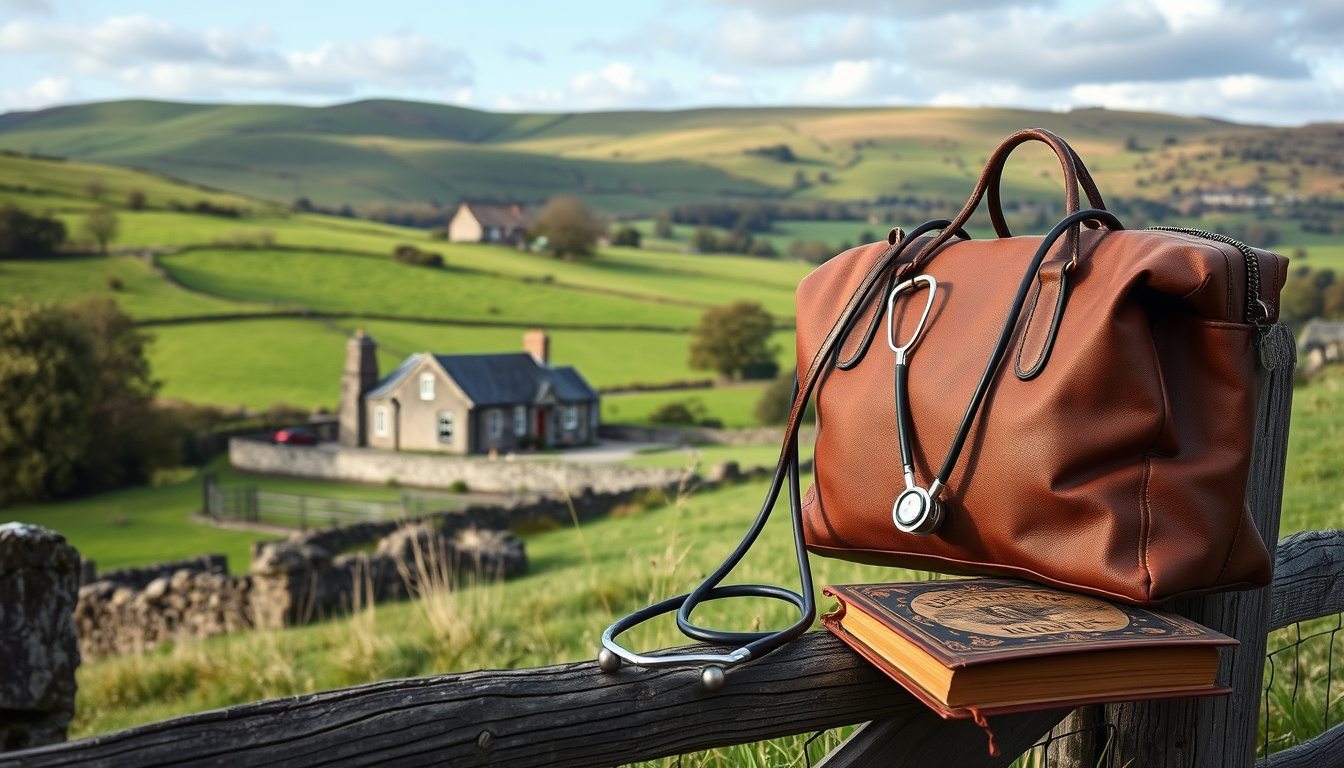
Few writers have reshaped public perception of a profession as completely as James Herriot did for veterinary surgery—but the man who signed those books wasn’t James Herriot at all. He was James Alfred Wight, a Yorkshire vet who didn’t start writing until he was 50, and his real story is every bit as rich as the tales he told.
Real name: James Alfred Wight ·
Born: 3 October 1916 ·
Died: 23 February 1995 ·
Occupation: Veterinary surgeon and author ·
Pen name: James Herriot
Quick snapshot
- Real name: James Alfred Wight (Britannica)
- Born 3 October 1916 in Sunderland (Britannica)
- Died 23 February 1995, aged 78 (Britannica)
- Exact reason for pen name choice not fully documented (Britannica)
- Some book events were fictionalized (Britannica)
- Began writing around age 50 (The Irish Times)
- Books set 1930s–1950s (Wikipedia)
- TV adaptations continue via 2020 reboot (Britannica)
- Legacy celebrated at World of James Herriot museum (World of James Herriot)
Here are the essential details of James Herriot’s life.
| Full Name | James Alfred Wight |
|---|---|
| Pen Name | James Herriot |
| Born | 3 October 1916, Sunderland, England |
| Died | 23 February 1995, Thirlby, North Yorkshire |
| Spouse | Joan Danbury (m. 1941) |
| Children | Jim Wight, Rosie Page |
| Occupation | Veterinary surgeon, author |
| Notable Works | All Creatures Great and Small series |
Was there a real Siegfried Farnon?
Yes, but not by that name. The character Siegfried Farnon was based on Donald Sinclair, the real-life veterinary surgeon and partner of James Alfred Wight at their practice in Thirsk. Britannica confirms Wight’s professional partnership with Sinclair, and the books openly acknowledge this real-world foundation.
Did Siegfried Farnon ever marry in real life?
Donald Sinclair married Mary Lightbody in 1941, according to BBC News. The television series’ portrayal of Siegfried as a lifelong bachelor who develops feelings for Mrs. Hall is a dramatic invention. In reality, Sinclair’s marriage to Lightbody lasted until his death.
Was Siegfried in love with Mrs. Hall?
There is no documentary evidence that the real Donald Sinclair was romantically involved with anyone like Mrs. Hall. The character of Audrey Hall, the housekeeper in the TV series, is a composite figure with no direct real-life counterpart, as Britannica notes. The romantic subplot between Siegfried and Mrs. Hall in the show is fictional.
The catch
Donald Sinclair’s real marriage is well-documented, yet the TV drama keeps Siegfried single for narrative tension. The real Siegfried was married for over 40 years, making the TV romance a clear fictional addition.
Who is the real Tristan Farnon?
Like his on-screen persona, Tristan Farnon was based on a real person: Brian Sinclair, Donald’s younger brother. The Bridgehead reports that Brian served in the Royal Army Veterinary Corps during World War II and survived the conflict, later working as a vet in the practice.
Did the real Tristan Farnon survive the war?
Yes. Brian Sinclair served in the Royal Army Veterinary Corps during WWII and returned to civilian veterinary life, unlike some characters in the series. The Bridgehead confirms his survival and continued career.
Why this matters
The real Tristan was a war veteran who came back, but the TV series compresses years of absence into dramatic tension—a textbook example of how adaptation reshapes biography for narrative purposes.
Did the real James Herriot have children?
Yes. James Alfred Wight and his wife Joan had two children: a son, Jim, and a daughter, Rosie. The Bridgehead identifies them, though neither became a veterinarian. Jim became a farmer, and Rosie pursued business, according to Wikipedia.
Did James Herriot’s daughter become a vet?
No. Rosie Page followed a different path—she did not enter veterinary medicine, despite her father’s profession. Family biographies confirm this divergence, as reported by The Bridgehead.
The trade-off
Fans expecting a Herriot dynasty of vets will find none. Instead, the Herriot children inherited something arguably more valuable: the family memoir project itself.
What did James Herriot suffer from?
James Alfred Wight was diagnosed with prostate cancer in the early 1990s. GradeSaver documents this diagnosis, which ultimately led to his death on 23 February 1995 at his home in Thirlby, Yorkshire, at the age of 78.
How old was James Herriot when he passed away?
He was 78 years old. The dates—3 October 1916 to 23 February 1995—are confirmed by Britannica, which notes he died of prostate cancer.
James Herriot cause of death
The official cause of death was prostate cancer, which he had been diagnosed with in the early 1990s. This is consistent across biographical sources, including Fact Monster, which adds that the disease had metastasized by the time of his death.
The upshot
Wight’s quiet retirement from practice in his late 70s reflected dignity in decline. He kept writing until nearly the end, with his last book published in 1992.
How much of All Creatures Great and Small is true?
The books are semi-autobiographical, not strict memoirs. Britannica notes that Herriot combined real cases with fictionalized characters and compressed timelines. The television adaptations, in turn, add another layer of dramatization on top of these books.
Why did James leave All Creatures Great and Small?
James Herriot never left the practice in real life; the storylines involving his departure in the TV series are fictional. Britannica clarifies that the character’s departure was a narrative device within the adaptation, not a biographical event.
Did James Herriot write under his real name?
No. He wrote under the pen name James Herriot because veterinary regulations at the time discouraged advertising and self-promotion, Britannica reports. The pen name allowed him to write without compromising his professional standing.
The pattern
Every layer of adaptation moves further from literal truth: real events become fictionalized books, then books become dramatized scripts. The core of Herriot’s work remains orientationally true—a real vet, real patients, real Yorkshire—but the specifics bend for narrative.
Bottom line: James Herriot’s books are semi-autobiographical, using real cases and people, but with names changed and events compressed for storytelling.
James Herriot brought the world of the Yorkshire veterinary practice to life, and in doing so, gave a voice to a profession that had been invisible to most readers.
— The Irish Times
This underscores the enduring power of Herriot’s storytelling: a blend of truth and narrative that continues to captivate audiences.
Wight’s quiet retirement from practice in his late 70s reflected dignity in decline. He kept writing until nearly the end, with his last book published in 1992.
— The Bridgehead
Was there a real James Herriot?
Yes, but the man behind the name wasn’t named James Herriot. James Alfred Wight, born 3 October 1916, practiced as a veterinary surgeon and began writing at age 50. The Irish Times calls him “a veterinary surgeon who wrote about his life with extraordinary skill,” and it’s true—but the pseudonym was his professional mask.
Bottom line: The pen name James Herriot allowed Wight to separate his professional identity from his authorial voice, letting the books live on their own terms.
Related reading: Ed Warren: Biography, Cause of Death, and Conjuring Truth
bionity.com, britannica.com, cs.wikipedia.org, ebsco.com, nl.wikipedia.org, goodreads.com
Frequently asked questions
What is James Herriot’s real name?
His real name was James Alfred Wight. He chose the pen name James Herriot because veterinarians in Britain couldn’t advertise, and the pseudonym kept his professional and literary lives separate.
When was All Creatures Great and Small first published?
The first book, then titled If Only They Could Talk, was published in 1970. The later, better-known volume appearing as All Creatures Great and Small followed in 1972.
How many books did James Herriot write?
He wrote over 10 books, including the semi-autobiographical series that became All Creatures Great and Small, and a children’s book. His works have sold over 10 million copies worldwide.
Where did James Herriot practice veterinary medicine?
He practiced in the Yorkshire Dales, primarily in Thirsk, which his books renamed as Darrowby. The practice was located at 23 Kirkgate, a site now part of the World of James Herriot museum.
Did James Herriot have any pets?
Yes, he owned dogs and cats throughout his life, often rescuing strays. His pets, including a dog named Dan, appear in his stories as characters.
What inspired James Herriot to start writing?
His wife Joan encouraged him to write about his experiences, and his veterinary work provided rich material. He began at age 50, publishing his first book in 1970.
Is the town of Darrowby a real place?
No, Darrowby is a fictional name for the town of Thirsk in North Yorkshire. Herriot used the real location as his setting but renamed it for the books.

Henry William Bennett Murray is a staff writer for CivicInsight.uk, covering UK public affairs, policy and civic life. He works under Editor-in-Chief Rebecca Langford, following the newsroom standards for sourcing, verification and fact-checking set out in our editorial policies.