You’ve seen them stacked on ships, used as pop-up coffee stands, and maybe even wondered if one could work as a garden shed, a workshop, or something more ambitious. Buying a shipping container in Ireland sounds simple — until you start pricing foundations, checking planning rules, and realising a steel box needs insulation to survive an Irish winter.
Average price for a used 20 ft container: $1,500 – $3,000 ·
Typical lifespan: 20–25 years ·
Standard 20 ft dimensions: 20 ft × 8 ft × 8.5 ft ·
Empty weight: ~5,000 lbs ·
Common uses: Storage, office, housing, pop-up retail
Quick snapshot
- Used 20ft container costs $1,500–$3,000 depending on condition (GetLocal.ie)
- Insulated 20ft containers in Dublin listed at €13,069 (GetLocal.ie)
- Containers used as dwellings almost always require permission (Anglepress)
- Temporary storage may be exempt if not for habitation (Anglepress)
- An Bord Pleanála ruled containers are “development” in a 2026 appeal (An Bord Pleanála)
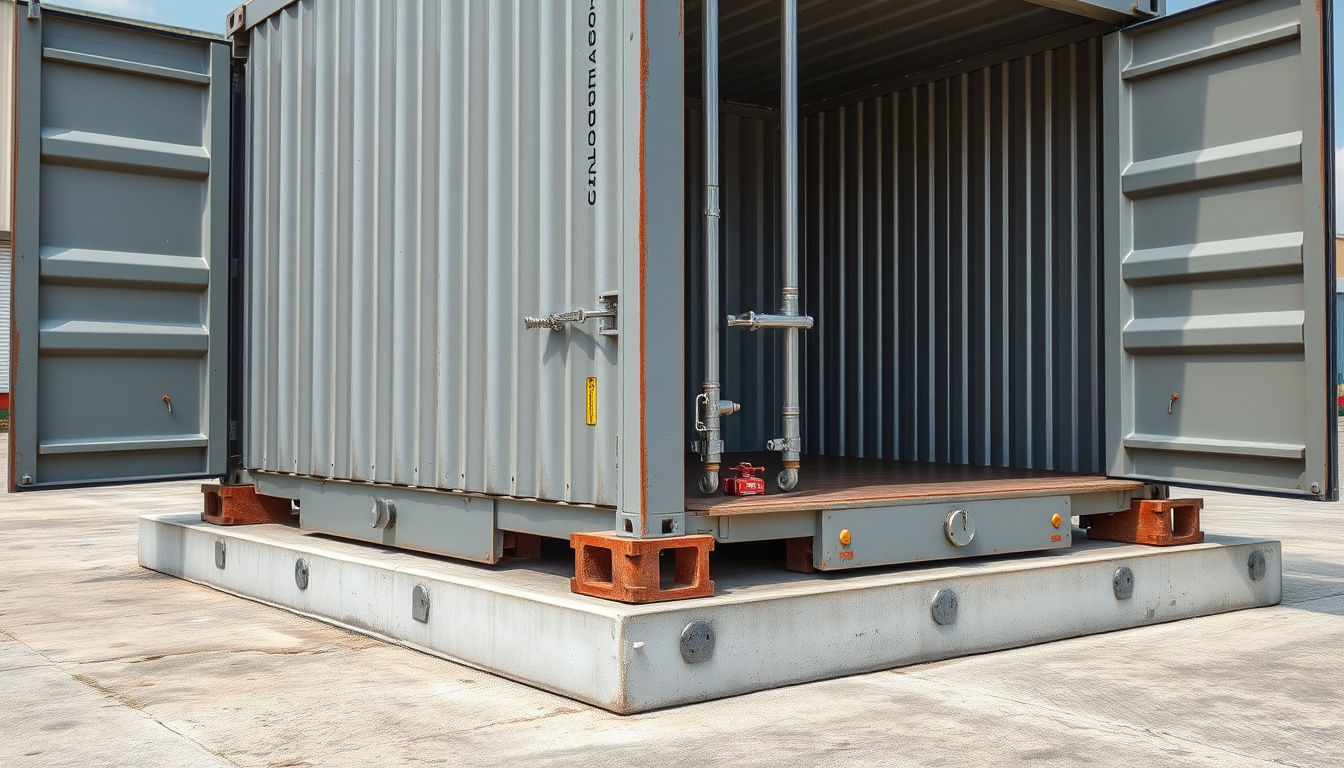
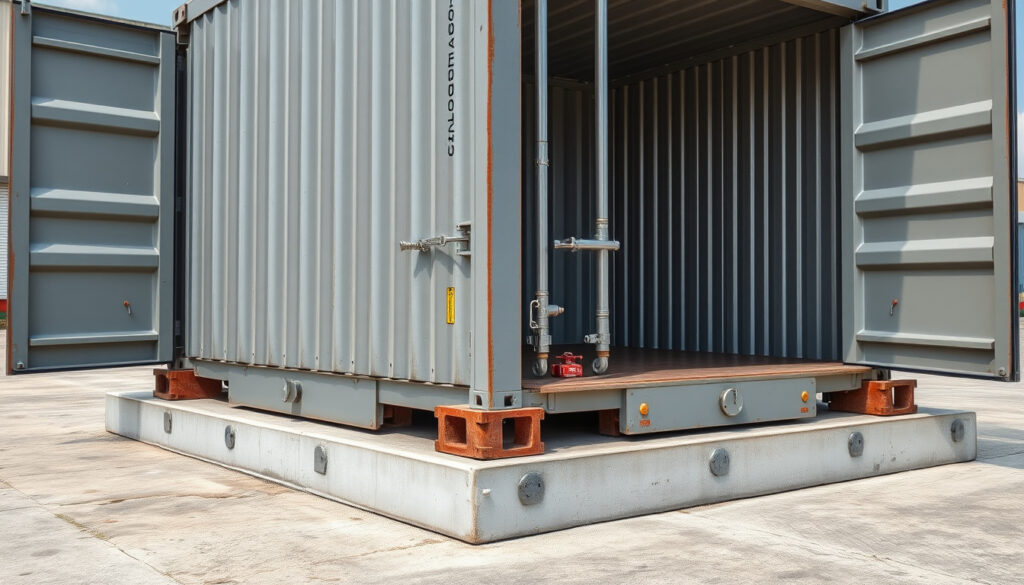
- Concrete slab is the most durable base option (Anglepress)
- Gravel pads are cheaper but risk settling over time (Anglepress)
- Weight of empty 20ft container: ~2,200 kg (Anglepress)
- Typical lifespan: 20–25 years with proper maintenance (Anglepress)
- Floor insulation critical in cold climates to prevent condensation (Anglepress)
- Spray foam and rigid foam are common methods (Anglepress)
Five key specifications, one pattern: shipping containers are built to a standard that makes them predictable for buyers, but the variations in grade and condition create a wide price gap.
| Specification | Value | Grade/Notes |
|---|---|---|
| External dimensions (20 ft) | 20 ft × 8 ft × 8.5 ft (6.1 m × 2.44 m × 2.59 m) | Standard ISO container |
| Internal floor area | ~160 sq ft (14.9 m²) | Enough for a small studio or large shed |
| Maximum load capacity | ~28,000 kg (61,730 lbs) | Cargo-worthy rating |
| Empty weight | 2,200 kg (4,850 lbs) | Heavy enough to require solid ground |
| Common grades | Cargo-worthy, wind-water-tight, as-is | Grade affects price and suitability |
| High cube height | 9.5 ft (2.9 m) | Extra headroom for conversions |
| Corrosion risk | High in coastal/Irish climate | Corten steel requires maintenance |
How much should I pay for a 20 ft shipping container?
Buyers who focus only on the container cost miss the real expense: delivery, modifications, insulation, and foundations can double the total outlay.
What factors affect the price?
The price of a used 20 ft container in Ireland depends on three things: condition grade, local supply, and whether it’s been modified. A cargo-worthy container that can still travel by sea costs more than a wind-water-tight unit that’s fine for on-site storage. Listings on the Dublin marketplace GetLocal.ie show a range from €1,994 for a basic unit to €13,069 for an insulated 20 ft container. The cheapest containers are usually “as-is” — rusted, dented, and sold without any guarantee of watertightness.
Used vs new container cost comparison
The price spread across grades tells you what you’re trading off: upfront savings versus long-term durability.
| Grade | Typical price (Ireland, 20 ft) | Best for |
|---|---|---|
| As-is (used) | €1,500 – €3,000 | Storage on private land, low risk |
| Wind-water-tight (used) | €3,000 – €5,000 | Storage shed, workshop |
| Cargo-worthy (used) | €4,000 – €6,500 | Shipping, conversions with structural integrity |
| New / one-trip | €6,000 – €10,000 | Home conversion, office, long-term use |
| Insulated (conversion-ready) | €8,000 – €15,000 | Habitable space, year-round use |
The trade-off: a cheap “as-is” container saves money upfront but costs more in repairs, rust treatment, and sealing. A new or insulated container costs three to four times as much but can be placed and used immediately.
The pattern: the total cost of a container project is driven more by what you do with it than by what you pay for the box itself.
Do I need planning permission for a shipping container?
Do you need planning permission for a container home in Ireland?
Yes — if you plan to live in it. According to the Anglepress shipping container guide, a container used as a dwelling generally requires planning permission. The same source states that temporary storage containers may be exempt if they are not used for habitation. But “may be” is the operative phrase — there is no blanket exemption.
A 2026 appeal report from An Bord Pleanála ruled that “temporary steel containers at a site were development and not exempted development.” This is crucial: even temporary placement can require permission if the activity (storage, office use) constitutes a material change of use. In a separate 2019 case, Dublin City Council granted permission for stacked shipping container storage, but the approval was specific to the site and the intended use (An Bord Pleanála).
A High Court case in Ireland ordered a freight company to remove containers from Tesco lands where it lacked planning permission for storage activity — retention permission had been refused (Irish Examiner). The message is consistent: don’t assume you can place a container without checking with your local planning authority.
A container under 25 m² used purely for storage on your own land and not visible from a public road is more likely to be exempt — but the risk is yours. One neighbour complaint can trigger a planning enforcement check.
The pattern across Irish rulings: the size, purpose, and visibility of the container all matter. A container that serves as an occasional workshop may slip through; one used as a rental office or living space almost certainly won’t.
Do you need a concrete slab for a shipping container?
Should I put gravel under a shipping container?
Gravel works — but only under the right conditions. A 4–6 inch compacted gravel base provides drainage and prevents the container from sitting in standing water, which is the main cause of floor rust. For a storage container that won’t carry heavy internal loads, a gravel pad is often sufficient. For a container intended as a workspace or home, concrete is much safer.
Do Shipping Containers Need Foundations?
Each foundation type comes with a different trade-off between upfront cost and long-term stability.
| Foundation type | Cost (approx) | Best for | Risk |
|---|---|---|---|
| Concrete slab (4–6 in) | €800 – €2,000 | Permanent structures, homes, offices | Low — most durable option |
| Concrete piers | €400 – €1,000 | Containers on uneven ground | Medium — needs leveling |
| Gravel pad (compacted) | €200 – €600 | Temporary storage, workshops | Medium — can settle unevenly |
| Timber beams on soil | €100 – €300 | Short-term, low-weight use | High — rot and sinking risk |
The catch: an empty 20 ft container weighs about 2,200 kg. That weight concentrates on the edges. Without a slab or piers, the base frame can buckle if the ground softens — especially on Irish clay soils that shift with rain. Gravel is the budget option, but it requires annual checking and re-leveling.
What is the lifespan of a 20ft container?
Are 20ft Used Containers Suitable for Long-Term Storage?
The standard answer from the shipping industry is 20–25 years for a well-maintained container. But that lifespan assumes the container stays in one place, off the ground, and gets regular maintenance. A container that sits directly on grass in a damp Irish field will rust from the bottom up within five to eight years.
The two grades that matter for longevity:
- Cargo-worthy: Structurally sound enough for international shipping. The floor is rated for forklift loading, the doors seal tightly, and the frame has no major corrosion. Lifespan in static use: 20–30 years.
- Wind-water-tight (WWT): No longer safe for cargo but still weatherproof for storage. The floor may be weakened, and the roof may have minor holes. Lifespan: 10–15 years if maintained.
Extending the life of any container means three things: raising it off the ground, treating rust spots annually with a marine-grade primer, and ensuring ventilation to prevent moisture buildup inside. According to the Anglepress guide, the Irish climate (rain, humidity, coastal salt air) accelerates corrosion, so buyers should factor in a repainting cycle every 2–3 years.
A container that looks fine on the outside may have a corroded floor — the most expensive part to replace. Always walk on the floor during inspection. If it bounces or feels soft, pass.
The pattern: buyers who treat a container as a permanent structure rather than a temporary box get the full lifespan; those who skip maintenance pay the difference in reduced years.
Do you need to insulate the floor of a shipping container?
Best insulation materials for container floors
Yes — especially in Ireland. A container floor is typically 28 mm of marine plywood over steel cross-members. Without insulation, that floor acts as a cold bridge: damp rises from the ground through the steel, hits the warm interior air, and condenses under the plywood. Within months, you get mould in the floor and rust in the frame.
The three common methods used by Irish converters:
- Spray foam (closed-cell): The gold standard. It seals every gap, provides R-6 to R-7 per inch, and blocks moisture vapour. Cost: €4–€8 per sq ft applied. Requires professional installation.
- Rigid foam boards (XPS or PIR): DIY-friendly. Cut to fit between the floor joists and sealed with a vapor barrier tape. R-value: ~R-4 per inch. Cost: €1–€3 per sq ft.
- Batt insulation + vapor barrier: Budget option, but high risk of moisture trapping unless the vapor barrier is perfectly sealed. Not recommended for floors.
How to insulate a shipping container for year-round use
The full recipe for a heated, habitable container: raise the container on a slab or piers, install a vapor barrier on the ground below, spray-foam the walls and ceiling (minimum 2 inches), and use rigid foam under the floor with a sealed vapor barrier above. Without a dedicated heating system, even the best insulation won’t stop condensation in an Irish winter. A small dehumidifier or a low-power fan-heater running at night makes the difference between a usable space and a damp box.
What this means for a buyer: if you plan to use the container as a workshop, home office, or living space, budget €1,500–€3,000 for professional insulation and moisture-proofing. The insulation cost alone can exceed the container’s purchase price — but the alternative is a container that rots from the inside out within three years.
The catch: insulation is not optional in Ireland’s climate — it’s the line between a structure that works and one that fails.
Clarity check: confirmed vs. unclear
Confirmed facts
- Standard 20ft container dimensions are 20 ft × 8 ft × 8.5 ft (Anglepress)
- Average lifespan is 20–25 years with maintenance
- Concrete slab is the most common and durable foundation option
- Planning permission is required for container dwellings in Ireland (Anglepress)
- An Bord Pleanála has ruled that temporary container placement can be “development” requiring permission (An Bord Pleanála)
- A High Court case ordered container removal from Tesco lands for lack of permission (Irish Examiner)
What’s unclear
- Exact planning permission rules vary by county in Ireland; exemptions for temporary storage are not uniform (Anglepress)
- Individual prices fluctuate with supply and demand; current listings range from €1,994 to over €13,000 for 20ft units (GetLocal.ie)
- Effectiveness of gravel vs. concrete in long-term settling is site-dependent and lacks Irish-specific studies
- Whether a container under 25 m² qualifies as exempted development depends on local authority interpretation (My Little Home)
“A shipping container that’s maintained, raised off the ground, and painted every few years will last 25 years or more. One that sits on soil and gets ignored? Five to seven years, depending on how wet the site is.”
— Representative of Conexwest, a shipping container supplier
“The key question for any container owner in Ireland is: are you using it for storage, or are you using it for accommodation? The law draws a very sharp line between those two.”
— Comment on exemption criteria, Irish Planning and Development Regulations
The consequence for an Irish buyer is clear: a shipping container can be a cheap storage shed or a costly home conversion. The difference is planning permission, foundations, and insulation. Skipping any of the three turns a €2,000 container into a €5,000 mistake.
containyourself.ie, mylittlehome.ie, revisedacts.lawreform.ie, dailyperspective.co.uk, mylittlehome.ie, pacificbrief.nz, trendrapport.se
Frequently asked questions
Can I place a shipping container on my property without a permit?
Possibly, if it’s used for temporary storage, under 25 m², and not visible from a public road. But local authority interpretation varies — check with your county council before placing it.
What size shipping container is best for a home conversion?
A 20 ft container provides ~160 sq ft — tight for one person. Most container homes use at least two 40 ft containers, or combine a 20 ft with a 40 ft for ~400 sq ft of living space.
How do I secure a shipping container from theft?
Use heavy-duty padlocks on both doors, weld lock boxes over the handles, and place the container in a well-lit, visible location. Consider GPS trackers for high-value contents.
Do shipping containers need regular maintenance?
Yes. Inspect the roof and door seals annually, treat rust spots with marine-grade primer, and repaint the exterior every 2–3 years in Ireland’s climate. Check the floor for soft spots after heavy rain.
Can a shipping container be used as a permanent home?
In theory, yes — with planning permission, proper insulation, foundations, and services. In practice, most Irish local authorities treat container homes as a material change of use requiring full planning permission.
How much does it cost to transport a shipping container in Ireland?
Delivery typically costs €100–€300 for a 20 ft unit within 50 km. Longer distances or off-road sites add significantly to the cost. Always get a delivery quote before committing to a price.
What is a high cube container and how is it different?
A high cube container is 9.5 ft tall (vs. 8.5 ft standard), offering 1 ft more headroom. It’s preferred for conversions because the extra height makes insulation and interior finishing more comfortable.
Are shipping containers safe for living in?
Yes, if modified correctly: adequate ventilation, fire exits, insulation without toxic off-gassing, and proper electrical work. Unmodified containers trap condensation and can develop mould — the real safety risk is moisture, not steel.

Henry William Bennett Murray is a staff writer for CivicInsight.uk, covering UK public affairs, policy and civic life. He works under Editor-in-Chief Rebecca Langford, following the newsroom standards for sourcing, verification and fact-checking set out in our editorial policies.