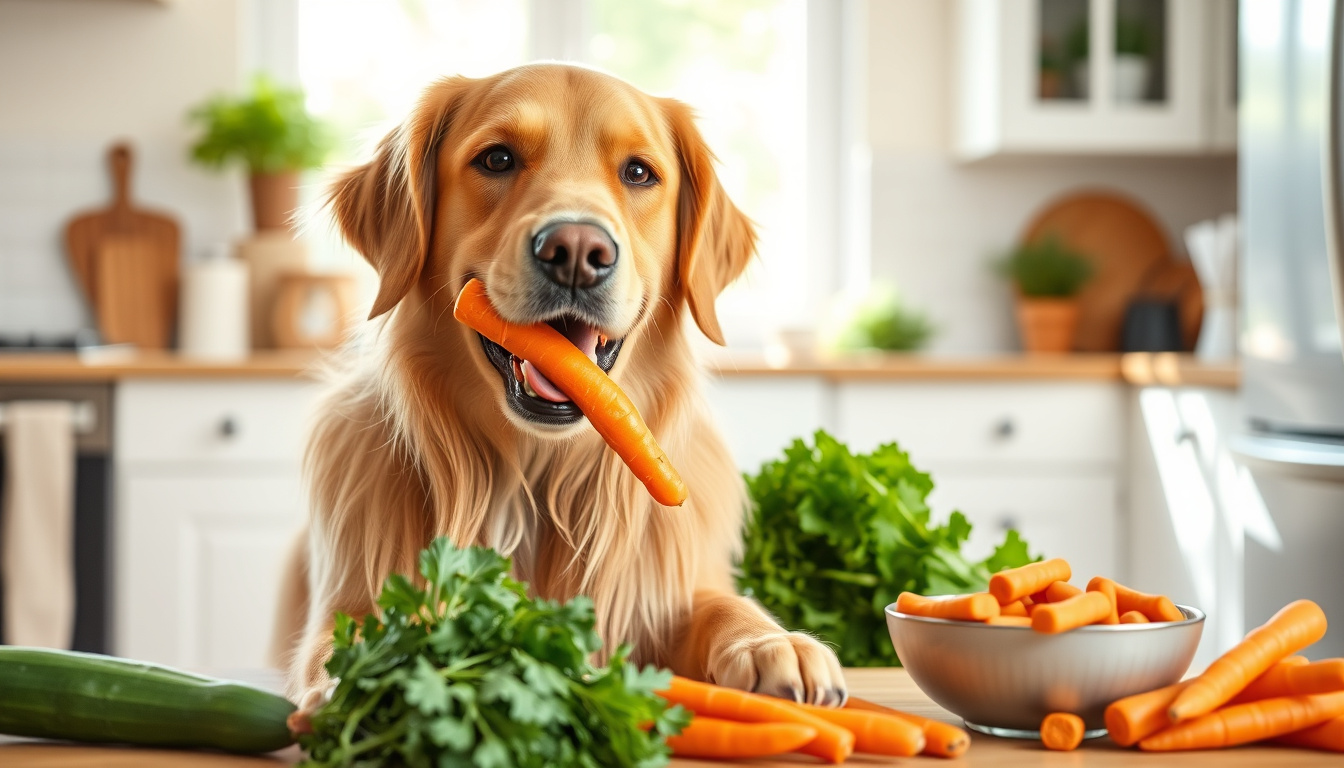
Dogs notice carrots. Most breeds can safely eat them raw or cooked, plain and in moderation, making carrots one of the most straightforward healthy treats you can share. This guide breaks down what veterinary sources actually say about feeding carrots, so you can decide with confidence.
Safe for dogs: Yes · Low-calorie treat: ~4 calories per baby carrot · Supports eye health: Vitamin A per PetMD · Fiber for digestion: Antioxidants included · Moderation key: Avoid overfeeding
Quick snapshot
- Carrots are safe when served plain (Chewy, citing Samuel Varon, DVM)
- Raw carrots help clean plaque off teeth (Chewy / Hill’s Pet Nutrition)
- Both raw and cooked carrots offer nutritional benefits (Open Farm)
- Exact daily maximum varies by individual breed and size
- Optimal cooking method for nutrient retention needs more research
- Carrots remain a recommended staple in updated AAFCO treat guidelines
- Recent vet guidance emphasizes the 10% calorie limit for treats
- Incorporate carrots as a low-calorie training reward
- Monitor your dog’s response, especially with new foods
Key nutritional data for carrots, sourced from USDA analysis via pet nutrition brands, appears in the table below.
| Fact | Detail |
|---|---|
| Safe overall | Yes per top veterinary sources |
| Raw safe | Yes, with skin (wash or peel first) |
| Cooked safe | Yes, steamed without seasoning is best |
| Puppy age | After weaning, in finely chopped or cooked form |
| Calories per baby carrot | Approximately 4 calories |
| Fiber per 1.5 oz baby carrots | 1 gram |
| Beta carotene per 100g raw | 8,280 µg (USDA data via Campfire Treats) |
| Potassium per 100g raw | 320 mg (USDA data via Campfire Treats) |
Is it okay to give dogs raw carrots?
Yes—and dogs often enjoy the crunch. Raw carrots are safe for most dogs when prepared properly, according to veterinary guidance published on Chewy (pet nutrition education platform). The natural firmness provides a satisfying texture that many dogs find appealing.
“Raw carrots are a safe and healthy snack for most dogs when cut into appropriate sizes and served in moderation.”
— Dr. Samuel Varon, Broadway Veterinary Hospital, via Chewy
Benefits of raw carrots
- Raw carrots help clean plaque off teeth due to their hard texture, supporting dental health, according to Dr. Samuel Varon of Broadway Veterinary Hospital as cited by Chewy.
- Carrots contain vitamin A and antioxidants that benefit skin and coat health, according to Open Farm (specialty pet food brand).
- Low in calories and high in fiber, making them useful for weight management as noted by American Kennel Club (premier purebred dog registry).
Risks and preparation
- Always wash or peel carrots to remove dirt and pesticide residue per American Kennel Club.
- Cut whole carrots or carrot sticks into bite-size chunks before feeding to prevent choking, as advised by Taste of the Wild Pet Food (dog food manufacturer).
- Supervise dogs when feeding large or frozen carrot pieces, per Spot & Tango (fresh dog food service).
How many carrots can I give a dog?
The answer depends on your dog’s size and daily calorie intake. Treats—including vegetables—should not exceed 10% of a dog’s daily calories per AAFCO standards (Association of American Feed Control Officials, feed regulation body).
Portion by dog size
The following portion ranges help you match carrot servings to your dog’s weight category.
| Dog size | Recommended portions |
|---|---|
| Small (under 20 lbs) | One to two baby carrots per serving |
| Medium (20–60 lbs) | Three to five baby carrots or one medium carrot, divided |
| Large (over 60 lbs) | Up to a full medium carrot; more if activity level supports it |
Daily limits
- A medium-sized carrot contains roughly 25 calories; for a dog eating 1,000 calories daily, no more than 100 calories should come from treats, which translates to about two and a half medium carrots, according to Campfire Treats (pet treat brand).
- Baby carrots have approximately 4 calories each per MetLife Pet Insurance (pet insurance provider).
- For diabetic dogs or dogs managing weight, carrots are an excellent low-calorie option per Loving Pets Products (pet product manufacturer).
What veggies can dogs not eat?
Not all vegetables are safe for dogs. Certain foods carry real risks that pet owners should understand before sharing their plate.
Toxic vegetables list
These vegetables cause documented harm and should never reach your dog’s bowl.
| Hazardous vegetable | Risk level and symptoms |
|---|---|
| Onions, garlic, leeks, chives | Red blood cell damage (allium toxicity) |
| Grapes and raisins | Kidney failure risk |
| Avocados | Persin can harm dogs in sufficient quantities |
- Avoid onions, garlic, leeks, and chives—all members of the allium family—because they can cause red blood cell damage in dogs, per American Kennel Club.
- Grapes and raisins are toxic and can lead to kidney failure, as confirmed by American Kennel Club.
- Avocados contain persin, which can be harmful to dogs in sufficient quantities, per American Kennel Club.
Safe alternatives
These vegetables rank among the safest options and complement carrots in a varied diet.
| Safe vegetable | Key benefit |
|---|---|
| Carrots | Low calorie, high vitamin A |
| Celery | Low calorie, vitamins C and K |
| Green beans | Low calorie, plain without seasoning |
- Carrots rank among the safest vegetables for dogs, according to Spot & Tango (fresh dog food service).
- Celery is also safe and can serve as a low-calorie snack, though it should be cut into small pieces to avoid choking, per American Kennel Club.
- Green beans (plain, without salt or seasonings) are another safe option for dogs.
The American Kennel Club (premier purebred dog registry) emphasizes that carrots are only unsafe when seasoned or prepared with ingredients like butter, salt, or onion powder—plain carrots remain a safe choice.
Can dogs eat carrots raw or cooked?
Both formats are safe and offer different advantages. According to PetMD (veterinary reference platform), cooked carrots may provide better nutrient absorption because cooking breaks down cell walls.
“Carrots provide more nutrients when cooked compared to raw carrots, but the difference is marginal for most dogs.”
— PetMD veterinary nutrition team
Raw vs cooked nutrition
- Raw carrots provide crunch that helps clean teeth, according to Spot & Tango.
- Cooked carrots offer easier digestion and potentially enhanced nutrient bioavailability, per Loving Pets Products.
- 100 grams of raw carrots provides 41 calories, 2.8 grams of dietary fiber, and 8,280 µg of beta carotene according to USDA data cited by Campfire Treats.
Best preparation
- Lightly steaming without seasoning is the recommended cooking method, per MetLife Pet Insurance.
- Roasting or sautéing preserves more nutrients than boiling, according to Loving Pets Products.
- Raw carrots should be washed, peeled, and cut into appropriate sizes before serving, as noted by Taste of the Wild Pet Food.
Raw carrots win on dental benefits, but cooked carrots win on nutrient absorption. PetMD (veterinary reference platform) notes that the difference is marginal for most dogs—the format your dog prefers is usually the right choice.
How often can dogs eat carrots?
The 90/10 rule provides a useful framework: treats should make up no more than 10% of a dog’s daily caloric intake, according to AAFCO standards. Carrots fit naturally into this guideline as a low-calorie treat option.
90/10 rule explained
Veterinary nutrition guidelines set treat limits to prevent obesity and nutritional imbalances.
| Daily calorie intake | Maximum treat calories (10%) | Equivalent carrots |
|---|---|---|
| 500 calories | 50 calories | ~2 baby carrots max |
| 1,000 calories | 100 calories | ~2.5 medium carrots max |
- If your dog eats 500 calories daily from regular meals, limit treats—including carrots—to 50 calories or fewer.
- For a dog eating 1,000 calories per day, treat allowance is roughly 100 calories, roughly two and a half medium carrots, per Campfire Treats.
- Carrot juice can be given in moderation without added ingredients, though whole carrots are generally preferable, per Pawstruck (pet product retailer).
Frequency guidelines
- Dogs can eat carrots daily as part of a balanced diet, per American Kennel Club.
- Spread carrot servings throughout the day rather than offering a large portion at once to aid digestion, per Open Farm.
- Monitor for signs of digestive upset, gas, or diarrhea, which can indicate too much fiber, as warned by Spot & Tango.
Carrots are low-risk enough for daily feeding, but MetLife Pet Insurance notes that variety matters—the healthiest vegetable rotation includes options like green beans, sweet potatoes, and pumpkin alongside carrots.
Upsides
- Low calorie count makes carrots ideal for weight management
- Vitamin A supports eye health, immune function, and coat quality
- Raw carrots provide natural dental cleaning action
- High fiber content aids digestion
- Antioxidants in carrots help protect cells from damage
- Carrots are inexpensive and widely available
- Frozen carrots can soothe teething puppies, per American Kennel Club
Downsides
- Too many carrots can cause digestive upset or diarrhea
- Large chunks pose choking risks, especially for small breeds
- Carrot tops (greens) should be avoided as they may contain harmful compounds
- Seasoned or buttered carrots are unhealthy for dogs
- Excessive beta carotene can lead to orange tinting of skin in dogs
- Carrots should never replace balanced dog food
How to prepare carrots for your dog
Preparing carrots safely for dogs requires minimal effort but a few important steps to maximize benefits and minimize risks.
- Wash thoroughly: Rinse under running water and scrub the surface to remove dirt and potential pesticide residue, per American Kennel Club.
- Peel if desired: While carrot skin is safe for dogs, peeling reduces any surface contaminants, according to Taste of the Wild Pet Food.
- Cut to appropriate size: Slice carrots into bite-sized chunks—roughly the width of a pencil or smaller—for safe chewing, as recommended by Chewy.
- Choose preparation method: Raw for crunch and dental benefits; steamed or roasted (no seasoning) for easier digestion, per MetLife Pet Insurance.
- Portion correctly: Adjust serving size based on your dog’s weight and daily calorie intake—consult the portion guidelines above.
- Introduce gradually: Offer a small amount first and watch for any digestive reactions over 24 hours, per Spot & Tango.
If your dog shows signs of choking, vomiting, or diarrhea after eating carrots, discontinue carrot feeding and consult your veterinarian, particularly if symptoms persist.
When you follow these steps, you give your dog the nutritional benefit of carrots while keeping choking and digestive risks near zero.
Related reading: What is turmeric good for · How many grams of protein in an egg
Beyond carrots’ crunch and vitamin A boost, peas safety guide offers dogs fiber, vitamins C and K, and hydration as another safe veggie snack in moderation.
Frequently asked questions
What is the best vegetable for a dog?
Carrots rank among the top choices due to their low calorie count, vitamin content, and fiber, per PetMD. Other strong contenders include green beans, sweet potatoes (cooked, plain), and pumpkin.
What is the healthiest vegetable for dogs?
Carrots, green beans, and pumpkin are frequently cited as the healthiest options for dogs, according to American Kennel Club. Each offers different nutritional benefits—carrots excel in vitamin A, green beans in low calories, and pumpkin in digestive fiber.
Is 1 carrot a day too much for a dog?
For most medium to large dogs, one medium carrot (roughly 25 calories) falls within reasonable treat limits when factored against the 10% treat allowance rule. For small dogs, one baby carrot or half a medium carrot is more appropriate, per Campfire Treats.
Can dogs eat raw carrots with skin?
Yes, dogs can eat raw carrots with skin as long as the carrots are thoroughly washed, per Taste of the Wild Pet Food. Peeling is optional but can reduce pesticide exposure.
What age can puppies eat raw carrots?
Puppies can eat cooked, mashed, or finely chopped carrots after weaning (typically around 8 weeks), per Spot & Tango. Frozen carrot slices can soothe teething discomfort in puppies, as noted by American Kennel Club.
Can dogs eat celery?
Yes, dogs can safely eat celery in small, cut-up pieces, per American Kennel Club. Celery is low in calories and provides vitamins C and K, though it should be cut into small pieces to prevent choking.
What is the 90/10 rule for dogs?
The 90/10 rule means that 90% of a dog’s daily calories should come from complete, balanced dog food, while treats—including vegetables—make up the remaining 10%, according to AAFCO standards. This guideline helps prevent obesity and nutritional imbalances.
For dog owners, the takeaway is straightforward: plain carrots, served in appropriate portions, make a safe and nutritious occasional treat. When you keep portions within the 10% treat allowance and avoid seasonings, carrots provide meaningful nutritional value without displacing balanced meals—making them one of the most reliable everyday treats available.

Oliver Hayes is a staff writer for CivicInsight.uk, reporting on news, local government and public services. His work is reviewed by the editorial desk and checked against our sourcing and fact-checking standards before publication.