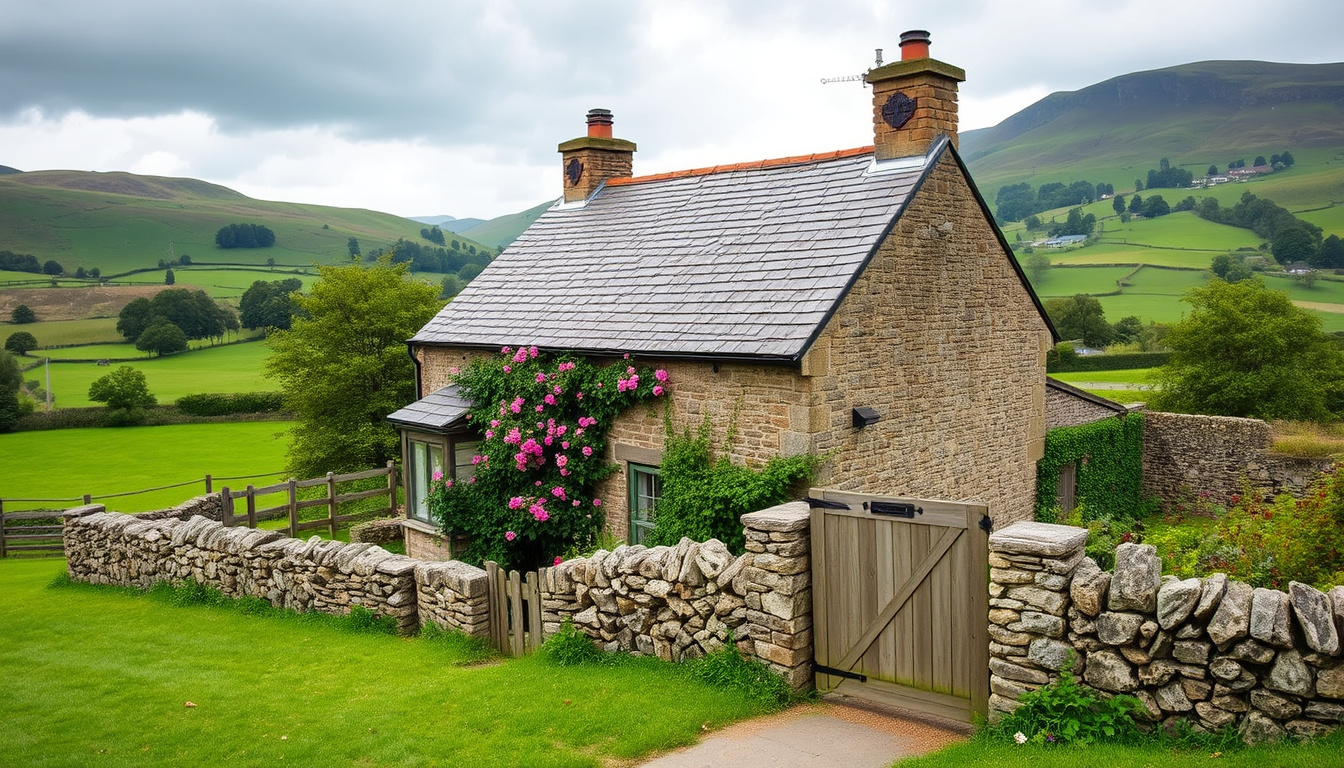
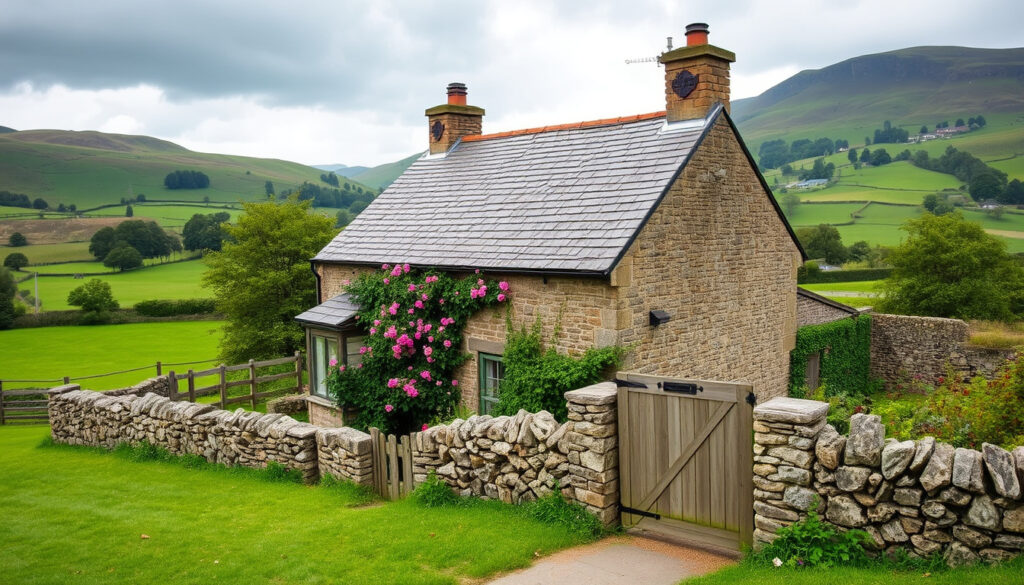
Most people meet Beatrix Potter through a small blue jacket and a very stubborn rabbit. By the time she died in 1943, according to the National Trust (British heritage conservation charity), she had spent the preceding decades as a farmer, sheep breeder, and landowner — and she gave away something bigger than stories. This is the life behind the watercolors: the Lake District farms bought with Peter Rabbit’s earnings, the marriage that came at 47, and the question of who actually owns her legacy today.
Born: 1866 · Died: 1943 · Married: age 47 · Books published: 23 · Land to National Trust: 4,000+ acres · Royalty beneficiary: Frederick Warne & Co Ltd
Quick snapshot
- Died in 1943, leaving 4,000 acres and 15 farms to the National Trust (Hill Top estate records)
- Married William Heelis in 1913, at 47 (National Trust (heritage conservation charity))
- Bought Hill Top Farm in 1905 with book earnings and an inheritance (Visit Lake District (official tourism authority))
- The exact cause of death beyond pneumonia and lung disease
- Her precise net worth at death — never publicly itemized
- Whether she chose not to have children, or could not
- 1866: born in London (Visit Lake District)
- 1905: bought Hill Top Farm (Visit Lake District)
- 1913: married William Heelis (National Trust)
- 1943: died; land to National Trust (National Trust)
- Hill Top remains a working farm of 250+ acres (National Trust (Hill Top planning guide))
- The National Trust manages the 4,000-acre estate across the Lake District (National Trust)
- Copyrights stay with Frederick Warne & Co Ltd; the books remain in print (National Trust (Hill Top planning guide))
Six rows cover the essentials, and one pattern holds throughout: the woman who drew rabbits was quietly assembling a land empire.
| Fact | Detail |
|---|---|
| Full name | Helen Beatrix Potter |
| Born | July 28, 1866, London (Visit Lake District) |
| Died | December 22, 1943, Near Sawrey, Lake District (National Trust) |
| Spouse | William Heelis (m. 1913) (National Trust) |
| Famous work | The Tale of Peter Rabbit (1902) |
| Major legacy | Land conservation in the Lake District (National Trust) |
How is Kate Middleton related to Beatrix Potter?
It is the question that resurfaces at every royal event: is Kate Middleton, now the Princess of Wales, a distant relative of the woman who invented Peter Rabbit?
No direct blood link: a distant cousin through shared ancestors
- Kate Middleton is a descendant of Anthony Furness, Beatrix Potter’s great-uncle — a genealogical connection widely reported in British media.
- The link runs through the 19th-century Furness family, not through Potter’s parents.
- Potter died in 1943, generations before Catherine was born, so the tie is ancestral, not personal.
Researchers tracing Middleton’s family tree found the connection in the Furness family of northern England, the line that included Anthony Furness, Potter’s great-uncle. The two women therefore sit on the same extended family tree, separated by several generations and most of a century.
A royal connection that sounds exotic is, in genealogical terms, ordinary: shared ancestors from 200 years ago produce thousands of cousins, most of whom never meet. The Middleton–Potter link makes a good headline and a thin biography.
The implication: file the royal link under curiosity, not biography. Potter’s real family story was the one she built on her own, among Lake District farmers and shepherds.
The shared Furness family line
- Anthony Furness was Potter’s great-uncle.
- Middleton’s ancestry connects to the same extended 19th-century family.
- Neither woman descended from the other, and there is no first-hand family relationship.
What the connection reveals is context. Potter’s own family — London-based, moneyed, socially conventional enough to disapprove of a publisher as a son-in-law — belonged to a wider northern network that she eventually chose over the capital.
Why it matters: the royal question keeps Potter’s name in headlines, but it does not explain her. The people who defined her life were a publisher’s son, a local solicitor, and a flock of Herdwick sheep.
What illness did Beatrix Potter suffer from?
Potter’s final chapter was short and, measured against her own crowded life, quiet. She died at Near Sawrey in December 1943, with pneumonia recorded as the cause (National Trust).
Pneumonia and lung complications at the end
- The National Trust records the year of her death as 1943 (National Trust).
- Pneumonia is the cause most often cited; she was 77.
- Lung complications are usually mentioned in the same breath, without a single settled diagnosis.
Here the public record stops cooperating. Some biographical accounts point to lung fibrosis or a form of cancer as contributing factors; none has been established as the definitive diagnosis.
A less documented picture: possible fibrosis or cancer
Potter left meticulous records of her land but no detailed medical account of her final illness. The result is a biographical blind spot: we know the year, the place, and the immediate cause — and almost nothing after that.
- Lung fibrosis and cancer appear in some accounts as possible contributors, reportedly without a firm medical record behind them.
- No single authoritative medical summary exists in the public record.
What is known is the outcome: at 77, after nearly four decades of damp fell-side farming, Potter’s health gave way. The precise mechanism matters less than the pattern it completes — a private woman who let the public see only the work.
The pattern: the more public her land became, the more private she stayed — and that boundary was her own design.
Who inherited Beatrix Potter’s estate?
Potter’s will did something unusual for a bestselling author: it treated land as the main inheritance, and treated the books as a separate commercial matter.
The National Trust: 4,000 acres, 15 farms, and Hill Top
The gift covered 4,000 acres and 15 farms — roughly the area of 2,000 football pitches — handed to the National Trust, the charity she had worked with for decades to buy and protect working farmland (National Trust (Hill Top estate records)).
- The National Trust received 4,000 acres of land and 15 farms, plus flocks of pedigree Herdwick sheep (National Trust (Hill Top estate records)).
- Hill Top Farm and its farmhouse were bequeathed to the Trust; the transfer was completed in 1944 (National Trust (Hill Top planning guide)).
- Today Hill Top remains both a visitor site and a working farm of more than 250 acres (National Trust (Hill Top planning guide)).
This was not a symbolic bequest. Potter had been buying working farms since 1905, restocking them, managing them, and pressing the National Trust to acquire adjoining land while the opportunity still existed (National Trust). By the time the will was read, she had effectively built a conservation estate and handed over the keys, the farms, and the flocks.
Frederick Warne & Co Ltd held the copyrights
- The literary copyrights went to her publisher, Frederick Warne & Co Ltd, under the terms of her will.
- The commercial rights to Peter Rabbit and the other “little books” therefore stayed with the company, not with the charity.
- Frederick Warne continues to publish the tales today, which is why the books have never really gone out of print.
The split mattered. The National Trust received the place where the books were imagined; Frederick Warne received the books themselves. Potter drew the same line the market does — stories are property, and the landscape is common wealth.
How wealthy was Beatrix Potter when she died?
- The exact cash figure of her estate was never publicly itemized.
- Her wealth sat in illiquid assets: thousands of acres, working farms, cottages, and sheep.
- Modern estimates of the equivalent value vary widely, from several million upward depending on how the land is valued.
What is certain is that the land had a job to do. Potter was not collecting property for display; she was assembling a landscape that could pay its own way as working farmland, year after year, long after her death.
The trade-off: Potter chose lasting land over liquid cash — a decision that made her one of the most consequential private landowners in the history of English conservation.
Why didn’t Beatrix Potter have children?
For a woman whose imagination was full of baby animals, the question writes itself. The recorded answer is more about timing than tragedy.
Married at 47, after a long path
Potter married William Heelis in 1913, at 47 — an age when a first pregnancy carried real risk and was uncommon in Edwardian England. The marriage was real, but it arrived late in her reproductive timeline.
- William Heelis, a local solicitor, married her in 1913 (National Trust).
- Potter was 47 at the wedding.
- The couple had no children.
The marriage anchored her in the Lake District for the rest of her life. Whatever the private story, the public record is consistent: two working partners, a growing estate, and no heirs.
Norman Warne: the engagement that ended in 1905
- Her first serious romance, with publisher Norman Warne, was opposed by her parents.
- They objected because Warne’s family was in trade.
- Warne died of pernicious anemia in 1905, before the wedding could take place.
The same year, Potter took her book earnings and bought Hill Top Farm (Visit Lake District). The loss of Warne and the purchase of the farm are usually told as separate stories, but they landed in the same year — the moment Potter stopped waiting for permission and started building a place of her own.
The consequence: when marriage finally came in 1913, it happened on her terms, on land she already owned.
No recorded medical reason
- No medical record explains why the couple had no children.
- At 47, age-related infertility is the simplest likely explanation.
- Biographers have also pointed to personal choice: by 1913, Potter’s days were already full of farms, flocks, and conservation campaigns.
The absence of children changed the shape of her legacy. With no direct heir, her working estate went to an institution instead of a family line — which is precisely why the National Trust, not a private family, still owns a large piece of the Lake District.
What this means: Potter’s personal decisions, from her late marriage to her childlessness, directly ensured that her conservation legacy would pass to an institution rather than a family line.
Where did Beatrix Potter live most of her life?
Potter’s life divides into two landscapes: roughly four decades in London, then nearly four more in the Lake District.
London childhood and a late escape
- Born in Kensington, London, in 1866 (Visit Lake District).
- Childhood summers in Scotland and the Lake District built her lifelong habit of sketching nature (National Trust).
- She holidayed regularly in the Lake District from 1882, deepening her connection to the area (Visit Lake District).
Her London years were structured and sheltered, but her notebooks were not. She grew up to be a natural scientist as well as an illustrator, and that precision — the close observation of a working naturalist — carried straight into the botanical and animal details of her picture books.
By her late thirties, she faced a choice that Victorian women of her class rarely got to make: a supervised drawing room in London, or the working countryside she had been visiting for two decades.
Hill Top and the Lake District from 1905
Hill Top is the hinge of Potter’s life: a real farm, bought with a fictional rabbit’s money, that turned an illustrator into a conservationist (National Trust Australia (historic preservation body)).
- She bought Hill Top Farm in Near Sawrey in 1905 (Visit Lake District).
- An alternative record dates the purchase to 1906 (Co-Curate North East (university research archive)).
- The house was bought with earnings from the Peter Rabbit books plus a small inheritance from an aunt (National Trust Australia).
- Hill Top became the visible inspiration for the later “little books” (National Trust (Hill Top estate records)).
At Hill Top, Potter became a serious farmer rather than a lady with a hobby. She bred pedigree Herdwick sheep, the hardy breed of the Lake District fells (National Trust (Hill Top estate records)), joined the farming community as a working member, and turned into a forceful campaigner on local conservation issues (National Trust). In the 1920s, she fought to save the Windermere foreshore from development (National Trust Australia).
Her partnership with the National Trust was practical, not ceremonial: she helped the organization acquire land and manage it for long-term preservation, using her own money and reputation to do it (National Trust).
Potter’s books paid for the land, and the land eventually redefined her. By her fifties, the children’s author and the farmer were the same person.
What this means: the landscape she inhabited and preserved remains her most enduring monument, managed by the charity she trusted.
A timeline of a double legacy
Five dates trace the arc from a London nursery to a Lake District estate that still anchors the National Trust’s holdings.
| Year | Life event |
|---|---|
| 1866 | Born in London (Visit Lake District) |
| 1901 | Self-published The Tale of Peter Rabbit |
| 1905 | Bought Hill Top Farm; Norman Warne died (Visit Lake District) |
| 1913 | Married William Heelis (National Trust) |
| 1943 | Died; estate left to National Trust (National Trust) |
Read chronologically, the key transition is 1905: the year her romantic life closed and her land life opened. The books kept coming, but from Hill Top onward they were increasingly paying for something else.
What this means: Potter did not retire into farming — she escalated into it, and the farm kept funding the farms.
What’s confirmed, what’s unclear
Separating the documented from the speculated matters more here than for most authors, because Potter left a detailed paper trail on land and almost none on her health.
Confirmed facts
- Died in 1943; married William Heelis in 1913 (National Trust).
- Bought Hill Top in 1905 with book money and a small inheritance (Visit Lake District, National Trust Australia).
- Left 4,000 acres and 15 farms to the National Trust (National Trust).
- Campaigned against development on Windermere in the 1920s (National Trust Australia).
What’s unclear
- The precise cause of death beyond pneumonia and lung disease.
- Her exact net worth at death; no public itemization exists.
- Whether the childless marriage reflected choice or biology.
- The year Hill Top was bought: recorded as 1905 in most accounts and 1906 in an alternative record (Co-Curate North East).
- The farm count: 15 farms per one National Trust page (National Trust), 14 per another (National Trust Australia).
- The precise legal mechanics of the copyright arrangement — a private commercial deal not publicly detailed.
The pattern: the institutions that inherited her land hold the fullest records, while the woman behind the hedges stays partly out of frame.
What people say about Beatrix Potter
The clearest voices on Potter’s legacy are the charity she endowed, the biographer who reconstructed her inner life, and the tourism body that now interprets her home.
Beatrix Potter left 4,000 acres of land and 15 farms to the National Trust — and they were to be kept as working farms, not museum pieces.
— National Trust (Hill Top estate records)
For biographer Linda Lear, the emotional hinge of Potter’s early life was the loss of Norman Warne in 1905 — the year she turned toward the land and bought Hill Top (Visit Lake District).
— Linda Lear, Beatrix Potter’s biographer
Hill Top is a time capsule of Beatrix Potter’s life — the farmhouse, garden, and rooms kept as she knew them.
— Visit Lake District (official tourism authority)
The pattern: every account converges on the same person — an artist who became an estate manager — which is why her books and her farms refuse to be separated.
The legacy that outgrew Peter Rabbit
The usual summary — beloved children’s author, shy Victorian spinster — misses the sharper story. Potter was a working farmer who used bestselling books as a cash machine for conservation, and she did it deliberately, farm by farm, decade by decade. The books made her famous; the land made her useful. For the National Trust, the choice is now straightforward: keep Potter’s farms working as farms, or watch the landscape she spent a lifetime acquiring fragment into postcard scenery.
Related reading
Potter belongs to a line of British writer-conservationists who treated nature writing as practical work. Two profiles from the same series:
- Gerald Durrell: His Life, Books & Conservation Legacy
- James Herriot: Real Story, Family, Cause of Death
nationaltrust.org.uk, nationaltrust.org.uk, nationaltrust.org.uk, en.wikipedia.org, visitlakedistrict.com, visitcumbria.com, lancashiretelegraph.co.uk
Frequently asked questions
Who was Beatrix Potter married to?
William Heelis, a Lake District solicitor. They married in 1913, when Potter was 47 (National Trust).
How many books did Beatrix Potter write?
She published 23 tales and books, beginning with The Tale of Peter Rabbit in 1902.
What happened to Hill Top farm after her death?
Hill Top was bequeathed to the National Trust in her will, with the transfer completed in 1944; it remains a working farm of more than 250 acres and a visitor site (National Trust).
Why is Beatrix Potter associated with the Lake District?
She bought Hill Top Farm in Near Sawrey in 1905, lived there for the rest of her life, and used her income to buy and protect thousands of acres across the region (Visit Lake District).
Did Beatrix Potter illustrate her own books?
Yes — every original tale carried her own watercolors, which is why the pictures and the text have always been sold as one work.
What kind of animals did Beatrix Potter feature?
Mostly small farmyard and woodland creatures with human habits: Peter Rabbit, Squirrel Nutkin, the hedgehog Mrs. Tiggy-Winkle, and the duck Jemima Puddle-Duck.
Are Beatrix Potter’s books still in print?
Yes. Frederick Warne & Co Ltd, which inherited the copyrights, continues to publish the tales; royalties flow to the publisher under the terms of her will.

Henry William Bennett Murray is a staff writer for CivicInsight.uk, covering UK public affairs, policy and civic life. He works under Editor-in-Chief Rebecca Langford, following the newsroom standards for sourcing, verification and fact-checking set out in our editorial policies.