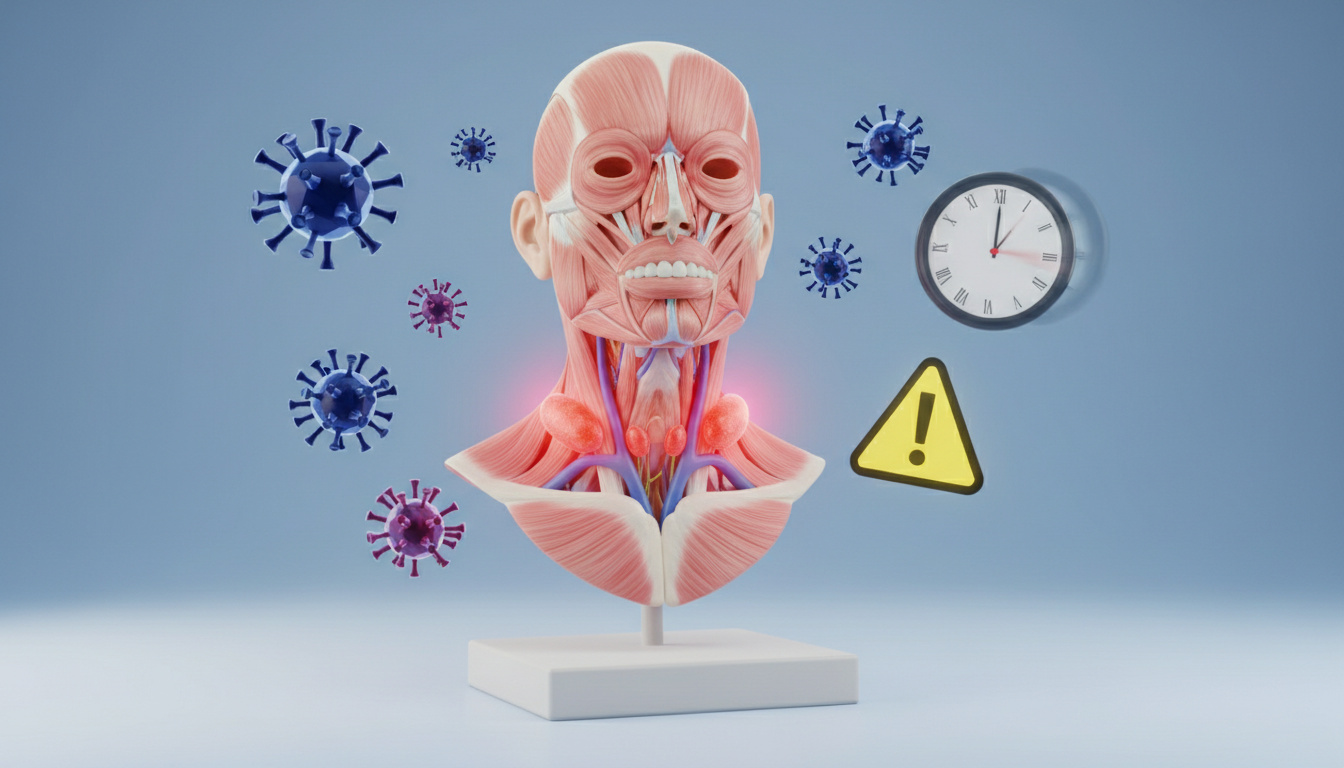
Swollen lymph nodes in the neck, medically termed cervical lymphadenopathy, represent one of the most common physical findings during routine medical examinations. These small, bean-shaped glands act as filtration points for lymphatic fluid, trapping viruses, bacteria, and other foreign particles before they can spread throughout the body. While discovering a neck lump often triggers immediate concern, medical consensus indicates that the vast majority of cases reflect temporary immune responses rather than serious pathology.
The cervical lymph node chain runs along the sides and back of the neck, with significant clusters positioned under the jaw and behind the ears. When activated by infection or inflammation, these nodes enlarge—sometimes becoming tender—as lymphocytes multiply to fight invading pathogens. Distinguishing between normal immune function and warning signs requiring professional evaluation remains essential for appropriate healthcare decisions.
According to the Cleveland Clinic, cervical lymphadenopathy is most commonly caused by infections and is usually temporary and harmless, though it can occasionally signal more serious conditions requiring intervention.
What Causes Swollen Lymph Nodes in the Neck?
Primary Trigger
Infections account for approximately 80% of cases, ranging from common colds to specific bacterial pathogens.
Expected Duration
Most infections resolve within 1-2 weeks, with nodes gradually returning to normal size as the immune response subsides.
Critical Threshold
Nodes persisting beyond 2-4 weeks or exceeding 1-2 centimeters in diameter warrant professional evaluation.
Recommended Action
Monitor symptoms closely and consult a healthcare provider if swelling remains static or progressive despite initial home care.
Key Clinical Insights
- Benign prevalence: Roughly 90% of swollen neck lymph nodes result from non-cancerous conditions, primarily viral and bacterial infections.
- Age correlation: Cancer as a cause remains statistically rare in patients under 40 years, with malignancy risk increasing with age.
- Unilateral significance: Swelling restricted to one side of the neck frequently indicates localized dental infections, ear infections, or skin conditions on that specific side.
- Texture indicators: Nodes that feel rubbery and movable typically suggest benign inflammation, while hard, fixed nodes require urgent assessment.
- Systemic symptoms: The presence of fever, night sweats, or unintentional weight loss alongside neck swelling changes the differential diagnosis significantly.
- Medication triggers: Certain pharmaceuticals, including atenolol, captopril, penicillin, and carbamazepine, can induce lymphadenopathy as a side effect.
- Differential diagnosis: Not all neck lumps represent lymph nodes; thyroid nodules and parotid gland disorders can present similarly.
Diagnostic Reference Table
| Presentation | Common Benign Cause | Serious Alternative | Typical Duration |
|---|---|---|---|
| Tender, movable nodes with cold symptoms | Viral upper respiratory infection | Mononucleosis complications | 7-14 days |
| Sudden painful swelling with sore throat | Streptococcal pharyngitis | Peritonsillar abscess | 1-2 weeks post-treatment |
| Unilateral swelling with dental pain | Tooth abscess or gum infection | Deep neck space infection | Until dental intervention |
| Bilateral small mobile nodes | Recent viral illness (EBV, CMV) | Lymphoma or leukemia | 2-4 weeks |
| Hard, fixed, painless nodes | Chronic granulomatous disease | Metastatic cancer or lymphoma | Persistent without treatment |
| Swelling with night sweats | Tuberculosis or acute HIV | Hodgkin lymphoma | Variable; requires diagnosis |
Viral infections—including common cold, influenza, COVID-19, mononucleosis, adenovirus, cytomegalovirus, chickenpox, shingles, rubella, and Epstein-Barr virus—represent the most frequent infectious triggers. Cleveland Clinic infectious disease specialists note that these conditions activate the immune system precisely as designed, with lymph node swelling indicating proper immune surveillance.
Bacterial sources encompass strep throat, staphylococcal infections, tooth abscesses, and Lyme disease. Additional infectious etiologies include tuberculosis, HIV, cat-scratch disease, and toxoplasmosis. Non-infectious causes range from autoimmune conditions such as lupus, rheumatoid arthritis, and Still’s disease to malignancies including lymphoma, leukemia, thyroid cancer, and melanoma.
When Should You Worry About Swollen Lymph Nodes in Your Neck?
Critical Warning Signs
While most cervical lymphadenopathy resolves without intervention, specific characteristics demand prompt medical attention. Surgical specialists emphasize that prolonged swelling beyond two to four weeks, particularly when nodes continue enlarging rather than fluctuating, requires diagnostic imaging or biopsy.
Physical characteristics providing concern include nodes that feel hard or fixed to underlying tissues rather than rubbery and mobile. Severe pain that intensifies rather than improving as infection clears—especially when accompanied by warmth and redness—suggests lymphadenitis, a potentially serious bacterial infection of the node itself. High fevers persisting more than a few days alongside lymph node swelling indicate systemic involvement.
The Malignancy Question
MD Anderson Cancer Center clarifies that while cancer can cause swollen lymph nodes, it is not the most common cause. Cancers potentially involving cervical nodes include lymphoma, leukemia, thyroid cancer, melanoma, and metastatic spread from primary tumors elsewhere in the body. However, less serious conditions like strep throat or chickenpox can also cause multi-regional lymph node swelling.
Seek emergency care if you experience difficulty breathing or swallowing alongside rapidly expanding neck swelling, as this may indicate deep space infections or superior vena cava syndrome requiring immediate intervention.
Systemic warning signs include night sweats, particularly when drenching and occurring alongside lymph node swelling, which may suggest tuberculosis or lymphomatous processes. Unintentional weight loss exceeding 10% of body weight over six months, combined with cervical lymphadenopathy, warrants hematologic evaluation. Swelling present simultaneously in the neck, armpits, and groin suggests systemic conditions such as lymphoma or disseminated autoimmune disease rather than localized infection.
How Long Do Swollen Lymph Nodes in the Neck Last?
Typical Resolution Patterns
The duration of cervical lymphadenopathy depends entirely on the underlying etiology. University of Florida Health reports that tender or painful lymph nodes from active infections typically improve within days as the infection clears, with complete resolution often occurring within one to two weeks for acute viral illnesses.
Bacterial infections treated with appropriate antibiotics generally show improvement within 48-72 hours, though complete normalization may take one to two weeks. Mononucleosis and other Epstein-Barr virus infections can produce lymph node swelling persisting several weeks or even months, though tenderness usually resolves earlier. Cleveland Clinic confirms that most swollen lymph nodes from infections are temporary and self-limiting.
Chronic and Persistent Cases
Nodes remaining enlarged beyond four weeks without improvement require medical reassessment. Persistent lymphadenopathy may indicate inadequately treated bacterial infection, atypical mycobacterial infection, or underlying autoimmune conditions. In rare cases, chronic swelling represents slow-growing lymphoproliferative disorders requiring lymph node biopsy for definitive diagnosis.
Treatment for Swollen Lymph Nodes in the Neck
Conservative Management
Treatment focuses primarily on addressing the underlying cause rather than the lymph nodes themselves. For viral infections, supportive care including adequate hydration, rest, and over-the-counter analgesics for discomfort represents the standard approach. Warm compresses applied to the neck may increase blood flow and promote resolution of inflammatory swelling.
Apply warm, moist compresses for 10-15 minutes several times daily. Maintain adequate hydration to support lymphatic drainage. Avoid palpating or squeezing the nodes excessively, as this can perpetuate inflammation.
Medical Interventions
Bacterial infections require targeted antibiotic therapy based on culture results or clinical presentation. Dental abscesses necessitate dental intervention alongside antibiotic coverage. Autoimmune-related lymphadenopathy improves with management of the underlying condition, potentially involving corticosteroids or disease-modifying antirheumatic drugs.
If you are taking atenolol, captopril, penicillin, or carbamazepine and notice new lymph node swelling, consult your prescribing physician. Drug-induced lymphadenopathy typically resolves upon medication discontinuation or substitution.
When malignancy is suspected, referral to hematology-oncology for excisional biopsy provides definitive diagnosis. Imaging studies including ultrasound, CT, or MRI help characterize node architecture and guide biopsy decisions. Treatment options for confirmed cancer include chemotherapy, radiation therapy, or surgical lymph node dissection depending on the specific diagnosis and staging.
Timeline: How Swollen Neck Lymph Nodes Typically Progress
- — Pathogen exposure triggers immune activation. Nodes begin enlarging as lymphocyte production increases. Tenderness and warmth may develop.
- — Maximum node size typically achieved during acute immune response. Viral infections often peak during this window.
- — As infection clears, lymphocyte production decreases. Node size gradually reduces, though palpable remnants may persist.
- — Complete normalization expected for most acute infections. Persistence beyond this point warrants medical evaluation.
- — Continued enlargement suggests non-infectious etiology requiring diagnostic workup including serology and imaging.
Certainty vs. Uncertainty in Diagnosis
| Established Medical Consensus | Areas Requiring Clinical Assessment |
|---|---|
| Approximately 90% of cervical lymphadenopathy cases result from benign infectious processes | Without physical examination and potentially imaging, lymphoma cannot be definitively ruled out based on symptoms alone |
| Viral upper respiratory infections cause bilateral, tender, mobile nodes lasting 1-2 weeks | The exact duration of swelling for specific infections varies significantly between individuals |
| Hard, fixed, painless nodes larger than 1-2 centimeters require urgent evaluation | Intermediate characteristics (slightly firm, partially mobile) may represent either chronic inflammation or early malignancy |
| COVID-19, mononucleosis, and strep throat are well-documented causes of cervical lymphadenopathy | Stress-induced lymph node swelling remains clinically controversial without accompanying infection |
Anatomical Context: Location and Specific Presentations
The specific location of swollen lymph nodes within the cervical chain provides diagnostic clues. Submandibular nodes situated under the jaw frequently swell in response to dental infections, oral herpes, or salivary gland disorders. Anterior cervical nodes along the front of the neck often react to throat infections and thyroid inflammation. Posterior nodes behind the ear typically enlarge with scalp infections or rubella.
Unilateral swelling—restricted to one side of the neck—most commonly indicates localized infection on that side, such as a tooth abscess, ear infection, or dermatitis affecting the ipsilateral scalp or face. Bilateral symmetrical swelling suggests systemic viral infections or generalized immune responses. Patients managing other health concerns may find general wellness strategies helpful; for example, those experiencing concurrent digestive discomfort might reference How to Relieve Trapped Wind – Fast Remedies and Tips for symptom management, though this addresses a separate physiological system.
Painless lymph node swelling without accompanying fever or malaise may indicate chronic conditions including sarcoidosis, Castleman disease, or indolent lymphomas. Conversely, painful nodes almost invariably indicate active inflammation or infection. The presence of “B symptoms”—fever, night sweats, and weight loss—fundamentally alters the risk stratification regardless of node size or location.
Medical Authority and Clinical Perspectives
Swollen lymph nodes in the neck are most commonly caused by infections and are usually temporary and harmless, though they can occasionally signal more serious conditions.
— Cleveland Clinic Department of Infectious Disease
Consult a healthcare provider if you notice neck lumps so they can identify the cause. While most cases resolve on their own, certain warning signs warrant prompt medical attention.
Summary: Navigating Neck Lymph Node Concerns
Swollen lymph nodes in the neck predominantly indicate robust immune activity against common infections, with approximately 90% of cases resolving spontaneously within weeks. Critical vigilance focuses on duration exceeding one month, hardness or fixation to tissue, rapid growth, or accompaniment by systemic symptoms such as night sweats and unexplained weight loss. While cancer remains a rare cause compared to viral and bacterial infections, appropriate medical evaluation eliminates diagnostic uncertainty. For those researching various health conditions including celebrity health news, you may find additional context in Peter Kay Wife Cancer – Facts on Sarah Sinclair Rumors, though this pertains to a specific case rather than general medical guidance. Ultimately, any persistent or atypical cervical lymphadenopathy deserves professional assessment to ensure appropriate treatment and peace of mind.
Frequently Asked Questions
Can stress cause swollen lymph nodes in the neck?
While stress itself does not directly cause lymph node swelling, it may indirectly contribute by suppressing immune function, making you more susceptible to infections that then trigger lymphadenopathy. Medical literature remains divided on whether anxiety alone can produce measurable node enlargement without concurrent infection.
Do allergies cause swollen lymph nodes in the neck?
Allergies rarely cause significant lymph node swelling. While severe allergic reactions might produce minimal node enlargement due to immune activation, prominent cervical lymphadenopathy typically indicates infection rather than allergic response. Persistent swelling during allergy season usually suggests secondary infection.
What does it mean when lymph nodes in the neck hurt?
Painful or tender lymph nodes almost invariably indicate active inflammation or acute infection. The tenderness results from rapid lymphocyte expansion stretching the capsule surrounding the node. Painful nodes are statistically more likely to be benign than painless ones.
Can COVID-19 cause swollen lymph nodes in the neck?
Yes, COVID-19 frequently causes cervical lymphadenopathy as part of the immune response to the SARS-CoV-2 virus. This swelling typically appears alongside other symptoms such as fever, cough, or sore throat and resolves within one to two weeks following recovery.
What if my lymph nodes are swollen but I have no other symptoms?
Painless lymphadenopathy without systemic symptoms requires monitoring. While often representing resolved infections leaving residual swelling, persistent painless nodes—particularly if hard or fixed—may indicate chronic infections, autoimmune conditions, or malignancy requiring medical evaluation.
Why are my lymph nodes only swollen on one side?
Unilateral swelling typically indicates localized infection or inflammation on that specific side, such as dental abscesses, ear infections, or skin conditions affecting the scalp or face. Asymmetrical swelling usually carries different implications than bilateral symmetrical enlargement.

Henry William Bennett Murray is a staff writer for CivicInsight.uk, covering UK public affairs, policy and civic life. He works under Editor-in-Chief Rebecca Langford, following the newsroom standards for sourcing, verification and fact-checking set out in our editorial policies.