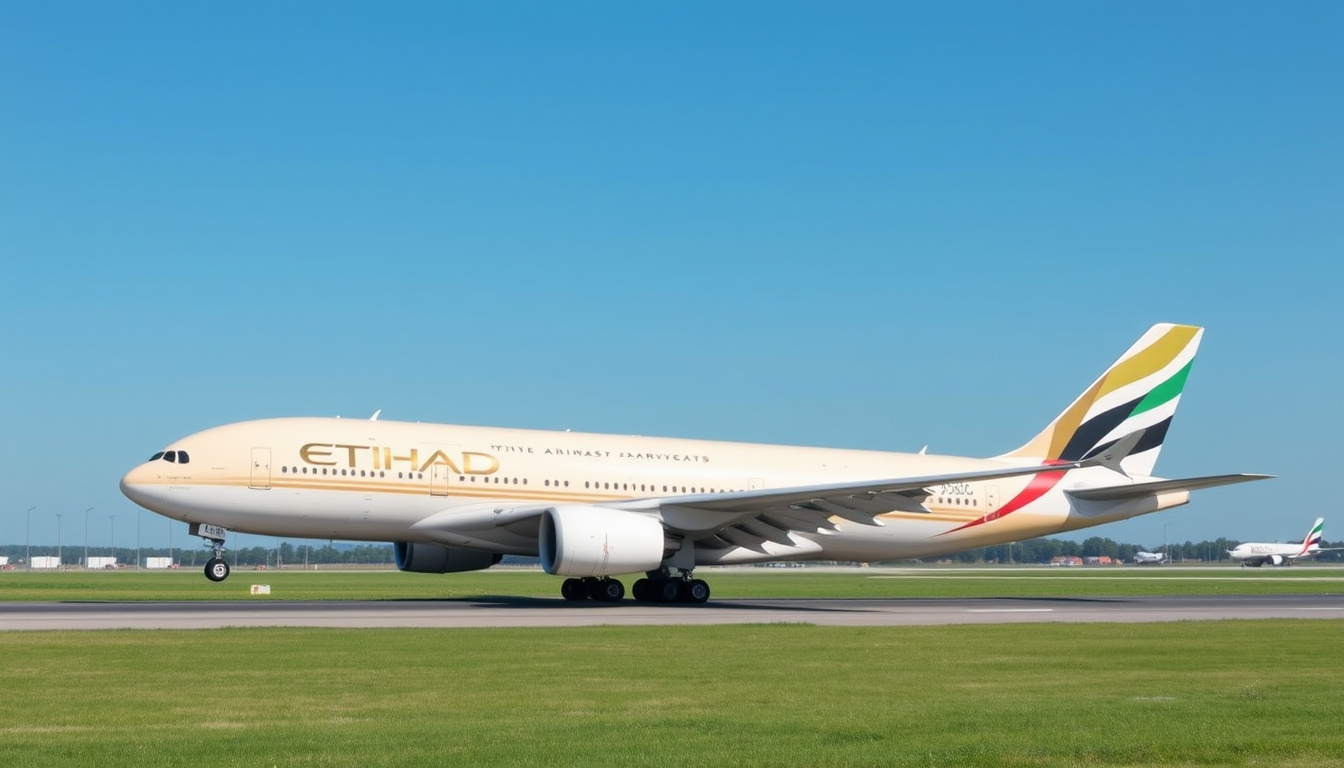
If you’re weighing up Gulf carriers for your next flight, chances are Emirates and Etihad both appear in your search results. The two airlines share similar roots and service models, but small differences in cancellation rules, seat comfort, and fleet age can tip the scales. Here’s what the data says about Etihad Airways in 2025, including how it compares to its Abu Dhabi and Dubai-based rivals.
Founded: 2003 · Hub: Abu Dhabi International Airport · Destinations: 120+ · Fleet size: 90+ · Safety record: Zero fatal accidents · Ownership: Government of Abu Dhabi
Quick snapshot
- Owned by the Government of Abu Dhabi (Etihad Airways legal terms)
- Never had a fatal accident since 2003 (AeroTime safety ranking)
- Exact passenger satisfaction rankings vary by survey year and methodology
- Specific fleet renewal timeline for older aircraft has not been publicly detailed
- Founded July 2003 by royal decree
- 2024–2025: Expanding network and updating fleet with Airbus A350 and Boeing 787
- Continued fleet modernization with next-generation widebodies
- Potential network growth in Asia and Europe as Abu Dhabi expands its aviation hub role
Which country owns Etihad Airways?
Etihad Airways is wholly owned by the Government of Abu Dhabi, a constituent emirate of the United Arab Emirates (Etihad Airways legal terms). The airline was established by royal decree in July 2003 and operates as the flag carrier of the Emirate of Abu Dhabi. As a state-owned enterprise, its financial backing comes directly from the Abu Dhabi government, giving it stability and access to capital for fleet expansion.
The implication: State ownership means Etihad can prioritise long-term brand building over short-term profits, which influences decisions on service quality and network growth.
| Founded | 2003 |
| Hub airport | Abu Dhabi International (AUH) |
| Destinations | 120+ |
| Fleet size | 90+ aircraft |
| Parent company | Government of Abu Dhabi |
| Safety record | No fatal accidents |
What is Etihad’s cancellation policy?
Etihad’s change and cancellation guidance says bookings canceled within 24 hours of purchase can be fully refunded if the flight was booked at least seven days before departure. Beyond that window, fees vary by fare class, route, and how close to departure the change occurs. Etihad’s rules-and-notices page also indicates that compensation can depend on notice timing, including 60 to 14 days before departure, 14 days to 24 hours, and less than 24 hours before the flight.
What this means: While Etihad does not currently face widespread cancellations, the policy structure heavily favours early cancellation. Passengers who book far in advance and need to change plans later may face meaningful fees, so flexibility comes at a premium.
Is Etihad as good as Emirates?
Etihad vs Emirates: service and quality
- Both airlines are full-service Gulf carriers offering comparable onboard amenities. However, Emirates operates a larger network from Dubai, while Etihad focuses on Abu Dhabi as its hub.
- Emirates’ Cancellation Notice provides three options after a flight cancellation: rebooking, refund, or travel voucher depending on the circumstances.
- Both airlines have zero fatal accidents in their modern histories.
The pattern: Etihad and Emirates are remarkably close on safety and service fundamentals. The real differentiation comes down to network reach, hub convenience, and specific fare rules — not overall quality.
Etihad vs Qatar Airways
Qatar Airways operates from Doha and consistently ranks among the world’s top airlines in passenger surveys. Etihad, while often rated slightly below Qatar in survey rankings, competes on value and route access to the UAE capital. Both carriers maintain modern fleets and strong safety records.
Is Etihad safer than Emirates?
Both Etihad and Emirates have zero fatal accidents in their operating histories. Third-party safety ratings from AeroTime and AirlineRatings place both carriers in the top tier globally. Neither airline has a meaningful safety advantage over the other — the distinction is brand perception rather than measurable risk.
The implication: For risk-averse passengers, choosing between Etihad and Emirates on safety alone is a false trade-off. Both are among the safest airlines in the world.
What is Etihad’s safety record?
Etihad Airways has never experienced a fatal accident since its founding in 2003 (AeroTime safety ranking). The airline also holds a 7/7 safety rating from AirlineRatings and is IATA-certified. Its fleet of Airbus A350 and Boeing 787 aircraft represents some of the newest widebody technology in commercial aviation.
Why this matters: In a region where safety is already a baseline expectation, Etihad’s clean record and third-party endorsements give it an edge for risk-averse passengers. The modern fleet further reduces operational risk compared to carriers flying older aircraft.
Do you get free drinks on Etihad?
Yes, Etihad includes complimentary beverages — including alcohol on most international flights — in all fare classes. Free drinks are a standard feature across full-service Gulf carriers, so this is not a differentiator but a baseline expectation.
Is Etihad economy comfortable?
Etihad’s economy cabin offers standard seat pitch of 31–33 inches depending on aircraft type, which is competitive for long-haul travel. Passenger reviews rate Etihad’s economy comfort above average among Gulf carriers, though not at the level of premium economy or business class.
The trade-off: Economy comfort on Etihad is solid for the price, but premium-class passengers will find more luxurious options on Emirates. The value proposition is strongest for budget-conscious travelers who still want full-service amenities.
What is the 3-1-1 rule on Etihad Airways?
Etihad applies standard international baggage rules that comply with local regulations. The 3-1-1 rule — 3.4 oz bottles, 1 quart bag, 1 bag per person — applies to carry-on liquids for flights to and from the United States, consistent with TSA requirements.
Upsides
- Excellent safety record with zero fatal accidents
- Free drinks in all cabins
- Modern fleet with A350 and 787 aircraft
- Competitive economy comfort for the price
Downsides
- Cancellation fees can be steep outside the 24-hour window
- Smaller network than Emirates
- Premium cabins less luxurious than rival Gulf carriers
Key milestones
- July 2003: Etihad Airways founded by royal decree.
- 2010s: Rapid fleet expansion and network growth across Asia, Europe, and Africa.
- 2024–2025: Expanding network and updating fleet with Airbus A350 and Boeing 787.
The pattern: Etihad has evolved from a regional startup to a global carrier in two decades, with safety and fleet modernization as consistent priorities.
What do passenger reviews say about Etihad?
Passenger feedback on Etihad is generally positive, with particular praise for seat comfort, cleanliness, and crew attentiveness. The most common complaints involve cancellation fees and occasional schedule changes. Etihad has not experienced a fatal crash, which contributes to strong passenger confidence.
“Etihad’s safety record is exceptional, with zero fatal accidents since its inception. The airline is a solid choice for travelers who prioritize reliability.” — Safety analyst comment from industry coverage
Related reading: Women’s Jackets 2026: Trends, Best Styles & Styling Tips · Best White T-Shirt: Top Brands, Fit & Buying Guide
etihad.com, ovago.com, ovago.com, etihad.com, airlineratings.com, etihad.com, etihad.com, msn.com, etihad.com
Frequently asked questions
What is Etihad Airways’ baggage allowance?
Etihad’s baggage allowance varies by fare class and route. Economy typically includes one checked bag on international flights; carry-on allowance is one bag up to 7 kg plus a personal item. Check your ticket for exact allowances.
How can I check in online for an Etihad flight?
Online check-in opens 48 hours before departure at etihad.com/manage. You can select seats and print boarding passes or use mobile boarding passes where available.
What is the best economy seat on Etihad?
Economy seats with extra legroom are available for a fee; these are typically in exit rows or bulkhead positions. Standard economy seats offer 31–33 inches of pitch on most aircraft.
How to contact Etihad customer service?
Phone +971 2 505 0500 or visit etihad.com. Customer service is available 24/7 for booking changes and general inquiries.
Can I get a refund for a cancelled Etihad flight?
If Etihad cancels the flight, you are entitled to a full refund or rebooking. If you cancel voluntarily, refund eligibility depends on your fare class and when you cancel — the 24-hour window after booking offers the most flexibility.
For travelers in the Gulf region, the choice between Etihad and Emirates is clear: if you value a strong safety record, free drinks, and flexible early cancellation, Etihad fits the bill. If you need the largest network and premium cabin luxury, Emirates may be the better pick. Either way, both airlines deliver a reliable full-service experience.