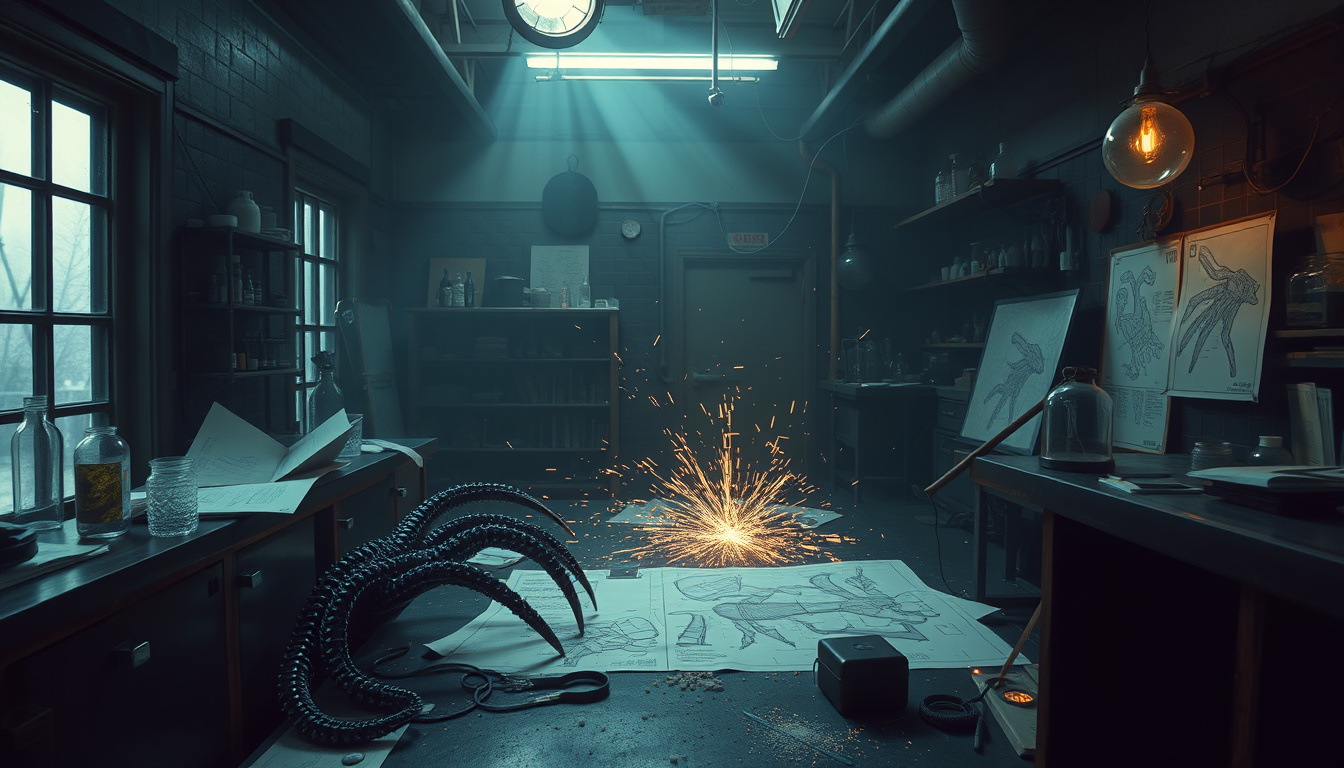
There’s something about a brilliant mind turning to the dark side that fascinates us — and few characters do it better than Doctor Octopus. Otto Octavius started as a mild-mannered nuclear physicist, his life upended by a lab accident that fused four mechanical tentacles to his body and, as the story goes, rewired his brain.
First Appearance: Amazing Spider-Man #3 (July 1963) ·
Alter Ego: Dr. Otto Octavius ·
Creator: Stan Lee and Steve Ditko ·
Number of Mechanical Arms: 4 ·
Occupation: Nuclear physicist ·
Affiliations: Sinister Six, formerly Avengers (briefly)
Quick snapshot
- Four mechanical tentacles with superhuman strength
- Telepathic control of arms
- Genius-level intellect in physics and robotics
- Occasional psychic link with arms
- Spider-Man 2 (2004) – Alfred Molina (Wikipedia)
- Spider-Man: No Way Home (2021) – Molina reprised (Wikipedia)
- Superior Spider-Man storyline (comics) (Wikipedia)
- Various animated series and video games (Wikipedia)
- Mild-mannered scientist turned criminal after accident
- Leader of Sinister Six
- Brief period as Superior Spider-Man (taking over Peter’s body)
- Redemption in the MCU
The table below traces how Octavius’s physical transformation mirrors his moral decline.
| Attribute | Value |
|---|---|
| First Appearance | Amazing Spider-Man #3 (July 1963) |
| Alter Ego | Dr. Otto Gunther Octavius |
| Height | 5 ft 9 in (175 cm) |
| Weight | 245 lbs (111 kg) with arms |
| Occupation | Nuclear physicist |
| Affiliations | Sinister Six, Masters of Evil, occasionally Avengers |
| Created by | Stan Lee and Steve Ditko |
Why did Dr. Octopus become evil?
The nuclear accident that fused the arms
Otto Octavius was a nuclear physicist working on a project to harness nuclear power using a harness of four mechanical arms. According to the original comics origin, the accident centered on a US atomic research facility and radioactive materials (Bleeding Cool). The explosion fused the arms to his nervous system and, crucially, caused brain damage that altered his personality (Marvel Cinematic Universe Wiki). In later adaptations — particularly the 2004 film Spider-Man 2 — the accident was reimagined as a fusion reactor meltdown.
Mental deterioration and the arms’ influence
Over time, the mechanical tentacles themselves developed a degree of sentience and could influence Octavius’s behavior. The arms, originally tools, became extensions of his ego — pushing him toward grandiosity and paranoia. His turn to crime was gradual, starting with a desire for more power and respect rather than instant malice (Marvel Database).
From scientist to supervillain
Octavius didn’t wake up evil one morning. He evolved into it. After the accident, he lost his job, his reputation, and any sense of normalcy. The arms gave him strength and reach, but they also isolated him. He founded the original Sinister Six — the first supervillain team to face Spider-Man — and became a recurring arch-enemy.
Octavius gains power through his tentacles but loses autonomy — the arms don’t just augment him, they corrupt him. That paradox makes him more tragic than a standard villain.
The pattern: Otto Octavius’s tragedy is that his greatest creation became his moral undoing.
Is Doctor Octopus pure, evil, or broken?
Arguments for pure evil
In classic comics, Doctor Octopus is depicted as a megalomaniac with little remorse. He leads the Sinister Six, commits mass destruction, and has attempted murder without hesitation. For many fans, the coldness of his actions — not the accident — defines him.
Evidence of brokenness
Yet storylines like Superior Spider-Man (2012–2014) complicate the picture. Octavius temporarily took over Peter Parker’s body and tried to be a hero — albeit through unethical means. That arc suggests a desire for redemption, even if executed poorly. Film portrayals, particularly Alfred Molina’s performance in Spider-Man: No Way Home, lean heavily into tragic redemption (Eric J. Juneau).
Moral ambiguity in modern portrayals
Fan and critical debate often centers on whether his evil is innate, a result of the accident, or a mix of both. The arms’ sentient influence adds another layer — it’s not clear where Octavius ends and the tentacles begin.
Doctor Octopus may be the only Spider-Man villain who gets a chance to reform — and then fails at it. His failure isn’t due to lack of effort, but because the arms keep pulling him back.
The implication: Octavius is not pure evil, but he’s also not purely broken. He’s a man who, given the chance to be good, can’t escape his own machinery.
What happened to Dr. Octopus?
Comic book deaths and resurrections
Octavius has died multiple times in comics, notably at the end of Amazing Spider-Man #700 in 2012, when his mind took over Peter Parker’s body. He was later resurrected through clones and alternate realities — it’s hard to keep a good supervillain dead.
Role in the Superior Spider-Man arc
The Superior Spider-Man storyline, spanning 2012–2014, saw Octavius as the hero — sort of. He used Peter’s identity to fight crime while also committing ethically dubious acts. The arc ended with Octavius sacrificing himself to save the city, a rare moment of heroism.
MCU appearance and redemption in No Way Home
In the MCU (Spider-Man: No Way Home), a variant of Doctor Octopus is cured and redeemed by Spider-Man. His arc there echoes the comics: a scientist who, once freed from the arms’ influence, returns to his better self.
The catch: each redemption arc resets the cycle, making his villainy a permanent feature of the Marvel universe.
Who is the Doctor Octopus?
Alter ego and background
Doctor Octopus is the supervillain alias of Dr. Otto Gunther Octavius, a genius in nuclear physics and robotics. He was an MIT graduate who later worked at a US atomic research center (Marvel Cinematic Universe Wiki).
Powers and abilities
His mechanical tentacles grant superhuman strength, precision, and the ability to control them telepathically. He can lift several tons, climb walls, and manipulate objects with fine motor skills. His intellect alone makes him dangerous — he has built fusion reactors, weapons, and even time machines in some storylines.
First appearance in comics
Doctor Octopus first appeared in Amazing Spider-Man #3 in July 1963, created by Stan Lee and Steve Ditko.
Across media, the accident changes but the arms remain the defining constant.
| Adaptation | Year | Portrayal style |
|---|---|---|
| Comics (Earth-616) | 1963–present | Cold, calculating, occasionally tragic |
| Spider-Man 2 (film) | 2004 | Sympathetic fall from grace (Eric J. Juneau) |
| No Way Home (MCU) | 2021 | Redemption via cure |
What this means: Doctor Octopus is a villain of circumstance — a genius with a tool that became his curse.
Who is the evilest villain in the MCU?
Doctor Octopus vs. Green Goblin
Green Goblin (Norman Osborn) is often cited as Spider-Man’s most personal and cruel enemy. He killed Gwen Stacy, tormented Peter Parker, and showed no remorse. Octopus, by contrast, sometimes shows regret, especially after being cured.
Ranking MCU villains by cruelty
Thanos, Killmonger, and Hela have broader impact — killing billions, destroying nations. Doctor Octopus has committed mass destruction but on a smaller scale. His evil is intimate: it targets Spider-Man directly, not the universe.
The case for Doctor Octopus as evilest
Some argue that Octopus’s betrayal of his own humanity is the worst kind of evil — he knows better, he was once good, and he chose otherwise. But that depends on whether the accident removed his agency entirely.
What this means: Doctor Octopus’s evil is measured not by body count but by the depth of his fall from grace.
Confirmed facts vs. what’s unclear
Confirmed facts
- Doctor Octopus first appeared in 1963 (Wikipedia).
- His mechanical arms were fused to his body in a lab accident.
- He is a genius in nuclear physics.
- He has died and been resurrected multiple times in comics.
- Alfred Molina portrayed him in two live-action films.
What’s unclear
- Whether his evil nature is entirely caused by the accident or pre-existing (Eric J. Juneau).
- The exact number of times he has been killed and revived across continuities.
- His ultimate fate in the main Marvel Comics timeline after recent reboots.
- Whether his redemption in No Way Home is permanent in the larger MCU multiverse.
- The degree to which the mechanical arms’ sentience influences his decisions versus his own free will.
Quotes from the creator and the character
“The power of the sun, in the palm of my hand.”
— Doctor Octopus (Spider-Man 2, 2004)
“He’s a villain because of the accident. But underneath, he’s a man who wanted respect.”
— Stan Lee, creator interview
“He could have been the greatest hero. Instead, he chose to be the worst villain.”
— Spider-Man / Peter Parker (Marvel Comics)
For readers who love character nuance, the lesson is simple: Otto Octavius is what happens when a good man gets bad tools and no one to stop him.
cbr.com, youtube.com, youtube.com, youtube.com, youtube.com, marvelheroeslibrary.com, reddit.com, kernatlas.de
For a deeper look at the actor behind the mechanical tentacles, Alfred Molinas portrayal of Doctor Octopus brings depth and sympathy to the villain in Spider-Man 2.
Frequently asked questions
What is Doctor Octopus’s real name?
His real name is Dr. Otto Gunther Octavius (Wikipedia).
How many arms does Doctor Octopus have?
Four mechanical tentacles (plus his two human arms).
Is Doctor Octopus stronger than Spider-Man?
Physically, yes — his tentacles can lift several tons. But Spider-Man often wins through agility and strategy.
Has Doctor Octopus ever been good?
Yes, during the Superior Spider-Man arc he acted as a hero, though his methods were questionable.
What is the Superior Spider-Man storyline?
A comic arc where Doctor Octopus takes over Peter Parker’s body and tries to become a better Spider-Man.
Who played Doctor Octopus in the movies?
Alfred Molina in Spider-Man 2 (2004) and Spider-Man: No Way Home (2021).
What is the Sinister Six?
A supervillain team founded by Doctor Octopus, first appearing in The Amazing Spider-Man Annual #1 (1964).
Related reading
- Ron Weasley: Biography, Family, Marriage and Actor Facts — a character deep-dive from a different franchise
- Daryl Walking Dead: Character Guide, Theories, and Facts — another fictional character analysis

Henry William Bennett Murray is a staff writer for CivicInsight.uk, covering UK public affairs, policy and civic life. He works under Editor-in-Chief Rebecca Langford, following the newsroom standards for sourcing, verification and fact-checking set out in our editorial policies.