
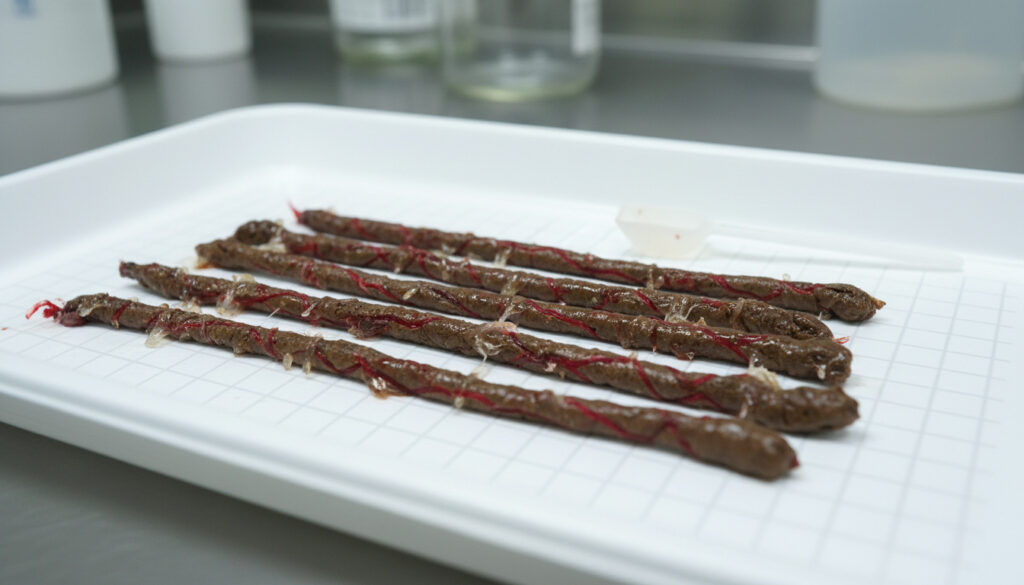
Colon cancer develops gradually over approximately a decade, often remaining silent in its earliest phases. When symptoms do emerge, changes in stool appearance frequently serve as the first observable warning signs. Understanding what these changes look like can mean the difference between early intervention and late-stage diagnosis.
Stool changes associated with colorectal cancer range from subtle alterations in caliber to visible blood or mucus. While these signs can indicate serious pathology, they also occur with numerous benign conditions. Medical professionals emphasize that persistence and pattern matter more than isolated incidents.
This guide examines the specific visual characteristics of colon cancer stool changes, distinguishes them from harmless variations, and outlines when medical evaluation becomes necessary.
What Does Colon Cancer Poop Look Like?
Narrow or Ribbon-Like Stools
Stools compressed by tumor obstruction often appear as thin as a pencil, flattened or grooved.
Blood or Red Streaks
Bright red indicates lower colon bleeding; dark tarry suggests proximal colon involvement.
Mucus Presence
White, clear, or yellowish coating may indicate inflammation or tumor secretion.
Black/Tarry Appearance
Melena indicates digested blood from higher in the gastrointestinal tract.
- Tumors narrow the colon lumen, causing pencil-thin stools that persist over time
- Blood and mucus presence often represents the earliest detectable indicators
- Not all stool changes indicate malignancy—dietary factors commonly cause temporary variations
- Fecal immunochemical tests provide at-home screening options for occult blood
- Blood color correlates with tumor location: bright red for rectal, dark for proximal colon
- Isolated incidents rarely signal cancer; persistent patterns lasting weeks warrant attention
- Advanced stages produce more dramatic obstruction symptoms than early disease
| Symptom | Description | Cancer Link |
|---|---|---|
| Narrow stools | Small-caliber or ribbon-like, often pencil-thin | High—indicates partial obstruction by tumor mass |
| Blood in stool (bright red) | Visible red streaks or coating on surface | Common in rectal or distal colon malignancies |
| Blood in stool (dark/black) | Tarry, sticky, jet-black appearance | Suggests proximal colon bleeding; digested blood |
| Mucus | White, clear, or yellowish coating or threads | Inflammation or tumor-induced secretions |
| Change in bowel habits | Persistent constipation or diarrhea alternating | Tumor interfering with normal peristalsis |
| Incomplete evacuation | Sensation of retained stool after defecation | Rectal tumor creating false urge |
| Abdominal pain/cramping | Gas, bloating, or cramping without resolution | Partial obstruction or inflammation |
| Unexplained weight loss | Involuntary loss of 5+ percent body weight | Metabolic changes from advanced disease |
Colon Cancer Unhealthy Stools Pictures and Examples
Visual documentation of stool changes helps patients recognize when normal variation crosses into concerning territory. Medical imaging and clinical photography typically capture four distinct presentations associated with colorectal malignancy.
Narrow Caliber Obstruction Patterns
When tumors partially obstruct the descending colon or rectum, stool must squeeze through restricted passages. The resulting feces appear flattened, ribbon-like, or consistently narrower than 2 centimeters in diameter. Johns Hopkins Medicine describes stools becoming “as thin as a pencil.” Unlike temporary changes from dietary fiber reduction, these narrow stools persist for weeks.
Hemorrhagic Presentations
Photographic examples distinguish between fresh bleeding and occult blood. Bright crimson streaks coating the stool surface typically indicate distal lesions, while maroon or wine-colored mixing suggests sigmoid involvement. The Mayo Clinic notes that blood may be visible to the naked eye or so mild it requires chemical detection.
Mucus and Exudate Indicators
Inflammatory responses to tumor growth produce visible mucus strands or gelatinous coatings. These appear distinct from the small mucus quantities normally present in stool, often presenting as substantial cloudy or clear layers adhering to fecal matter.
Bright red blood typically indicates bleeding in the lower colon or rectum, while dark, black, tarry stools suggest bleeding higher in the colon where digestion has occurred. This distinction helps physicians locate potential tumors during diagnostic evaluation.
What to Look For in Colon Cancer Stool Changes
Effective monitoring requires distinguishing between transient digestive disturbances and persistent pathological changes. Johns Hopkins Medicine emphasizes that duration and consistency matter more than isolated appearance.
Texture and Form Alterations
The Bristol Stool Scale provides a framework for documenting changes. Types 1 and 2 (hard, lumpy) or Type 6 and 7 (mushy, watery) that persist beyond two weeks may indicate malignancy. Specifically, stools that suddenly become consistently thin or fragmented without dietary explanation require evaluation.
Frequency and Urgency Patterns
A persistent urge to defecate despite empty bowels—termed tenesmus—suggests rectal involvement. Patients may notice increased frequency without corresponding volume, or alternating episodes of constipation and diarrhea. While How to Relieve Trapped Wind may provide temporary relief for associated gas and bloating, persistent symptoms demand medical assessment.
Differentiating Temporary vs Persistent Changes
Viral infections, food intolerances, and stress commonly alter bowel habits for 48-72 hours. However, changes persisting beyond two weeks, particularly those accompanied by abdominal discomfort that doesn’t resolve, warrant professional evaluation.
Early Signs of Colorectal Cancer in Poop
Early-stage colon cancer frequently produces subtle stool changes before causing systemic symptoms. The Cleveland Clinic identifies that many patients overlook initial signs because they mimic common digestive complaints.
Subtle Caliber Reductions
Before becoming pencil-thin, stools may show slight flattening or grooving. These early changes result from small polyps creating partial obstructions. Regular observation helps establish baseline appearance for comparison.
Occult Blood Detection
Not all bleeding remains visible. Guaiac-based or immunochemical testing detects microscopic blood quantities. The Rocky Mountain Cancer Centers note that even mild, unexplained bleeding requires investigation.
While small amounts of blood warrant scheduled medical evaluation, large quantities of blood or bleeding accompanied by dizziness, weakness, or rapid heart rate require immediate emergency room visitation.
Early detection through screening colonoscopy often occurs before stool changes become apparent. Current guidelines recommend screening beginning at age 45 for average-risk adults, potentially identifying malignancy before symptomatic changes develop.
How Stool Changes Progress Over Time
Colorectal cancer stool characteristics evolve alongside disease progression. The Mayo Clinic describes distinct phases of gastrointestinal symptom development.
- Stage 1-2: Subtle narrowing and occasional mucus strands appear. Blood may be microscopic only, detectable through FIT testing but not always visible. Patients might notice slight caliber changes or increased gas.
- Stage 2-3: Visible blood becomes common, with stools growing progressively thinner. Pencil-thin configurations appear regularly. Patients experience persistent diarrhea or constipation, increased mucus production, and more frequent bathroom visits.
- Stage 4: Advanced obstruction manifests as severe changes—complete bowel obstruction may occur, with stool appearing as small, ribbon-like pieces or ceasing altogether. Compromised colon function produces tarry stools from upper GI bleeding or significant mucus-only discharge.
What Stool Symptoms Confirm vs. What Remains Uncertain
Stool appearance provides clues, not diagnoses. Understanding the boundaries between established medical knowledge and diagnostic uncertainty prevents both alarm and complacency.
Established Indicators
- Persistent narrow stools indicating mechanical obstruction
- Visible blood requiring immediate professional evaluation
- Tarry black stools confirming upper GI bleeding
- Changes persisting beyond two weeks warranting colonoscopy
- Mucus accompanied by blood or pain signaling inflammation
Uncertain or Benign Causes
- Single episode changes from dietary fiber fluctuations
- Temporary constipation from dehydration or travel
- Blood from minor hemorrhoids that resolves within days
- Mucus from self-limiting viral infections
- Color changes from food dyes or medications
The Houston Methodist emphasizes that new, unexplained symptoms lasting more than one to two months warrant medical evaluation, regardless of apparent benign explanations.
Why Colon Cancer Alters Stool Appearance
Colorectal malignancy affects stool characteristics through mechanical obstruction, bleeding, and inflammatory response. Tumor growth within the colon lumen physically narrows passage diameters, compressing fecal matter into thinner configurations. This mechanical effect explains the characteristic ribbon or pencil-thin stools associated with advanced disease.
Bleeding occurs as tumors ulcerate or erode vascular tissue within the mucosal lining. The resulting blood mixes with stool or coats its surface depending on lesion location. Swollen Lymph Nodes Neck and other systemic symptoms may accompany advanced disease, though localized stool changes typically precede generalized lymphatic involvement.
Screening adherence dramatically impacts detection timing. Because the disease develops slowly over approximately ten years, regular colonoscopy can identify and remove precancerous polyps before they produce stool changes. Current medical consensus holds that early detection through screening leads to cure rates exceeding 90 percent.
Medical Authority on Stool Indicators
Leading medical institutions provide specific guidance on interpreting stool changes. Their clinical observations inform screening protocols and diagnostic criteria.
Colon cancer can affect your stools, causing narrow stool or blood in the stool. If you notice blood, talk to your doctor. You might be able to test at home.
— Mayo Clinic
Narrow or ribbon-like stools are a notable warning sign… stools can become as thin as a pencil.
— Johns Hopkins Medicine
Constipation alone does not indicate colon cancer. Temporary constipation can result from dietary changes, poor nutrition, stress, dehydration, or lack of physical activity.
Key Takeaways on Bowel Cancer Stool Signs
Colon cancer produces distinct stool changes including narrowing, blood, and mucus that persist over weeks rather than days. While these signs warrant medical evaluation, they are not diagnostic—only colonoscopy can confirm malignancy. Adults experiencing persistent changes lasting two weeks or more should consult healthcare providers, while those over 45 benefit from regular screening regardless of symptoms. Early detection remains the most reliable strategy for favorable outcomes.
Frequently Asked Questions
What does blood in the stool mean for bowel cancer?
Blood indicates bleeding from tumor ulceration or erosion. Bright red suggests rectal or distal colon involvement; dark tarry blood indicates higher lesions. Any persistent blood requires medical evaluation.
Can mucus in stool indicate colon cancer?
Yes, excessive mucus may signal tumor-induced inflammation or secretion. However, mucus also occurs with infections and IBS. Persistence beyond several weeks differentiates concerning from benign causes.
Are narrow stools always cancer?
No. Temporary narrowing results from low fiber, dehydration, or muscle tension. Persistent pencil-thin stools lasting weeks suggest obstruction and require evaluation.
How long should I wait before seeing a doctor for stool changes?
Consult your physician if changes persist beyond two weeks without obvious dietary cause. Immediate care is needed for large blood amounts or severe abdominal pain.
Can hemorrhoids be mistaken for colon cancer?
Yes. Both cause rectal bleeding. However, hemorrhoid bleeding typically fluctuates with flare-ups, while cancer bleeding persists or worsens progressively.
What color is colon cancer blood?
Color varies by location: bright red for rectal/distal, darker red for sigmoid, and black/tarry for proximal colon or right-sided tumors where digestion occurs.
Does colon cancer cause pencil-thin stools?
Advanced tumors can compress the colon lumen, producing pencil-thin or ribbon-like stools. This typically indicates partial obstruction requiring immediate assessment.

Henry William Bennett Murray is a staff writer for CivicInsight.uk, covering UK public affairs, policy and civic life. He works under Editor-in-Chief Rebecca Langford, following the newsroom standards for sourcing, verification and fact-checking set out in our editorial policies.