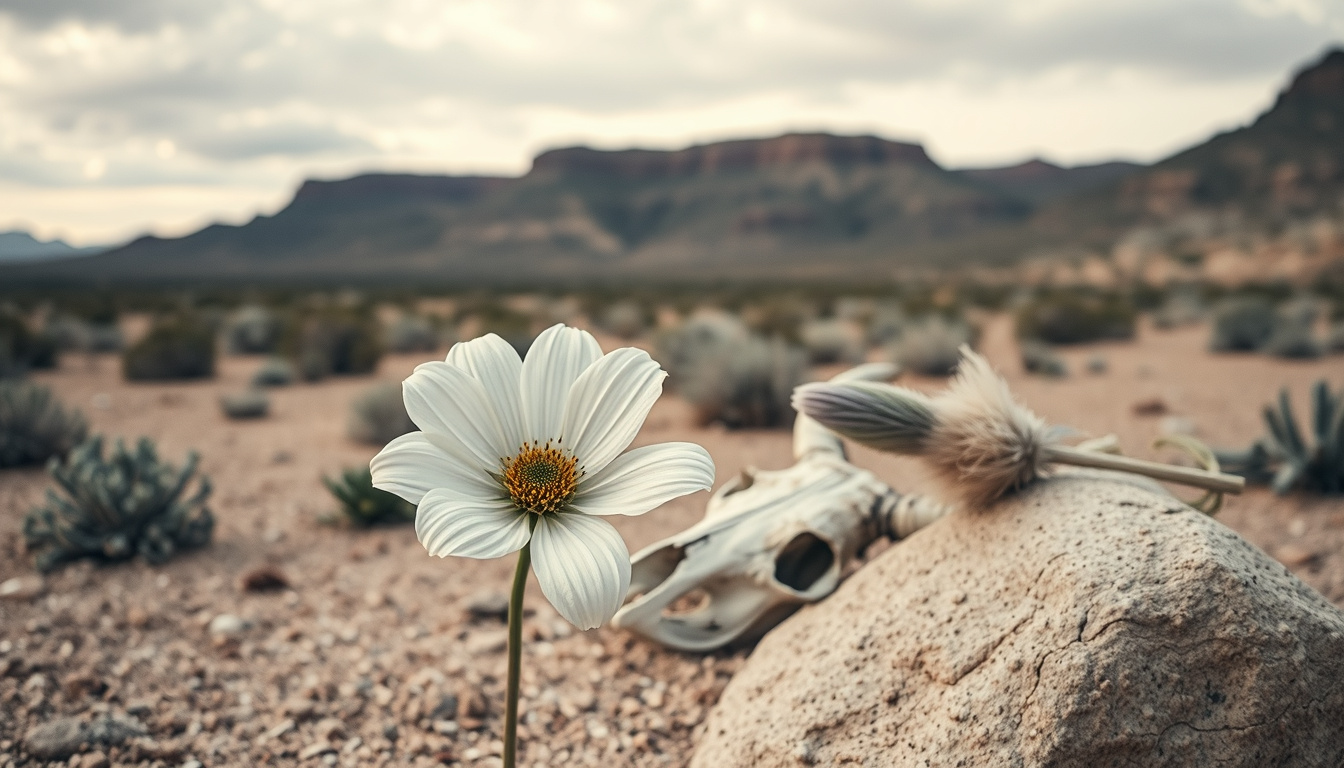
Few artists can be recognized by a single flower, but Georgia O’Keeffe spent ninety-eight years making sure the world would remember hers. Born on November 15, 1887 in Sun Prairie, Wisconsin, she was by the mid-1920s a defining voice of American modernism, according to the Georgia O’Keeffe Museum (museum biography), and this guide separates the documented biography — her vision loss, her estate, her most famous quotes — from the interpretations that still stir debate.
Born: November 15, 1887 · Died: March 6, 1986 · Started painting: age 10 · Estate at death: over $76 million · Known for: mother of American modernism
Quick snapshot
- Born , near Sun Prairie, Wisconsin (Georgia O’Keeffe Museum (museum biography)) (Whitney Museum of American Art (artist profile))
- Her art records emotional and sensory responses to the rhythms and forms of the natural world (Whitney Museum of American Art (artist profile))
- Painted her last unassisted oil painting in 1972 (Georgia O’Keeffe Museum (museum biography)) (Whitney Museum of American Art (artist profile))
- The exact timing and full scope of her vision loss is not precisely documented (Vision and Art Project (specialist health resource))
- Her relationship with later-life assistant Juan Hamilton (Georgia O’Keeffe Museum (museum biography)) remains a subject of speculation (Vision and Art Project (specialist health resource))
- Her feelings about the “yonic” reading of her flowers were complex — she publicly denied it, and critics kept emphasizing it (Whitney Museum of American Art (artist profile)) (Vision and Art Project (specialist health resource))
- Alfred Stieglitz showcased her work in 1916, launching her career (Georgia O’Keeffe Museum (museum biography)) (Georgia O’Keeffe Museum (museum overview))
- First traveled to northern New Mexico in the summer of 1929 (Georgia O’Keeffe Museum (museum biography)) (Georgia O’Keeffe Museum (museum overview))
- New Mexico subjects included bones, shells, and desert architecture (Georgia O’Keeffe Museum (museum overview))
- See her works at the Georgia O’Keeffe Museum in Santa Fe (Georgia O’Keeffe Museum (museum overview))
- Her standing as a major figure of 20th-century modernism is secured by museum collections and market records (Georgia O’Keeffe Museum (museum biography))
Seven facts, one pattern: a farm girl turned avant-garde icon whose biography moved from Wisconsin to New York to New Mexico.
| Label | Value |
|---|---|
| Full Name | Georgia Totto O’Keeffe |
| Born | , Sun Prairie, Wisconsin (Georgia O’Keeffe Museum (museum biography)) |
| Died | , Santa Fe, New Mexico (Georgia O’Keeffe Museum (museum biography)) |
| Movement | American Modernism (Whitney Museum of American Art (artist profile)) |
| Known For | Enlarged flowers, New York skyscrapers, New Mexico landscapes (Whitney Museum of American Art (artist profile)) |
| Spouse / Partner | Alfred Stieglitz (married 1924–1946) (Georgia O’Keeffe Museum (museum biography)) |
| Iconic Quote | “I have had a wonderful life.” (Georgia O’Keeffe Museum (museum biography)) |
At what age did Georgia O’Keeffe start painting?
O’Keeffe began painting at the age of 10, according to the Georgia O’Keeffe Museum (museum biography).
Where was Georgia O’Keeffe born?
- Born , near Sun Prairie, Wisconsin (Georgia O’Keeffe Museum (museum biography))
- Second of seven children in her family (Georgia O’Keeffe Museum (museum biography))
The farm gave her an early familiarity with the natural forms she would later enlarge — leaves, flowers, and bones were part of the landscape long before they became subjects.
What art schools did she attend?
- School of the Art Institute of Chicago, 1905–1906 (Georgia O’Keeffe Museum (museum biography))
- Art Students League in New York, 1907–1908 (Georgia O’Keeffe Museum (museum biography))
- Studied the ideas of Arthur Wesley Dow, which changed her artistic direction (Georgia O’Keeffe Museum (museum biography))
Dow’s philosophy — that a painting could be built from color, line, and arrangement rather than imitation — became the foundation of her abstract language, which she later developed through charcoal drawings while teaching in West Texas (Georgia O’Keeffe Museum (museum biography)).
Who discovered her talent?
- Photographer and gallery owner Alfred Stieglitz showcased her work in 1916 (Georgia O’Keeffe Museum (museum biography))
- Stieglitz married O’Keeffe in 1924, and the partnership lasted until his death in 1946 (Georgia O’Keeffe Museum (museum biography))
The relationship was professional and personal at once: Stieglitz promoted her, photographed her, and eventually married her. When he died in 1946, O’Keeffe built the second half of her career on her own.
The implication: O’Keeffe’s rise was propelled by training, timing, and a mentor who knew how to make an artist famous — but the abstract language she spoke was entirely her own.
What is the significance of Georgia O’Keeffe’s paintings?
What are the main themes in O’Keeffe’s work?
- Flowers, leaves, rocks, shells, bones, New York cityscapes, and northern New Mexico architecture and landscapes (Georgia O’Keeffe Museum (museum overview))
- Emotional and sensory responses to the rhythms and forms of the natural world (Whitney Museum of American Art (artist profile))
She is widely described as the Mother of American modernism, and the museum that bears her name identifies her as one of the significant artists of 20th-century modern art (Georgia O’Keeffe Museum (museum biography)). The label stuck because she did what few American artists of her generation managed: she made nature feel modern without abandoning it.
How did her flower paintings change modern art?
- By the mid-1920s, her enlarged-flower and skyscraper paintings made her an important American artist (Georgia O’Keeffe Museum (museum biography))
- Her enlarged botanical subjects can move between representation and abstraction through distorted scale (Whitney Museum of American Art (artist profile))
The trick was scale. A flower that normally fits in a hand became six feet tall on canvas, forcing viewers to look at petals the way abstract painters asked us to look at color and shape. The Whitney links this to a broader modernist interest in abstract painting and music as nonverbal emotional expression (Whitney Museum of American Art (artist profile)).
What does the “yonic” interpretation mean?
- Critics have read her flowers as representing female genitalia — a “yonic” symbolism (Whitney Museum of American Art (artist profile))
- O’Keeffe publicly denied the reading; critics have continued to emphasize it
The term “yonic” describes symbolism that evokes female genitalia, and it became the most famous — and most contested — lens applied to O’Keeffe’s flowers. Her own position was consistent: she publicly denied the interpretation, and that denial has itself become part of the paintings’ mythology.
A painter who spent decades resisting the label “feminist icon” is now remembered largely because of the feminist reading she rejected — the denial is part of the story.
What this means: O’Keeffe’s significance is double-edged — she is celebrated for expanding abstraction, and reduced by the very symbolism she spent a lifetime disputing.
What was Georgia O’Keeffe’s famous quote?
What were her last words?
“I have had a wonderful life.” — reported as her last words, and the most quoted sentence in the O’Keeffe archive.
The sentence is usually attributed to her final months, when she was 98, blind, and living in Santa Fe (Georgia O’Keeffe Museum (museum biography)).
What did she say about art and creativity?
- “I have been trying to create an equivalent for what I feel.” (Georgia O’Keeffe Museum (museum biography))
For an artist so closely tied to recognizable flowers and bones, the line is a useful correction: O’Keeffe’s goal was never botanical accuracy — it was translating emotion into visual form.
What is her most famous statement about her life?
- “I have had a wonderful life.” — reported last words (Georgia O’Keeffe Museum (museum biography))
- “I can’t see what I’m doing.” — reportedly said as her eyesight failed (Vision and Art Project (specialist health resource))
Both lines share the same flat honesty. O’Keeffe never performed tragedy in public; she described her circumstances and moved on.
The implication: her most-quoted lines are short, unsentimental, and final — which is why they still sound like her.
Why did Georgia O’Keeffe go blind?
The documented cause of O’Keeffe’s vision loss was macular degeneration — a slow breakdown of central vision, not a sudden injury (Georgia O’Keeffe Museum (museum biography)).
Was it a sudden loss?
- O’Keeffe experienced macular degeneration and failing vision late in life (Georgia O’Keeffe Museum (museum biography))
- First signs may have appeared as early as 1964, according to a specialist account (Vision and Art Project (specialist health resource))
- A 1972 letter attributed to O’Keeffe describes clouding in both eyes and uncertainty about treatment (Vision and Art Project (specialist health resource))
The loss was not a single event. She painted her last unassisted oil painting in 1972 (Georgia O’Keeffe Museum (museum biography)), and her failing eyesight forced her into retirement from painting in 1984 (Georgia O’Keeffe Museum (museum overview)). The timeline is measured in decades, not days.
How did she continue to paint?
- With help from assistants, drawing on memory and imagination (Georgia O’Keeffe Museum (museum biography))
- Potter Juan Hamilton became one of her most important assistants in her later years (Georgia O’Keeffe Museum (museum biography))
- In 1977, O’Keeffe said she could still see what she wanted to paint (Vision and Art Project (specialist health resource))
The assistants handled the physical labor her failing eyesight made difficult, but the compositions remained hers.
What is macular degeneration?
- A condition affecting the macula, the central part of the retina (Vision and Art Project (specialist health resource))
- It erodes the sharp central vision that detail-oriented work like painting depends on (Vision and Art Project (specialist health resource))
The slow onset mattered: O’Keeffe had years to adjust her process before retirement, which is why her late career looks more like adaptation than collapse.
The blindness narrative often skips the middle act — from suspected signs in 1964 to her last unassisted painting in 1972, she was still finding ways to work as her central vision failed.
Why this matters: O’Keeffe’s late career is usually framed as a fight against blindness, but the record shows a quieter process — she adapted, delegated, and retired only when the physical limits became absolute.
What was Georgia O’Keeffe worth when she died?
How much was her estate valued at?
- The estate was valued at over $76 million (Georgia O’Keeffe Museum (museum biography))
- The estate was heavily contested before it eventually benefited the Georgia O’Keeffe Foundation (Georgia O’Keeffe Museum (museum biography))
The figure made her one of the most financially successful American artists of her generation, but the headlines after her death were less about the art and more about the fight over who controlled it.
Who inherited her fortune?
- The estate was heavily contested but eventually substantially benefited the Georgia O’Keeffe Foundation (Georgia O’Keeffe Museum (museum biography))
- The precise nature of her relationship with Juan Hamilton remains a subject of speculation (Georgia O’Keeffe Museum (museum biography))
That foundation now anchors the institutional home of her work: the Georgia O’Keeffe Museum in Santa Fe (Georgia O’Keeffe Museum (museum overview)).
What is the most expensive O’Keeffe painting ever sold?
- Jimson Weed/White Flower No. 1 sold for $44.4 million, a record for a female artist at the time (Georgia O’Keeffe Museum (museum biography))
The sale happened years after her death, but it confirmed what collectors had long understood: the market for O’Keeffe’s flowers had no ceiling in sight.
The $44.4 million record made O’Keeffe a financial benchmark, but it also turned her intimate flower studies into luxury assets — the opposite of the “equivalent for what I feel” she said she was painting.
What this means: the money question is really a legacy question — the contested estate and the record auction price are two sides of the same fact: O’Keeffe’s work became American art’s blue-chip property.
Georgia O’Keeffe biography: a timeline
Ten dates, one pattern: nearly every turning point after 1929 runs through New Mexico — a biography that begins in Wisconsin and ends in Santa Fe (Georgia O’Keeffe Museum (museum biography)).
| Date | Event |
|---|---|
| Born in Wisconsin. | |
| 1905–1906 | Studied at the Art Institute of Chicago. |
| 1907–1908 | Studied at the Art Students League in New York. |
| Alfred Stieglitz showcases her work, launching her career. | |
| Marries Alfred Stieglitz. | |
| First trip to New Mexico, which becomes her spiritual home. | |
| Stieglitz dies; O’Keeffe moves permanently to New Mexico. | |
| Loses most of her vision to macular degeneration; paints her last unassisted oil painting. | |
| Awarded the Presidential Medal of Freedom. | |
| Dies in Santa Fe at the age of 98. |
The compressed view hides the slow decline: specialists suggest the first signs of macular degeneration may have appeared as early as 1964 (Vision and Art Project (specialist health resource)).
The pattern: every turning point in O’Keeffe’s life after 1929 runs through New Mexico — the landscape shaped the second half of her career and her final chapter.
Confirmed facts vs. what’s unclear
Here is where the record is solid and where it gets speculative.
Confirmed facts
- Born , in Wisconsin (Georgia O’Keeffe Museum (museum biography))
- Suffered from macular degeneration late in life (Georgia O’Keeffe Museum (museum biography))
- Awarded the Presidential Medal of Freedom in 1977 (Georgia O’Keeffe Museum (museum biography))
What’s unclear
- The exact timing and full scope of her vision loss — sources suggest possible signs as early as 1964 (Vision and Art Project (specialist health resource))
- The precise nature of her relationship with assistant Juan Hamilton (Georgia O’Keeffe Museum (museum biography))
- The full context of her feelings about the “yonic” reading of her flowers (Whitney Museum of American Art (artist profile))
- Whether she ever accepted the feminist artist label (Whitney Museum of American Art (artist profile))
The distinction matters: O’Keeffe’s confirmed biography is long on work and short on scandal; the speculation around her is mostly other people’s narratives.
Georgia O’Keeffe in her own words
Three lines sum up how she spoke — and how the art world spoke about her.
“I have been trying to create an equivalent for what I feel.”
— Georgia O’Keeffe, on her approach to abstraction (Georgia O’Keeffe Museum (museum biography))
“I can’t see what I’m doing.”
— Georgia O’Keeffe, on losing her eyesight (Vision and Art Project (specialist health resource))
“O’Keeffe’s art records emotional and sensory responses to the rhythms and forms of the natural world.”
— Whitney Museum of American Art (Whitney Museum of American Art (artist profile))
The implication: side by side, O’Keeffe’s words and the Whitney’s description agree — her subject was never “flowers” but what flowers made her feel.
What O’Keeffe leaves behind
O’Keeffe’s life keeps producing the same contradiction: a woman who insisted her flowers were just flowers now anchors a market, a museum, and a feminist canon she never signed up for. For collectors, the implication is clear: demand has only grown since the auction record, and the estate valuation now reads as a conservative baseline. For first-time viewers, the choice is equally clear — find a wall with a real O’Keeffe on it and let the scale do the arguing, or keep debating flowers you’ve only seen in photos.
access-ok.okeeffemuseum.org, denverartmuseum.org, mutualart.com, artdaily.com
Frequently asked questions
What is Georgia O’Keeffe’s most famous painting?
Jimson Weed/White Flower No. 1 is her most famous work by market record, selling for $44.4 million, a record for a female artist at the time (Georgia O’Keeffe Museum (museum biography)).
Was Georgia O’Keeffe considered a feminist artist?
She resisted the label, and critics have debated the question for decades. Her flower paintings were widely read as female symbolism, a reading she publicly denied (Whitney Museum of American Art (artist profile)).
What materials did Georgia O’Keeffe use to paint?
Oil on canvas was her primary medium. Earlier, while teaching in West Texas, she developed her abstract language through charcoal drawings (Georgia O’Keeffe Museum (museum biography)).
Who was Alfred Stieglitz to Georgia O’Keeffe?
He was the photographer and gallery owner who showcased her work in 1916 and married her in 1924. The partnership lasted until his death in 1946 (Georgia O’Keeffe Museum (museum biography)).
Where can I see Georgia O’Keeffe’s artwork?
The Georgia O’Keeffe Museum in Santa Fe is the dedicated institution for her work (Georgia O’Keeffe Museum (museum overview)), and the Whitney Museum of American Art in New York is another major collection point (Whitney Museum of American Art (artist profile)).
What is the meaning of “yonic” in relation to O’Keeffe?
“Yonic” describes symbolism evoking female genitalia. Critics applied it to O’Keeffe’s enlarged flowers, which she publicly denied; art historians still debate whether that reading deepens or narrows her work (Whitney Museum of American Art (artist profile)).
Did Georgia O’Keeffe have any children?
The Georgia O’Keeffe Museum’s biography records no children; the estate that made news after her death passed to the foundation that now supports her legacy (Georgia O’Keeffe Museum (museum biography)).
The pattern in the questions is telling: people ask about the flowers, the money, and the eyes — the three things O’Keeffe herself refused to make into melodrama.

Henry William Bennett Murray is a staff writer for CivicInsight.uk, covering UK public affairs, policy and civic life. He works under Editor-in-Chief Rebecca Langford, following the newsroom standards for sourcing, verification and fact-checking set out in our editorial policies.