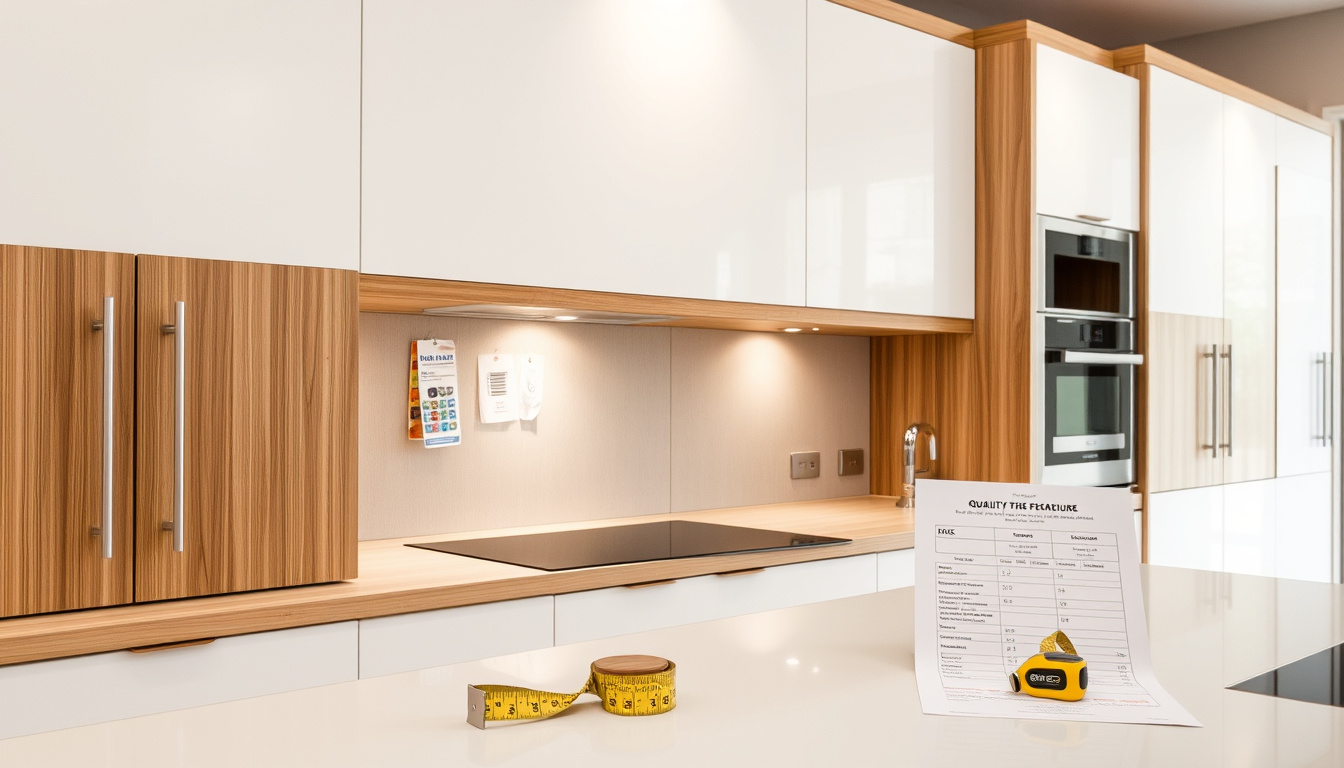
There’s a moment in almost every kitchen renovation when the quote lands and the cupboards alone seem to cost more than the car outside — they often do: installation alone can eat up around 30% of the total cost, according to cost-comparison site MyJobQuote. The real question is how much you should actually pay, where cheap cupboards are worth it, and why the lowest price in the catalogue can become the most expensive choice — with a no-spin look at IKEA, B&Q, Wickes, and Howdens.
Average kitchen cupboard cost (materials only): £2,000 – £5,000 ·
Most expensive part of a kitchen renovation: Cabinetry and installation (40–50% of total) ·
Typical tradesman fitting cost: £2,500 – £6,000 ·
Howdens fitted kitchen average price: £3,000 – £10,000
Quick snapshot
- Budget base units typically run £20–£70 each, rising to £70–£130 for higher-quality ranges (BookaBuilderUK, UK tradesman-matching platform).
- Average cupboard installation is about £225 per unit, excluding materials (BookaBuilderUK). (BookaBuilderUK)
- There is no fixed national average price per cupboard — size, material, and brand move the figure.
- Whether bespoke or off-the-shelf works out cheaper depends on your kitchen’s dimensions and existing services.
- Final fitting costs depend on local labour rates and how much prep work the room needs.
- Get at least three itemised quotes before committing to a brand or fitter.
- Check whether the price is supply-only or includes fitting, delivery, and disposal.
One set of numbers worth pinning up before you order: the cost facts every UK guide keeps repeating.
| Fact | What it means for you |
|---|---|
| Kitchen cupboard vs cabinet | In the UK, “cupboard” and “cabinet” are used interchangeably for kitchen storage units. |
| Most expensive component | Cabinetry accounts for 40–50% of a full kitchen renovation cost. |
| Average professional fitting | Around £3,500, excluding the kitchen itself (BookaBuilderUK). |
| Standard labour range | Typically £1,700–£3,000 for a standard UK kitchen (MyJobQuote, UK quote-comparison site). |
| Bespoke cabinetry | £12,000–£25,000 for a complete bespoke kitchen (Checkatrade, UK trade vetting service). |
| Simple replacement | Can fall closer to £1,000 if no services are moved (FKBD). |
| Typical fitting time | A professional fitter usually needs 3–10 days, depending on kitchen size and prep work. |
| Flat-pack savings | Flat-pack cabinets can be 30–50% cheaper than pre-assembled units. |
How much should kitchen cupboards cost?
Kitchen cupboards are priced per unit, and the total depends on how many units your room needs. UK cost guides agree on the broad price bands better than they agree on anything else.
What is a realistic budget for a new kitchen?
- Single floor units: £65–£75 for budget chipboard, £70–£90 for mid-range MDF, £150–£300 for premium solid wood (MyJobQuote).
- Double floor units: £75–£90 budget, £90–£120 mid-range, £175–£400 premium.
- Wall and over-counter units: £50–£65 budget, £55–£80 mid-range, £175–£350 premium.
- Freestanding single larders: £150–£200 budget, £175–£250 mid-range, £750–£1,500 premium.
- Fully bespoke cabinetry: £12,000–£25,000 (Checkatrade).
A good carcass can outlive two sets of cheap doors — and upgrading handles and hinges costs a fraction of replacing the whole kitchen.
So a realistic budget is less about a magic number and more about the number of units you need. A small galley kitchen needs far fewer cupboards than a large L-shaped room, which is why two identical budgets can produce very different kitchens.
What’s the cheapest way to buy kitchen cabinets?
- Flat-pack cabinets: 30–50% cheaper than pre-assembled units, but you assemble and level them yourself.
- Supply-only deals: buy units from one retailer and hire a separate fitter — often cheaper than a bundled package.
- Ex-display and second-hand kitchens: big savings if you can match the existing dimensions of your room.
The common thread is that the cheapest way to buy is almost never the brand with the lowest sticker price. It’s the option that leaves enough budget for quality hinges, proper fitting, and a worktop that won’t flex.
The pattern: per-unit prices look small but compound fast. Anyone comparing a £65 chipboard unit with a £150 solid-wood unit is really choosing between a short-term saving and a long-term commitment.
Where can I find cheap kitchen cupboards?
Cheap cupboards are not hard to find. The harder task is finding units that stay cheap once fitting, delivery, and a few years of daily use are added to the bill.
What makes a kitchen look cheap?
The cheapest units often use thinner materials that don’t hold up to daily use — the first warning most kitchen designers give when buyers chase per-box savings.
- Flat-pack retailers such as IKEA — cabinetry starts from £627 (Federation of Master Builders, UK trade body).
- Online direct-to-consumer kitchen sellers that ship flat-pack units nationally.
- Ex-display kitchens from showrooms and second-hand units from salvage yards.
- Trade counters such as Howdens, if you have a builder willing to order through a trade account.
A kitchen looks cheap when the details are wrong: flimsy hinges, thin doors, mismatched end panels, and careless spacing between doors. None of that is fixed by buying the most expensive brand — good hardware and a straight installation matter more than the name on the box.
The trade-off: a cheap cabinet saves you money today; one call-back visit from a fitter — or one sagging door in year three — can erase that saving in a single morning.
What is a cupboard in a kitchen called?
In the UK, “cupboard” and “cabinet” are used interchangeably for kitchen storage units. Walk into a showroom, though, and the trade uses its own words: unit, carcass, and door.
Types of kitchen cupboards: base, wall, larder, tall
- Base units — the floor-level cupboards that support the worktop.
- Wall units — mounted above the worktop, usually 300–400mm deep.
- Tall or larder units — full-height storage for dry goods, small appliances, or integrated fridges.
- Corner units — carousel, magic-corner, or pull-out designs that use dead space.
The jargon that catches first-time buyers is “carcass” (the box itself), “door” (the visible front), and “worktop” (the surface on top of base units). A fitted kitchen is cut and joined to your room; a freestanding cupboard is a standalone piece. When a quote arrives, check whether it prices carcasses, doors, or complete units — the difference can be substantial.
The implication: learning five words of kitchen vocabulary is the cheapest upgrade in the whole project — it stops you paying for doors while assuming you’ve bought the cupboards too.
What is the most expensive part of redoing a kitchen?
Cabinetry and installation take the largest single share of most UK renovation budgets. That’s the line that surprises first-time renovators most: the units themselves are only half the story.
How much do tradesmen charge to fit a kitchen?
- A straightforward installation costs at least £2,000 and typically runs 5–6 days at £160–£200 per day (FKBD).
- Bespoke kitchen specialists charge around £275 a day for two people, and bespoke cabinetry itself can land at £12,000–£25,000 (Checkatrade).
- A like-for-like swap — no moving services, no new layout — is the cheapest possible scenario by a wide margin.
Labour is quoted per day or per unit, and the complexity of the room decides the final figure. A straight swap of cabinets in a sound kitchen is a different job from taking a room back to brick, which is why quotes range so widely.
Why this matters: prep, plumbing, and fitting eat the budget before the first door is hung — which is why a per-cupboard price is never the real cost of a kitchen.
Is Wickes or B&Q better for kitchens?
Both sell ready-to-fit kitchens with design help and installation, and both sit in the mid-market rather than the premium tier. The difference shows in entry prices, service structure, and what the fitted kitchen actually costs once everything is added.
Federation of Master Builders (UK trade body) entry prices span £627 to £12,000 — yet the entry ticket is only the beginning of the final kitchen bill.
| Brand | Price picture | Fitting & service model | Best for |
|---|---|---|---|
| IKEA | from £627 | Flat-pack; self-assembly or a third-party fitter | Budget buyers and confident DIYers |
| Wickes | from £979 | Ready-to-fit units with own installation teams | Shoppers who want a mid-range fitted kitchen |
| B&Q | from £1,053 | In-store design plus fitting from around £99 per unit | First-time renovators who want one supplier |
| Howdens | typically £3,000–£10,000 fitted | Trade-supplied; your builder orders and fits | Renovations run through a builder |
| Magnet / John Lewis | from £2,487 / £3,500 | Showroom design and project management | Style-led buyers with a larger budget |
| Harvey Jones | from £12,000 | Bespoke hand-built cabinetry | High-end bespoke kitchens |
How much does a Howdens fitted kitchen cost?
Howdens supplies mainly through builders, and a fitted Howdens kitchen most often lands between £3,000 and £10,000 — a different price tier from the DIY chains, with a strong warranty reputation in consumer surveys.
So, Wickes or B&Q? Wickes undercuts B&Q on entry price, while B&Q counters with a broader design service and in-store support. IKEA stays the value benchmark. Howdens suits buyers already working with a builder. The honest answer is that neither Wickes nor B&Q is “better” in the abstract — the better kitchen is the one whose warranty, fitter, and final price you’ve actually compared.
The implication: when entry prices are this close, the decision should be made on fitting quality and warranty length, not the brochure.
Kitchen cupboards: pros and cons to weigh first
Upsides
- Flat-pack cabinets can be 30–50% cheaper than pre-assembled units.
- Mid-range MDF units deliver a quality look for roughly £70–£120 per base cabinet.
- A new kitchen raises the usability — and resale appeal — of your home.
Downsides
- The cheapest units often use thinner materials that don’t survive daily use.
- Fitting can add £2,500–£6,000 on top of materials.
- Hidden costs: plumbing, electrics, plastering, disposal, and delivery.
The trade-off: cheap cupboards cost less today; good cupboards cost less over a decade.
What’s clear — and what still isn’t
Before you order anything, separate what the cost guides agree on from what genuinely depends on your kitchen.
Confirmed facts
- “Cupboard” and “cabinet” mean the same thing in UK kitchens.
- Cabinetry is the biggest single cost in a kitchen renovation.
- B&Q and Wickes both offer kitchen fitting services, with prices quoted on request.
What’s unclear
- No fixed national average exists for a single cupboard — size, material, and brand move the price more than any formula.
- Whether bespoke or off-the-shelf is cheaper depends on your room’s dimensions and existing plumbing.
- The final fitting bill depends on local labour rates, wall condition, and how much prep work the room needs.
The pattern: the more specific your kitchen is, the less useful national averages become — which is exactly why per-unit quotes exist.
What the experts say
The cheapest units often use thinner materials that don’t hold up to daily use.
Independent kitchen designer
Our standard fitting starts at £99 per unit but varies with site preparation.
B&Q kitchen installation representative
Our survey shows IKEA customers rate value highly, while Howdens scores best for warranty.
Which? consumer advice
IKEA cabinetry starts from £627, Wickes from £979, B&Q from £1,053, Magnet from £2,487, John Lewis from £3,500, and Harvey Jones from £12,000.
Federation of Master Builders (UK trade body)
The implication: the cheapest quote and the most experienced fitter are rarely the same person — and the warranty is the only promise that outlives the installation day.
What to do next
The smart sequence is simple: measure the room, set a total budget that includes fitting and prep, then compare supply-only prices from at least three suppliers. Spend the most on the carcass — it’s the part that holds everything else up — and spend an hour checking the warranty before you spend a pound on doors. For the average UK household, the decision is clear: buy mid-range units and pay for a proper fitter now, or budget to replace cut-price cupboards far sooner than the brochure suggests.
checkatrade.com, kitchenfindr.co.uk, the-page.co.uk, realhomes.com, impactfurniture.co.uk, hamuch.com, homebuilding.co.uk
Frequently asked questions
Can I paint my kitchen cupboards to change their look?
Yes. Clean, sand, and prime the doors first, then use cabinet-specific paint. Flat-fronted MDF and wood doors take paint best; heavily textured laminate needs more preparation.
Do kitchen cupboards come flat-packed or pre-assembled?
Both. Budget ranges such as IKEA are flat-packed, while many mid-range and premium brands deliver pre-assembled carcasses. Flat-pack can be 30–50% cheaper, but you supply the assembly time.
What’s the best material for kitchen cupboard doors?
Thermofoil and vinyl-wrapped MDF are common on budget and mid-range kitchens; painted wood and solid oak sit at the premium end. The hinge, finish, and sealing of the edges matter more than the core material for everyday wear.
How long do kitchen cupboards typically last?
Well-fitted kitchen cupboards typically last 10–20 years. Cheaper chipboard units with thin vinyl wrap tend to fail first at the edges and hinges.
Are freestanding kitchen cupboards cheaper than fitted ones?
Usually, because there is no cutting, joining, or worktop templating involved. They suit renters and small kitchens, but fitted units use the available wall space far more efficiently.
What size are standard kitchen cupboards?
Base units are typically 600mm wide, 720mm high (before legs and worktop), and 500–600mm deep. Wall units are usually 300–400mm deep and 720–900mm high.
Should I hire a professional fitter or install kitchen cupboards myself?
If the room is square and the services are not moving, a confident DIYer can fit flat-pack units. If walls are uneven or plumbing and electrics need rerouting, a professional fitter is the cheaper option — mistakes cost more than labour.

Henry William Bennett Murray is a staff writer for CivicInsight.uk, covering UK public affairs, policy and civic life. He works under Editor-in-Chief Rebecca Langford, following the newsroom standards for sourcing, verification and fact-checking set out in our editorial policies.