If you’re planning a kitchen renovation in Ireland, the cabinet decision often feels like the biggest fork in the road: do you order custom-built from a local joiner, or pick up flat-pack boxes from a specialist retailer? We’ll walk through the real costs and trade-offs for 2026, highlight trends actually showing up in Irish kitchens, and help you decode the colour question so you can make a choice you won’t second-guess next year.
Standard base cabinet depth: 570 mm | Height (without worktop): 720 mm | Wall cabinet height: 720 mm or 900 mm | Construction: Frameless (European) style | Common material: MDF or particleboard with laminate
Flat-Pack Kitchen Cost
€3,000 – €8,000 for supply only, typical for an 8-10 unit kitchen. Kitchens4U price guide
Fitted Kitchen Cost
€7,000 – €12,000 for semi-fitted or trade-supply cabinets. RenovationCosts.ie 2026 guide
Custom Kitchen Cost
€15,000 – €30,000+ for bespoke joinery, including installation. The Journal June 2026 report
2026 Colour Trend
Wood tones lead at 29% of renovating homeowners, white at 28%. Alex Trend Painters trends analysis
“The issue often isn’t the colour itself but the finish and how it responds to light and oils in your kitchen.” – Alex Trend Painters
“Duration of a trend is shorter for high-contrast shades, meaning your choice may look dated sooner than you think.” – Houzz 2026 kitchen study
| Aspect | Key Fact |
|---|---|
| Average cost for a standard kitchen (Ireland) | €8,000 – €15,000 for supply only |
| Standard base cabinet depth (Ireland) | 570 mm |
| Standard base cabinet height (without worktop) | 720 mm |
| Standard wall cabinet height | 720 mm or 900 mm |
| Popular cabinet construction | Frameless (European) style |
| Common material | MDF or particleboard with laminate |
Comparing your options is tough because there’s no single “best” for everyone—it depends on whether you’re flipping a property or settling in for twenty years. That’s why we’ve pulled together a side-by-side look at the main routes (flat-pack, fitted, and custom) to help you see which one matches your priorities.
| Option | Typical Price Range (Supply Only) | Lead Time | Best For |
|---|---|---|---|
| Flat-pack (e.g., IKEA, Woodie’s) | €3,000 – €8,000 | In stock or 1-2 weeks | Budget-conscious DIYers, rental properties |
| Semi-fitted / Trade supply (e.g., Howdens, local trade counters) | €7,000 – €12,000 | 2-4 weeks | DIY with some support, medium budget |
| Fitted / Custom (Local joiner or specialist) | €15,000 – €30,000+ | 6-12 weeks | High-end finishes, awkward spaces, long-term |
You’ll notice the price ranges overlap a bit, which is where the confusion comes in. The good news is that the “right” option often comes down to your renovation skills and timeline as much as your bank balance, so it’s worth thinking about how much headache you want to deal with.
What’s the Biggest Cost Trap When Buying Irish Kitchen Cabinets for 2026?
It’s rarely the cabinets themselves that break the budget—it’s the hidden extras like worktop templates, delivery fees, and the cost of fitting if you’re not doing it yourself. When you see a headline price for a kitchen, ask what’s not included.
- Worktop (worktop is often 15-20% of the total on top of cabinets)
- Delivery and installation (if you’re not doing it yourself)
- Adjustments to walls and floors that are out of square
- Upgraded hardware (soft-close, push-to-open) and internal organisers
Those extras are why a “flat-pack” kitchen can quickly creep towards the cost of a fitted one. It’s also why you should get a fixed quote in writing that itemises these elements before you commit.
The implication: paying attention to these extras helps you choose between flat-pack and custom without surprises.
A cheaper flat-pack can cost more in the long run if you need to hire a carpenter to fix misaligned doors or replace cheap hinges within a year.
Is it cheaper to build or buy kitchen cabinets?
Building your own cabinets from scratch can save on labour but requires woodworking skills and time. Buying pre-made flat-pack is cheaper than custom but may not fit odd spaces. For most Irish homeowners, trade-supply cabinets offer the best balance of cost and quality.
What are the three types of kitchen cabinets?
Stock cabinets are pre-made in standard sizes, semi-custom offer some flexibility, and custom are built to your exact specifications. Stock is cheapest (€3,000–€8,000), semi-custom mid-range (€7,000–€12,000), and custom the most expensive (€15,000+).
Upsides of Buying (Flat-Pack or Trade Supply)
- Lower upfront cost
- Quick lead times (1–4 weeks)
- Easy to replace individual units
- Wide range of finishes and hardware
Downsides of Buying
- Limited customization for awkward spaces
- Quality can vary – cheap hinges and slides
- Hidden costs for installation and filler pieces
- Less durable than custom-built
Which Kitchen Cabinet Colour Is Not Good for the Kitchen?
Trends come and go, but some colours create functional and stylistic problems that are harder to live with than social media suggests. Dark colours, for instance, are dramatic and elegant, but they show every smudge, water spot, and crumb—especially on matte finishes. In a busy family kitchen, that can quickly turn a design win into a constant cleaning chore. Similarly, very light whites and creams look fresh but can be unforgiving if you have pets or like to cook with turmeric and tomato. It’s not that these colours are objectively wrong; it’s that they demand a certain lifestyle and maintenance level. If you’re not up for cleaning your cabinet fronts every other day, a mid-tone or patterned finish might be a more practical daily choice. Irish painting specialist Alex Trend Painters points out that the issue often isn’t the colour itself but the finish and how it responds to light and oils in your kitchen. Houzz’ 2026 kitchen study has also noted that the duration of a trend is shorter for high-contrast shades, meaning your choice may look dated sooner than you think.
Another angle is the “too much of a good thing” trap: painting all cabinets a dark, dramatic shade can make a small Irish kitchen feel like a cave, especially if you’re in a north-facing room that gets little natural light. While it’s not a hard “don’t do it,” design professionals often steer people toward using dark colours on an island or a single wall instead of every exposed surface. The result is a more balanced space that still has depth and sophistication. So, while no colour is strictly forbidden, a full-on dark or stark white scheme without considering your room’s natural light and your own cleaning habits is where many people go wrong. Woodie’s (a major Irish DIY and kitchen retailer) suggests that most kitchen specialists recommend testing a painted sample at home for a few days before committing, precisely because the same colour looks different under LED versus natural light.
Which Color Never Goes Out of Style?
- White and off-white (off-white shades are your best bet; they stay light and bright and don’t yellow with age)
- Grey tones (warm greys, not cold industrial greys)
- Wood tones (natural oak and walnut are modern and also transitional)
- Navy and dark blue (a classic neutral when paired with white counters and brass handles)
White is the safest long-term bet because it’s a blank canvas for your accessories and appliances—you can change the handle style or the worktop without having to rip out the cabinets. However, there’s a catch: not all whites are created equal. The pavestone white (a warm white with a hint of cream) is often more popular than the sterile bright white that was everywhere a decade ago. According to Alex Trend Painters (an Irish house painting authority), the trend has clearly shifted toward warm whites that have a soft beige or greige undertone. They also note that when you pair white with a wooden worktop or a coloured island, you get a look that never truly dates because it’s built on texture and contrast, not just the paint’s hue.
If you’re looking for a colour with true longevity, you can’t go wrong with warm greys or greige—they’re basically neutral and mix well with any accent colour you might want to try in your soft furnishings.
The pattern: these timeless choices let you redecorate without replacing cabinets.
What Color Makes a House Look Expensive?
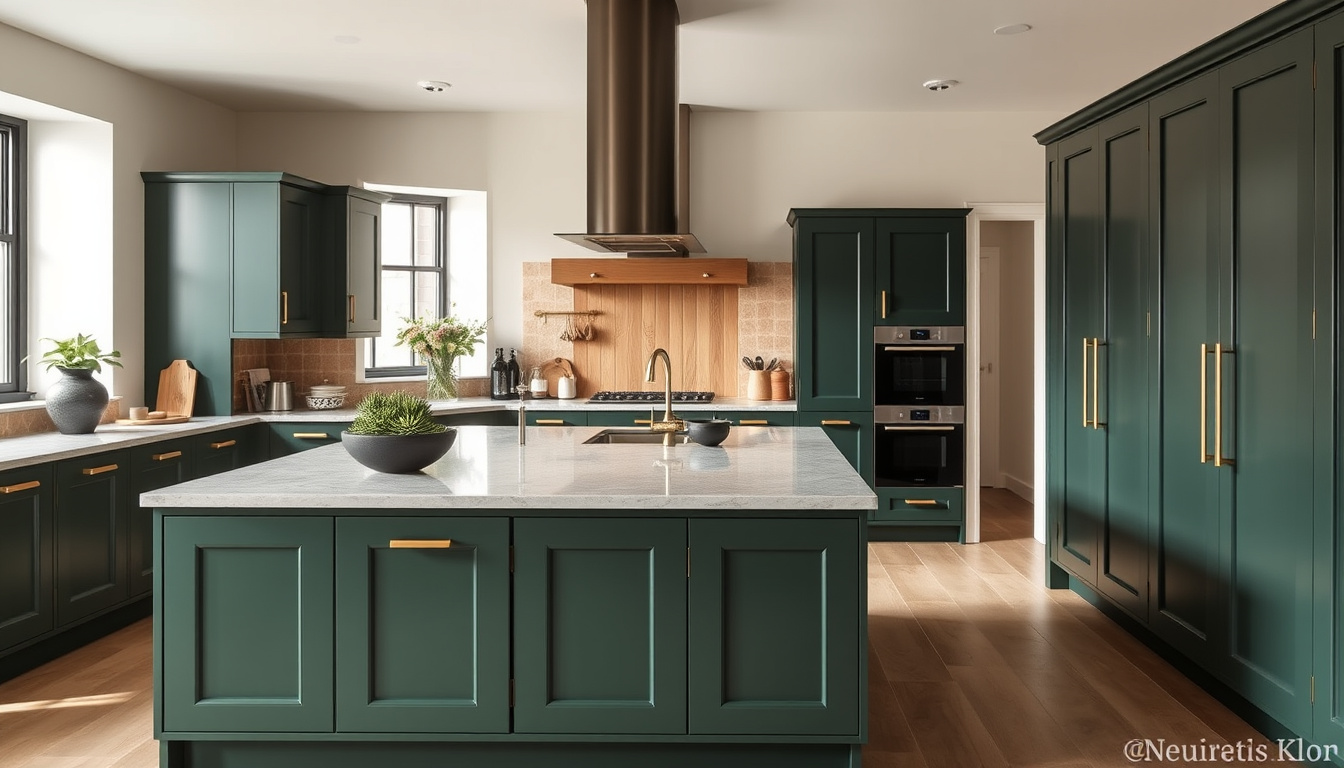
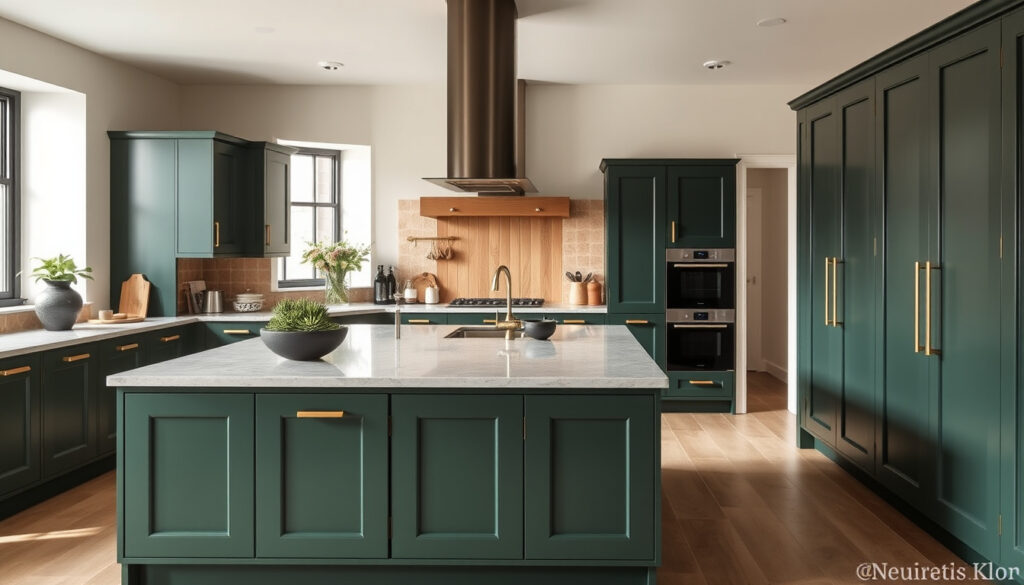
If you’re aiming for that premium look without the premium price tag, the secret is often in the palette’s restraint. Deep, rich shades like forest green, charcoal, or burgundy convey confidence and luxury, especially when applied to an island or larder unit. These darker tones create depth and mimic the effect of bespoke furniture, which automatically lifts the room’s perceived value. On the other hand, a muted, tonal palette of similar shades (like a greige cabinet with a beige wall and a taupe worktop) also reads as high-end because it feels curated, not matchy-matchy.
One of the quickest ways to make your kitchen look expensive is to invest in high-quality hardware. A brushed brass or unlacquered brass tap and handle set can transform a builder-grade kitchen into a designer one. Also, under-cabinet lighting does wonders to the cabinets’ finish and creates a custom-built feel, making the whole space look more elegant and thoughtfully designed. Currys (a major Irish electronics retailer) also highlighted that integrated LED lighting is one of the most common upgrades they see in premium kitchens.
Another huge factor is the paint finish: a satin or matte finish looks more expensive than a gloss, which can look dated in large amounts. The absence of visible clutter is also key—minimal styling with a few high-quality pieces (a nice wooden board, a bowl of fruit) is what makes a house look expensive, not the cost of the units themselves. According to global design platform Houzz, the 2026 study found that wood tones are officially in the lead at 29% for renovating homeowners, slightly ahead of white at 28%.
Which Colour Is Trending for 2026 in Irish Kitchens?
The short answer is that green is officially in the lead—specifically, sage green and deep forest green—with grey slipping to second place. An Irish kitchen article that analysed 2026 trend data found that wood tones are the strongest force, capturing nearly a third of renovation decisions. This isn’t just a passing fad; it’s a reaction against the all-grey “builder’s beige” that dominated the 2010s. People are craving warmth and organic texture. This means you’re increasingly seeing oak and walnut veneers paired with matte black or brushed brass hardware.
If you’re in the market to sell, going with a green-and-wood combination is a safe bet that appeals to a broad audience. On the other hand, if you’re renovating for your own enjoyment, it’s a great chance to lean into the trend. Just be cautious: going full wood-on-wood without any contrasting countertop can look heavy, so pair it with white or quartz to keep it fresh. An Irish survey in 2026 predicted that this connection will persist, but if you prefer a warmer neutral that has even more staying power, consider a “fusty” green—a muted moss shade that feels grounded and was shown to survive the test of time.
Renovators in Ireland are moving away from cool greys and toward wood-tone and green cabinets—a shift that’s particularly strong in new builds and larger family homes.
The catch: jumping on a trend without considering your home’s resale timeline can leave you with a dated look.
Is a kitchen cupboard or cabinet the same thing?
In Ireland, “cupboard” is common for wall-mounted storage, while “cabinet” often refers to base units. In the trade, “cabinet” is the standard term for the whole box.
planningpermissionireland.ie, scopepress.uk, presshive.uk, independent.ie, buildtech.ie, kitchens4u.ie, kitchens4u.ie, handld.org
Frequently Asked Questions
Can you repaint your own kitchen cabinets, or is it better to hire a pro?
You can absolutely DIY it, but the prep work is the real challenge. The finish will last far longer if you sand, prime, and apply multiple thin coats. However, if the existing finish is gloss or laminate, hiring a professional (like a spray painter) is often worth it because they can do an even, durable finish that won’t chip. A professional spray job for a standard kitchen can cost between €600 and €1,200 in Ireland, but it saves you hours of work and a brush-painted look.
Are flat-pack kitchens from IKEA or Woodie’s actually good quality for a permanent home?
Yes, they can be, provided you look after them. The standard 18mm board is the same thickness used by many local joiners, and the hardware is often made by reliable brands. The weak point is usually the drawer slides and hinges—so if you pay a bit extra for soft-close, you’re fine. The trade-off is that they are not as customisable for odd layouts, so you might need to buy filler pieces to make it fit perfectly, which adds to the cost.
How much does it cost to have a kitchen cabinet company install a kitchen in Ireland?
You’re looking at roughly €1,500 to €3,000 for fitting a standard kitchen, depending on the area and the complexity. That’s for the standard labour. If you need plastering, tiling, or electrical work, you’ll have to pay extra. The best way to avoid surprises is to ask for the fitter’s own cert of insurance and a written quote that lists every task.
What is the lead time for ordering a new kitchen in Ireland for 2026?
It depends massively on where you buy. A large DIY store like B&Q or Woodie’s might have a ready-to-assemble flat-pack you can take home today. However, if you order a complete fitted kitchen from a specialist or a local joiner, you should expect 4-8 weeks for supply, plus another 1-2 weeks for installation. If you’re doing a full renovation, always add a buffer of two weeks to your schedule because disruption and delivery delays happen.
Which cabinet material is the most popular in Ireland?
Particleboard (or chipboard) with a laminate finish is by far the most common. It’s cheap, stable, and comes in many colours. For more upscale projects, MDF with a sprayed finish or a foil wrap is also growing in popularity because it can achieve a smooth, painted look without the cost of solid wood. Solid wood is beautiful but expensive and needs a lot of upkeep if it’s near a sink.
Do I need to replace the doors or the whole cabinet box for a kitchen update?
You can definitely update just the doors and worktops, which is a cheaper way to refresh the space. But there’s a catch: if the existing boxes are dated or in poor condition, starting fresh is a better long-term investment. It’s a simple call to make: if the carcasses are solid and you like the general layout, keep them and spend the savings on better quality doors or new appliances.
What is the current trend for kitchen cabinets?
For 2026, the main trend is a move away from cool greys toward warm wood tones and greenery. Slab doors with matte finishes and brass hardware are popular, and integrated lighting is becoming a must-have.
Before you pick a colour or visit a showroom, it’s worth taking a step back to consider the bigger picture. In 2026, the “good” kitchen is one that balances your family’s actual needs with the resale value of your home. The choice between a flat-pack and a fully custom build isn’t just about money—it’s about how much sweat equity you’re willing to invest in the project and how you want to live in the space. If you’re planning to move in the next five years, keeping things neutral (warm white, wood) is likely your best bet. If you’re building your forever home, let your personality shine through with that green island you’ve been eyeing. Either way, get a few quotes in writing, and don’t forget to ask about the extras that can blow your budget.
Whatever direction you lean, the most important thing is to not rush into a decision based on a trend. Measure twice, buy once—your future self, and your wallet, will thank you.

Henry William Bennett Murray is a staff writer for CivicInsight.uk, covering UK public affairs, policy and civic life. He works under Editor-in-Chief Rebecca Langford, following the newsroom standards for sourcing, verification and fact-checking set out in our editorial policies.