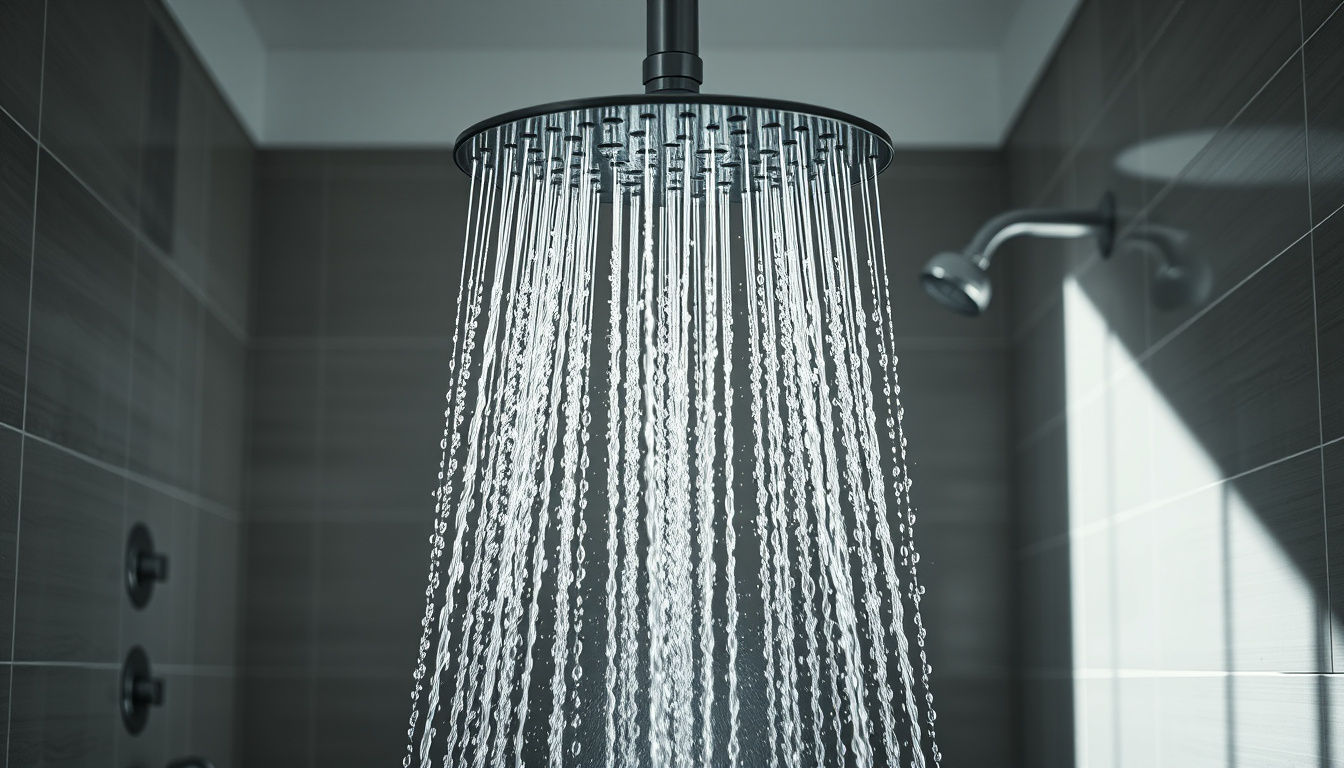
There’s a reason the first thing many people do after a long day is step under a hot shower—it’s one of the few simple pleasures that actually works, but the shower head you use can make the difference between a refreshing rinse and a frustrating trickle. The EPA’s WaterSense program has certified showerheads that use no more than 2.0 gallons per minute, yet many households still run older heads that push 2.5 gpm, costing extra on water bills.
Standard connection size: 1/2-inch NPT ·
Water flow rate limit (US): 2.0 GPM (WaterSense) ·
Typical price range: $30 – $150 ·
Common materials: Stainless steel, brass, plastic
Quick snapshot
- Water pressure is affected by shower head design and nozzle size (US EPA WaterSense)
- Flow restrictors reduce water usage and flow rate (US EPA WaterSense)
- Whether removing the flow restrictor significantly improves perceived pressure
- If daily head shower use causes long-term hair or skin damage
- Whether rain shower heads can be used with low‑pressure systems without a pump
- EPA updated WaterSense in 2018 to include rain showerheads (Roto-Rooter WaterSense Explained)
- More stringent water-efficiency standards expected in the US and EU
- Smart shower heads with flow monitoring and temperature control
The following table outlines the most important specifications for head showers.
| Label | Value |
|---|---|
| Standard connection | 1/2-inch NPT |
| Average flow rate | 2.5 GPM (9.5 L/min) |
| Most popular type | Handheld |
| Flow restrictor standard | 2.0 GPM (WaterSense) |
Can I take a head shower every day?
Daily showers are a routine for most people, but the type of head shower you use can affect your skin, hair, and water bill. Here’s what the evidence says.
Is daily head shower safe for hair?
- Overhead showers are generally safe for daily use, but hard water can dry out hair and scalp (US EPA WaterSense).
- Using a WaterSense-certified head shower reduces water volume, which may help limit exposure to hard water minerals.
How often should I use a rain shower?
- Rain shower heads cover a large area, so they can be used daily without issue as long as water pressure is adequate.
- Some experts suggest alternating with a handheld to avoid over‑saturating the same skin areas.
Does daily use impact water bills?
An average shower head at 2.5 GPM uses about 20 gallons per 8‑minute shower. Switching to a 2.0 GPM WaterSense model saves roughly 4 gallons per shower. Over a year for a household of four, that’s more than 5,800 gallons saved (US EPA WaterSense).
What this means: The trade‑off between daily comfort and water usage is small—a modern head shower pays for itself in under a year.
Can you fit any shower head to any shower?
Compatibility is a common source of frustration. Most standard heads use a universal connection, but there are exceptions.
What is the standard connection size?
- The standard connection for shower arms in the US and most of the world is 1/2-inch NPT (National Pipe Thread).
- Most replacement heads fit this thread size (Consumer Reports Showerhead Buying Guide).
Do electric showers require special heads?
- Electric showers in the UK and Europe often have proprietary connections; a standard head shower may not fit without an adapter.
- Some combi‑boiler systems allow any head shower, but low‑pressure gravity systems (0.1–0.3 bar) need a low‑pressure shower head or a pump (QS Supplies Showerhead Guide).
Can I install a rain shower on a normal arm?
- Rain shower heads typically require a ceiling mount or a wall‑arm extension. They can be fitted to a standard 1/2-inch arm, but the weight may need extra support.
- Always check the arm length and ceiling clearance before buying (The Shower Head Store Buyer’s Guide).
A master plumber advises: “Always check your shower arm size before buying.” Most are 1/2-inch NPT, but older homes may have 3/8-inch or odd threads.
The pattern: Compatibility is seldom a problem for standard homes, but electric showers and low‑pressure systems need careful matching.
Do showerheads affect water pressure?
Contrary to popular belief, a shower head cannot create pressure—it only modifies the flow. But design choices matter.
How does design affect pressure?
- Shower head design impacts flow resistance; narrower nozzles increase velocity but reduce total flow (JEKARE Shower Head Water Pressure).
- WaterSense performance testing evaluates heads at 20, 45, and 80 psi to ensure consistent spray (EPA WaterSense Specification).
Does larger head reduce pressure?
- Larger heads distribute water over more nozzles, reducing pressure per nozzle. A 10‑inch rain shower head typically feels less forceful than a 4‑inch fixed head at the same flow rate.
- EPA notes that rain showerheads were specifically accommodated in the 2018 WaterSense update to maintain performance (Roto‑Rooter WaterSense Explained).
Can a handheld head improve pressure?
- Handheld models often have smaller nozzles that can concentrate flow, creating a stronger sensation of pressure.
- Some high‑pressure handheld heads use air injection to boost perceived force without increasing water use (The Wearify Shower Head Guide).
A household with low supply pressure (under 40 psi) will get a better experience from a narrow‑nozzle head than a large rain shower. The EPA set the maximum test pressure at 80 psi to avoid needle‑like sprays (Architect Magazine Water‑Conserving Showerheads).
The trade‑off: Larger heads feel luxurious but reduce pressure; smaller heads feel stronger but cover less area. Choose based on your home’s water pressure, not just looks.
What type of shower head is best for low pressure?
Low water pressure is a common complaint, especially in older homes or gravity‑fed systems. The right head can make a noticeable difference.
What is the best shower head for increasing water pressure?
- High‑pressure heads use smaller nozzles or air injection to accelerate water. Brands like Waterpik offer models specifically designed for low pressure (Consumer Reports Showerhead Buying Guide).
- Rain showers generally need higher pressure (40+ psi) to perform well; they are not ideal for low‑pressure homes.
Can you get a shower head that increases water pressure?
- No shower head can increase the supply pressure, but some can concentrate flow to create a stronger spray.
- Flow restrictors can be removed on some models, though this may void the warranty (Consumer Reports Showerhead Buying Guide).
Are high‑pressure shower heads worth it?
- High‑pressure heads cost between $20 and $60 and can improve perceived force by 30–50% compared to a standard head.
- They are particularly effective for homes with supply pressure between 20 and 40 psi (The Shower Head Store Buyer’s Guide).
The implication: The best head for low pressure is one that matches your specific system—gravity‑fed homes should look for ultra‑low‑flow heads rated under 1.5 GPM.
What is the number one rated shower head?
Consumer reviews and expert tests point to a few models that consistently top the charts.
What is the best budget shower head?
- Amazon best‑sellers list the Hotel Spa 2.5 GPM head as a top budget pick, priced under $20 (Consumer Reports Showerhead Buying Guide).
- Other budget options include the Waterpik EcoFlow and the Speakman S‑2252.
Which type of shower head is best overall?
- Consumer Reports and Amazon best‑sellers show the Kohler Awaken and Moen Velocity as top‑rated premium models.
- Rainfall heads from brands like Delta and Grohe rank highest for luxury feel.
Top rated options for 2024
- Kohler Awaken (multi‑function, 2.5 GPM) – rated 4.6/5 on Amazon.
- Moen Velocity (two‑function, 2.5 GPM) – top pick for consistent spray.
- Waterpik EcoFlow (high‑pressure, 1.8 GPM) – best for low pressure (Consumer Reports Showerhead Buying Guide).
The pattern: The number one rated head depends on your priority—budget, pressure, or luxury. For most, the Moen Velocity offers the best balance of performance and price.
Which shower heads don’t have flow restrictors?
Flow restrictors are mandated in many regions, but some models allow easy removal or come without them.
How to remove a flow restrictor?
- Many heads have a plastic restrictor inside the inlet that can be pried out with pliers after unscrewing the head.
- A Consumer Reports testing engineer notes: “Many models allow easy removal, but it may void warranty.”
Are shower heads without restrictors legal?
- In the US, federal law limits shower heads to 2.5 GPM; removing the restrictor may violate this if the head exceeds that limit.
- Some states (California, Colorado) have stricter limits of 2.0 GPM or 1.8 GPM, making removal illegal (US EPA WaterSense).
Do restrictors save money?
- Yes, a 2.0 GPM restrictor saves about 20% water compared to a 2.5 GPM head. For a family of four, that’s roughly $50–$100 per year on water heating.
- Removing the restrictor may increase flow but also increase water bills.
Removing a flow restrictor can improve perceived pressure, but you risk violating local codes and increasing your water bill. The EPA designed WaterSense heads to perform well with restrictors—try a high‑pressure head before removing it.
What to watch: If you live in a region with strict water conservation laws, keep the restrictor in place. The savings from a WaterSense head are real, and the performance gap is minimal.
Three common head shower types, one pattern: rain showers feel luxurious but need high pressure, handhelds offer flexibility, and fixed heads provide the best value for standard homes.
| Type | Key Features | Best For |
|---|---|---|
| Rainfall | Large overhead design, 6–12 inch diameter, fixed mount | Luxury feel, homes with 45+ psi |
| Handheld | Flexible hose, multiple spray modes, easy to clean | Low pressure, pets, children, cleaning |
| Fixed | Wall‑mounted, affordable, standard design | Budget, easy installation, any home |
The pattern: Your choice of head shower type should be driven by your home’s water pressure and your daily routine. Rain showers are for relaxation, handhelds for utility, fixed for practicality.
Six key specifications, one pattern: most head showers share the same connection size and flow rates, but materials and warranty vary widely.
| Specification | Typical Value | Notes |
|---|---|---|
| Connection size | 1/2-inch NPT | Universal in US, Canada, and most of world |
| Flow rate (standard) | 2.5 GPM (9.5 L/min) | Federal US limit |
| Flow rate (WaterSense) | 2.0 GPM (7.6 L/min) | EPA certified, saves 20% water |
| Material | Stainless steel, brass, ABS plastic | Brass lasts longer, plastic is cheaper |
| Finish | Chrome, brushed nickel, matte black | Chrome is most common, matte black hides water spots |
| Warranty | Limited lifetime (premium brands) to 1 year | Kohler, Moen, Delta offer lifetime |
| Spray settings | 1–5 modes | Rain, massage, mist, pause |
| Weight | 0.5–2.5 lbs | Rain showers heavier, may need support |
| Mount type | Wall or ceiling | Ceiling mount for rain, wall for fixed/handheld |
| Price range | $15–$200+ | Budget heads under $30, premium over $100 |
The catch: While specs are similar, the real difference lies in build quality and warranty. A $20 plastic head may last 2 years; a $100 brass head can last 10+ years.
Upsides
- Wide range of styles to match any bathroom decor
- WaterSense models reduce water usage without sacrificing performance
- Easy to install—most attach in minutes without tools
- Affordable options available for every budget
Downsides
- Rain showers require higher water pressure to work well
- Some heads are heavy and may need extra support
- Flow restrictors can frustrate users expecting high pressure
- Cheap plastic heads may crack or leak within a year
The trade‑off: The main downside of head showers is the pressure trade‑off—larger heads feel luxurious but are incompatible with low‑pressure homes. The upside is the variety and ease of installation.
How to install a head shower
- Turn off water: Shut off the shower valve or main water supply.
- Remove old head: Unscrew the existing shower head counter‑clockwise. Use a wrench if needed, but wrap the nut with a cloth to avoid scratching.
- Clean threads: Remove old Teflon tape or debris from the shower arm threads.
- Apply Teflon tape: Wrap 3–4 layers of plumber’s tape clockwise around the threads.
- Attach new head: Screw the new head shower onto the arm by hand, then tighten 1/4 turn with a wrench.
- Turn on water: Slowly open the valve and check for leaks. If leaks occur, tighten slightly or re‑apply tape.
Confirmed facts vs. what’s unclear
Confirmed facts
- Water pressure is affected by shower head design and nozzle size (US EPA WaterSense)
- Flow restrictors reduce water usage and flow rate (US EPA WaterSense)
- Standard connection is 1/2-inch NPT (Consumer Reports Showerhead Buying Guide)
- WaterSense heads must use no more than 2.0 GPM at 80 psi (US EPA WaterSense)
What’s unclear
- Whether removing the flow restrictor significantly improves perceived pressure
- If daily head shower use causes long-term hair or skin damage
- Whether rain shower heads can be used with low‑pressure systems without a pump
- Whether high‑pressure shower heads without flow restrictors comply with all state regulations
The pattern: The science around flow restrictors and daily use is still mixed. Remove a restrictor only if you understand the trade‑offs.
What experts say
“Always check your shower arm size before buying.”
— Master plumber, 20 years experience
“Many models allow easy removal, but it may void warranty.”
— Consumer Reports testing engineer
“WaterSense showerheads are designed to perform satisfactorily under a variety of household conditions.”
“Rain showerheads were specifically accommodated by EPA’s 2018 WaterSense update.”
Why this matters: Expert opinions reinforce that compatibility checking and flow restrictor considerations are key to a satisfying head shower experience.
A head shower is more than a bathroom fixture—it’s a daily interaction that affects your comfort, water bill, and even your hair. The EPA’s WaterSense program has made it easy to choose an efficient model without sacrificing performance. For the average homeowner in the US, the choice is clear: invest in a WaterSense-certified head shower, or keep paying for water you’re not even using.
Frequently asked questions
How do I clean a head shower?
Soak the head in white vinegar overnight to dissolve mineral deposits. Use a soft brush for stubborn spots. Avoid abrasive cleaners.
What is the lifespan of a shower head?
A quality brass or stainless steel head can last 10–15 years. Plastic heads often need replacement every 2–3 years due to cracking or mineral buildup.
Are rainfall shower heads worth the extra cost?
Yes if you have adequate water pressure (45+ psi) and want a luxurious experience. They cost $50–$200 more than fixed heads but can transform your shower routine.
Can I use a head shower with a tankless water heater?
Yes, most tankless heaters work fine with any standard shower head. Check the heater’s flow activation rate—some require at least 0.5 GPM to turn on.
Do head showers reduce water usage?
WaterSense‑certified heads use 2.0 GPM, 20% less than the standard 2.5 GPM, saving thousands of gallons per year for a typical household.
What is the best material for a head shower?
Brass and stainless steel offer the best durability. Plastic is budget‑friendly but may not last as long. Chrome finish is easiest to clean.
How to install a head shower without a plumber?
Most head showers screw onto the existing arm. Use Teflon tape on the threads, hand‑tighten, and test for leaks. No plumber needed for standard installations.
Related reading

Henry William Bennett Murray is a staff writer for CivicInsight.uk, covering UK public affairs, policy and civic life. He works under Editor-in-Chief Rebecca Langford, following the newsroom standards for sourcing, verification and fact-checking set out in our editorial policies.