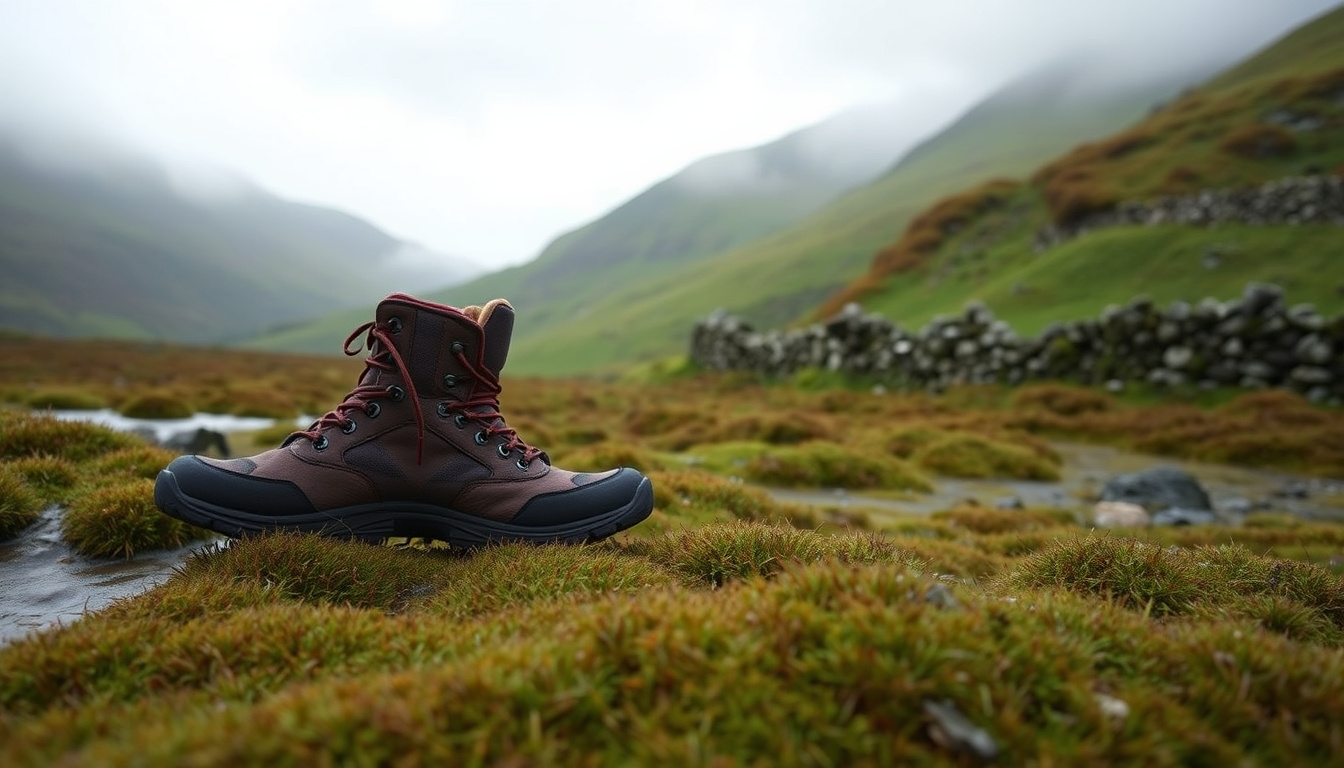
Anyone who has stepped onto a damp Irish trail knows the feeling: the ground turns spongey, a stream appears, and ordinary trainers turn into sponges. The question isn’t whether you need waterproof gear — it’s which hiking shoe actually handles the mix of bog, rain, and rocky coastline that makes hiking in Ireland so rewarding.
hiking trails in Ireland: over 3,000 km of marked trails ·
hiking shoe brands tested by REI: over 30 annually ·
waterproof hiking shoes sold per year (global): approximately 15 million pairs ·
average price of a quality hiking shoe: $120–$180
Quick snapshot
- Waterproof hiking shoes are recommended for wet climates like Ireland (Walking Holiday Ireland (Irish walking specialists))
- Whether Hoka’s cushioning is suitable for technical trails due to reduced ground feel (Southern Pulse (outdoor gear analysis))
- Best hiking shoe for Ireland depends heavily on individual foot shape and trail type (Southern Pulse (outdoor gear analysis))
- No specific timeline events; buying guidance is evergreen but re-proofing recommended every 20–30 walking days
- Check local retailers (Great Outdoors, Decathlon, Columbia Ireland) for current model availability — see Columbia Sportswear IE (official Irish store)
Three key facts about hiking shoes, one pattern: the choice between waterproof and breathable. Here’s what the data shows.
| Attribute | Hiking shoe | Hiking boot |
|---|---|---|
| Weight | Lighter, more flexible | Heavier, more rigid |
| Best for | Day hikes, well-maintained trails | Rough terrain, heavy packs |
| Average lifespan | 300–500 miles (500–800 km) | 500–800 miles (800–1300 km) |
| Ankle support | Low to moderate | High |
| Waterproof option | Available (membrane like Gore-Tex) | Standard on many models |
| Breathability when dry | Better (non-waterproof versions) | Lower |
The trade-off: a hiking shoe gives you speed and comfort on Irish greenways and coastal paths; a boot is overkill for a 10-km loop but adds safety on the Wicklow Way after a downpour.
“Waterproofing is the baseline rather than a luxury because conditions are often wet.” — Walking Holiday Ireland (Irish walking specialists)
What Type of Shoes Are Best for Hiking?
Key features of a hiking shoe: traction, support, waterproofing
A proper hiking shoe starts with a sole that bites into mud and wet rock. The tread pattern should be deep and multi-directional, often made from rubber compounds like Vibram or Contagrip. REI (US outdoor retailer with decades of testing) emphasises that shoes should be chosen for the specific trail type — aggressive lugs for loose ground, shallower ones for packed dirt.
Ankle support comes from height. Low-cut shoes give freedom of movement but less stability; mid-cut models add a collar that helps on uneven ground. For Ireland’s wet conditions, a waterproof membrane — Gore-Tex, Outdry, or brand-specific technology — is the non-negotiable barrier. RunRepeat (gear testing database) notes that labels like WP, GTX, or “waterproof” on the tongue are the easiest way to confirm.
Irish hikers face a specific paradox: you need waterproofing to stay dry, but a fully sealed shoe can trap sweat. The solution is a shoe with a membrane that breathes — not a rubber boot.
Height: low vs mid vs high
Low shoes are adequate for groomed trails but leave ankles exposed on rocky descents. Southern Pulse (outdoor gear analysis) suggests that mid-cut models are popular in Ireland because they provide more protection when water conditions are prolonged. High-cut boots are rarely necessary for day hikes but are common among multi-day hillwalkers.
“Shoes should be chosen for the specific trail type — aggressive lugs for loose ground, shallower ones for packed dirt.” — REI (US outdoor retailer)
What this means: For nine out of ten Irish day hikes, a mid-cut hiking shoe with a waterproof membrane gives the best balance — it handles the rain and the rocks without weighing you down.
What Are the Best Hiking Shoes for Ireland?
Why waterproof is critical in Irish weather
Ireland’s microclimate delivers rain on roughly 150–225 days a year depending on the region. That makes a waterproof shoe essential rather than optional. Walking Holiday Ireland (specialists in Irish walking holidays) states plainly that “waterproofing is the baseline rather than a luxury because conditions are often wet.” Hikers who try a water-resistant shoe will soon discover the difference: after twenty minutes in drizzle, the sock is damp.
A genuine waterproof shoe uses a membrane sealed to the upper. A Day Trip (Irish travel and gear site) explains that these membranes block liquid water while allowing sweat vapour to escape. The catch: no shoe is fully submersible. Southern Pulse warns that water over the ankle collar will still enter, so deep puddles call for gaiters or simply going around.
Top picks from local retailers: Great Outdoors, Decathlon, Columbia Ireland
Irish hikers have access to solid local options. Columbia Sportswear IE (official Irish store) lists models like the Men’s Peakfreak II Outdry Hiking Shoe, priced between €91 and €130. On’s Irish site markets the Cloudhorizon Waterproof with a high-performance membrane for sudden downpours. Decathlon Ireland carries the NH500 range at an affordable price point, though the retailer’s own advice is to choose a mid-cut if you plan to tackle wet trails.
A brand that offers Irish-specific sizing and easy returns (like Great Outdoors or Decathlon) is worth a slight premium because you can try the shoes on local terrain.
Pros & Cons of Waterproof vs Non-Waterproof Hiking Shoes
Waterproof
- Keeps feet dry in rain and puddles
- Essential for Irish conditions
- Durable membranes available
Non-Waterproof
- Better breathability in warm weather
- Dries faster after stream crossings
- Lighter weight
Which Is Better: Merrell or Hoka?
Merrell Moab vs Hoka Speedgoat: comfort and durability
Merrell’s Moab line has been a hiking staple for over a decade. It uses a Vibram outsole and a moderately cushioned midsole, which provides good stability on rocky ground. REI notes that both non-waterproof and waterproof versions exist, so you can choose based on season. Hoka’s Speedgoat, by contrast, is renowned for its thick cushioning — often called “maximalist” — which many hikers find comfortable on long, smooth trails but less secure on uneven terrain.
Cushioning differences: Hoka maximalist, Merrell moderate
The trade-off is straightforward: Hoka gives you plush shock absorption but sacrifices ground feel and lateral stability. Merrell sits in the middle — cushioned enough for a 15-km day, rigid enough for a boulder field. Outdoors Magic (UK-based gear reviewers) points out that for wet or snowy conditions waterproofing improves protection, while non-waterproof shoes offer more breathability — a choice that applies directly to both brands.
The catch: If your Irish hike involves slick rocks and steep descents (think the Burren or the Kerry Way), Merrell’s stability gives you more control. For mainly flat coastal paths, Hoka’s cushioning may be the more comfortable choice.
Is Merrell or Salomon Better for Hiking?
Salomon’s Contagrip vs Merrell’s Vibram
Both brands use top-tier rubber, but with different philosophies. Salomon’s Contagrip formulations vary by model — low-profile lugs for speed, deeper ones for looseness. Merrell’s Vibram outsoles are known for consistent grip across wet and dry rock. REI includes Salomon models like the X9 Pro 3D V9 GORE-TEX in its current hiking shoe picks, highlighting precise fit and traction.
Fit differences: Salomon narrow, Merrell wider
One of the most common complaints from Irish hikers is that Salomon runs narrow. Merrells, especially the Moab, accommodate wider feet. Outdoors Magic confirms that fit is the deciding factor: if a shoe doesn’t fit your arch and width, the best rubber in the world won’t help.
The implication: Salomon wins for hikers with slim feet who want a locked-in feel on technical descents; Merrell wins for everyone else who needs room for thick socks on cold days.
Can I Wear Normal Shoes for Hiking?
Risks of wearing trainers on uneven terrain
Ordinary trainers (running shoes or casual sneakers) lack the stiff sole, deep tread, and lateral support that a hiking shoe provides. On a wet trail, the risk of a slip increases dramatically because the rubber is not designed for mud and wet rock. Outdoor Life (outdoor gear experts) stresses that even shoes labelled “trail runners” often have a shallower tread than proper hiking shoes. Blisters are also more common because trainers use a thinner, more absorbent upper.
When normal shoes might be acceptable (easy, dry trails)
On a perfectly dry, paved path — like the River Liffey boardwalk — any shoe works. But the moment you step onto a grassy slope or a gravel track, a dedicated hiking shoe becomes safety gear. Outdoors Magic suggests that for very easy, dry terrain a non-waterproof walking shoe is fine, but never recommend a standard trainer for hills.
Why this matters: A single ankle twist on a wet root can sideline you for weeks — the €30 you saved on footwear is dwarfed by the cost of a doctor’s visit and lost walking days.
What Not to Wear While Hiking?
Avoid cotton socks and non-breathable fabrics
Cotton absorbs moisture like a sponge. Once wet, it stays wet, causing friction and blisters. Walking Holiday Ireland recommends synthetic or merino wool socks that wick away sweat. The same logic applies to clothing: avoid jeans or non-breathable jackets that trap heat when you start climbing.
Heavy boots that cause fatigue
Overly stiff, heavy boots are the second common mistake. They may offer plenty of ankle support but at the cost of energy. A pair that weighs 150 g more per shoe adds over half a kilo of load per hour for an average walker. Outdoors Magic warns that overly stiff boots reduce agility and can lead to ankle fatigue on long descents.
The pattern: The biggest mistakes are materials that hold water (cotton) and footwear that is either too flimsy (trainers) or too rigid (heavy boots). The middle ground — a waterproof hiking shoe with proper fit — is the sweet spot.
What Are the Top 5 Hiking Shoes?
Our top picks for Ireland terrain
Consensus from gear guides and Irish retailer lists points to five models that perform well in wet conditions:
- Merrell Moab 3 (Waterproof): dependable grip, wide fit, reasonable price.
- Salomon X Ultra 4 GTX: precise fit, excellent traction, popular on Irish trails.
- Hoka Speedgoat 5 GTX: maximum cushion for long days on smooth ground.
- Columbia Peakfreak II Outdry: fully waterproof, good value (€91–€130 per Columbia IE).
- Decathlon NH500 Mid Waterproof: budget-friendly option sold in Dublin and Cork stores.
Budget-friendly options from Decathlon
Decathlon’s NH500 range is often the most affordable entry point. The mid-cut version includes a waterproof membrane and is light enough for day hikes. Decathlon Ireland (sports retailer with local outlets) offers a 365-day return policy, which lowers the risk of buying online.
The trade-off: You can spend €130 on a Salomon or €55 on a Decathlon model. Both are waterproof, both will handle a wet trail. The difference is weight, fit, and long-term durability — the Salomon will likely last 800 km; the Decathlon may need replacing earlier.
Final Take: Hiking Shoes and Your Next Irish Trail
Choosing a hiking shoe for Ireland isn’t about finding a magic model — it’s about accepting that wet, variable terrain demands specific features. A waterproof membrane, a sole that grips in mud, and a fit that prevents slippage are the three pillars. Ignoring any one of them turns a pleasant coastal walk into a blistering, damp trudge. The gear industry loves to market “waterproof” as a premium upgrade, but in Ireland it’s the baseline.
For the majority of Irish day hikers — those walking the Wicklow Way, the Burren Way, or local looped trails — the choice is clear: a mid-cut, waterproof hiking shoe from Merrell, Salomon, or Columbia, fitted with enough room for a thin merino sock, will cover everything from sea mist to a genuine downpour. Alternatively, if budget is tight, the Decathlon NH500 delivers the essential protection. The investment is modest; the consequence of bad footwear — a sprained ankle, ruined socks, an aborted hike — is far bigger.
outdoorlife.com, runrepeat.com, rei.com, outdoorsmagic.com, adaytrip.com, bettertrail.com, on.com, czechobserver.com
Readers looking for additional brand comparisons can consult this expert buyers guide for Ireland for a thorough analysis of the best hiking shoes for Ireland.
Frequently asked questions
Do I need waterproof hiking shoes for day hikes?
Yes, especially in Ireland where rain is common even on short walks. Waterproof shoes keep feet dry and reduce blister risk. Non-waterproof shoes are fine only on completely dry, paved paths.
How should hiking shoes fit?
Leave about a thumb’s width of space between your longest toe and the shoe’s front. The heel should be snug (no lifting when you walk). Try on shoes with the socks you plan to hike in.
Are trail running shoes okay for hiking?
They can work on dry, easy trails but lack the ankle support and deep tread needed on muddy or rocky terrain. For Irish conditions, a dedicated hiking shoe is still safer.
What is the best material for hiking shoes?
Synthetic uppers (mesh, nylon) are lightweight and dry faster; leather is more durable but heavier and slower to dry. Many shoes combine both.
Can I use hiking shoes for walking the Camino?
Yes, lightweight hiking shoes are a popular choice for the Camino Frances. The key is good break-in and waterproofing for the coastal sections.
How often should you replace hiking shoes?
After 300–500 miles (500–800 km) or when the tread is worn down and the midsole feels flat. Check for delamination of the sole.
Are leather hiking shoes better than synthetic?
Leather offers superior durability and natural water resistance when treated, but it is heavier and takes longer to dry. Synthetic is lighter and better for wet conditions if you need fast drying.
What socks work best with hiking shoes?
Merino wool or synthetic blend socks that wick moisture and have cushioning in the heel and toe. Avoid 100% cotton.

Henry William Bennett Murray is a staff writer for CivicInsight.uk, covering UK public affairs, policy and civic life. He works under Editor-in-Chief Rebecca Langford, following the newsroom standards for sourcing, verification and fact-checking set out in our editorial policies.