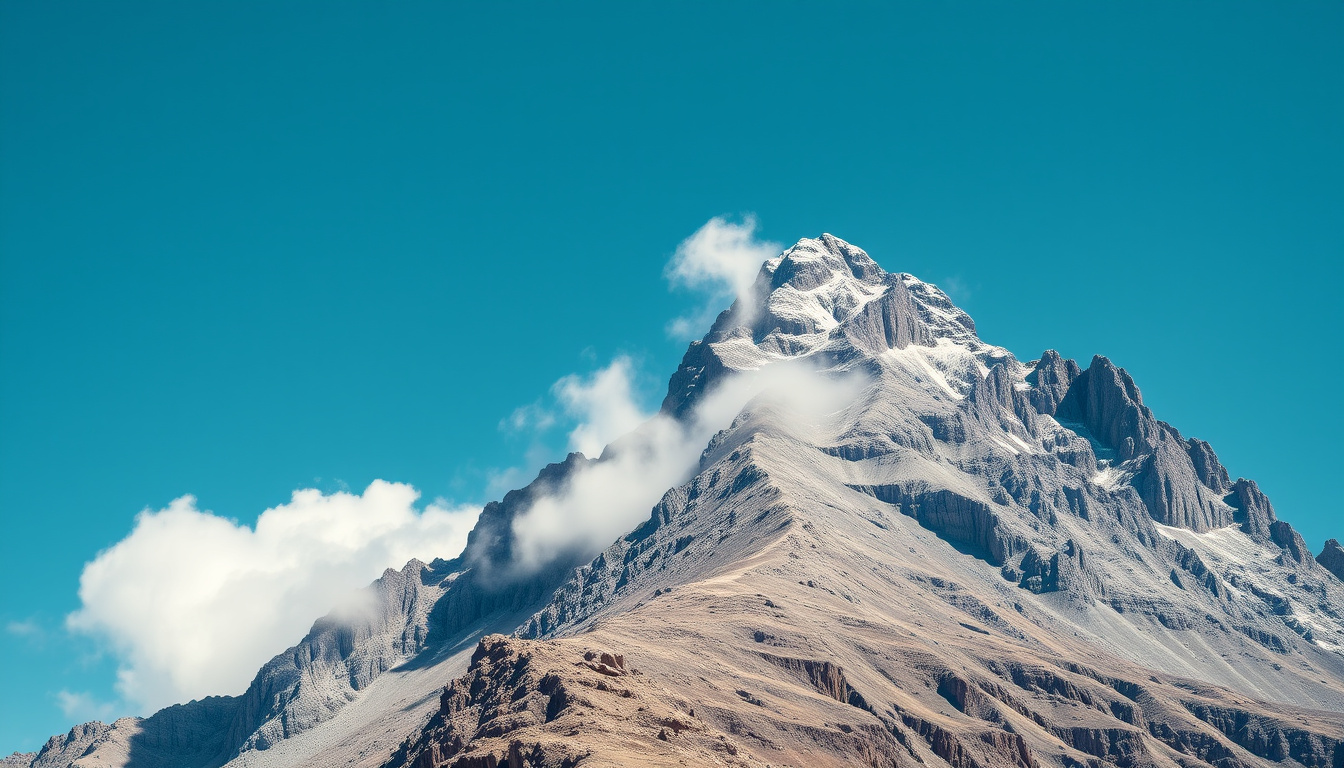
Mount Olympus spent millennia as the mythical home of gods, but for hikers willing to earn the summit, it’s surprisingly down-to-earth. At 2,917.727 meters, Greece’s highest peak offers a real climbing challenge wrapped in ancient mythology—this guide blends both so you know exactly what it takes to stand on Mytikas.
Height: 2,917.727 m (9,573 ft) ·
Number of peaks: 52 ·
Highest peak: Mytikas ·
Location: Greece, near Gulf of Thermai ·
Main trails: 60 km ·
Mountain huts: 5
Quick snapshot
- Highest peak in Greece (Wikipedia (encyclopedic reference))
- 52 peaks in the massif (Wikipedia)
- Located in Thessaly, near the Gulf of Thermai (Britannica (encyclopedia publisher))
- Home of the twelve Olympians (Britannica)
- Throne of Zeus associated with Stefani peak (Visit Greece (official tourism site))
- Many myths set here, including the fall of Hephaestus (GreekMythology.com (mythological reference))
- 60 km of marked trails (Xtremgear (hiking guide))
- 5 mountain huts, including Spilios Agapitos (Oxymeter (climbing reference))
- Moderate difficulty, best in summer (Much Better Adventures (adventure travel publisher))
- Rich fauna and flora, over 1,700 plant species (UNESCO (biosphere reserve authority))
- Wolves present in the region (Greece.com (travel information))
- Endemic species, such as the Olympus primrose (Wikipedia)
Here is a quick reference of Mount Olympus’s key statistics.
| Attribute | Value |
|---|---|
| Height | 2,917.727 m (9,573 ft) |
| Highest Peak | Mytikas |
| Number of Peaks | 52 |
| Trails | 60 km |
| Mountain Huts | 5 |
| Location | Greece, near Gulf of Thermai |
Where is the mountain of Olympus?
Geographic location on the map
- Mount Olympus rises in the Olympus massif in central Greece, on the border between Thessaly and Macedonia (Britannica (encyclopedia publisher)).
- Its coordinates are approximately 40°05′N 22°21′E (Wikipedia (encyclopedic reference)).
- The nearest major town is Litochoro, about 15 km east (Visit Greece (official tourism site)).
Height and prominence in Greece
- At 2,917.727 meters (9,573 feet), Mount Olympus is the highest peak in Greece (Wikipedia).
- It is the second highest mountain in the Balkans after Musala (Britannica).
- The massif contains 52 distinct peaks, with Mytikas as the summit (Wikipedia).
The pattern: Mount Olympus dominates the Greek landscape both physically and symbolically — it is the undeniable geographic anchor of the region.
For hikers, the 2,917 m elevation means altitude sickness is unlikely, but the cumulative ascent from the trailhead to Mytikas exceeds 1,800 m — a serious day’s work.
How hard is it to climb Mount Olympus?
Fitness level required
- Moderate good physical shape is recommended; you should be comfortable with steep, sustained ascents over 8–10 hours (Much Better Adventures (adventure travel publisher)).
- The final section from Skala to Mytikas is a Class III scramble requiring handholds and careful foot placement (Much Better Adventures).
- Many trekkers report that the descent puts extra strain on knees and quads (The Blog of Dimi (hiking accounts)).
Routes and difficulty ratings
- The classic route starts at Prionia, ascends to Spilios Agapitos Refuge (Refuge A), then goes over Skala peak to Mytikas (Xtremgear (hiking guide)).
- The Prionia-to-refuge section takes about 2.5–3 hours with 1,000 m gain over 6.6 km (Oxymeter (climbing reference)).
- The Skala-to-Mytikas ridge is widely described as a scramble, not a hike, requiring sure-footedness (Much Better Adventures).
Mountain huts and trail length
- There are 5 huts: Spilios Agapitos (Refuge A), Christakis (Refuge C), and others at lower elevations (Xtremgear).
- Total maintained trail network on the mountain is about 60 km, covering various routes (Wikipedia (Mount Olympus National Park)).
- The classic Prionia-to-Mytikas round trip with an overnight stay totals roughly 18 km and 1,800 m elevation gain (The Blog of Dimi).
The catch: the hardest part of the climb isn’t the altitude, but the steep, exposed scramble that separates Skala from Mytikas — it’s where many hikers turn back.
Two-day climbers who stay at Spilios Agapitos get a restful sleep and light pack for the summit push; day-trippers from Litochoro face a 10-hour+ day with limited daylight margins.
Can beginners climb Mount Olympus?
The two most popular routes to Mytikas differ significantly in difficulty and commitment.
| Attribute | Classic Route (Prionia → Mytikas) | Alternative Route (Plateau of Muses) |
|---|---|---|
| Starting point | Prionia (1,100 m) | Christakis Hut (2,400 m via 4×4) |
| Difficulty | Moderate; Class III scramble final section | High; sustained Class III with some Class IV moves |
| Elevation gain | ~1,800 m | ~500 m from hut to summit |
| Typical time | 2 days (8–10 hrs climbing day 2) | 1 day (steep and technical) |
| Skill required | Good fitness; some scrambling experience | Advanced scrambling; helmet recommended due to loose rock |
Six differences, one pattern: the classic route is more accessible for beginners if done over two days, while the alternative route via the Muses plateau demands prior climbing experience.
Recommended experience
- Beginners can attempt Mount Olympus with an experienced guide (Much Better Adventures).
- The summit day requires an early start (by 5–6 a.m.) and good endurance (Xtremgear).
- Prior hiking experience on steep terrain is strongly advisable (The Blog of Dimi).
Guided tours vs solo
- Guided tours provide safety on the exposed Skala–Mytikas ridge and reduce navigation risk (Outdoor Voyage (adventure tour operator)).
- Solo climbing is possible for fit hikers who are comfortable with route finding on rocky terrain (Much Better Adventures).
- Permits are not required for individual hikers, but huts must be booked in advance (Visit Greece).
Essential gear
- Sturdy hiking boots with good ankle support (Xtremgear).
- Helmet recommended for the summit scramble, especially in wet conditions (Scribd (climbing guide)).
- Plenty of water, sunscreen, and layered clothing for changing weather (The Blog of Dimi).
The trade-off: hiring a guide adds cost but dramatically increases safety on the exposed ridge; solo gives freedom but requires self-reliance in route finding and weather decision-making.
Why is Mount Olympus so famous?
Home of the Greek gods
- In ancient Greek mythology, Mount Olympus was the celestial palace of the twelve Olympian gods (Britannica).
- Zeus, the king of the gods, held his throne on the highest peak (GreekMythology.com).
- The mountain was considered an actual physical place and not merely a symbol (Britannica (mythology entry)).
Mythology of the Throne of Zeus
- The peak Stefani is traditionally identified as the Throne of Zeus due to its distinctive shape (Visit Greece).
- From this throne, Zeus supposedly watched over the mortal world and occasionally hurled thunderbolts (GreekMythology.com).
Historical significance
- The mountain was first conquered in 1913 by Christos Kakalos, Frederic Boissonnas, and Daniel Baud-Bovy (Wikipedia).
- It was declared a national park in 1938, the first in Greece (Wikipedia (Mount Olympus National Park)).
- In 1981, it became a UNESCO Biosphere Reserve (UNESCO).
The pattern: the mountain’s fame rests on a rare double foundation — it is both a real, protected natural monument and the most recognizable mythological setting in Western literature.
What is the myth of Mount Olympus?
The twelve Olympians
- The twelve Olympians — including Zeus, Hera, Poseidon, Athena, Apollo, and Artemis — were said to dwell in crystal palaces on the summit (Britannica).
- They ruled the world from this mountain, meeting in council to decide the fates of mortals and heroes (GreekMythology.com).
The Throne of Zeus
- Zeus’s throne was placed on the highest peak, Mytikas or Stefani, from which he could see all of Greece (Visit Greece).
- The adjective “Olympian” became synonymous with supreme power and excellence (Britannica).
Hephaestus thrown from Olympus
- According to one myth, Hephaestus was hurled from Mount Olympus by his mother Hera after she was displeased with his lameness (GreekMythology.com).
- He landed on the island of Lemnos, where he later established his forge (Britannica (Hephaestus entry)).
What this means: the myths gave Mount Olympus an immortal identity that persists today, even as hikers measure it in meters and scramble up its rocks.
“Mount Olympus is the highest mountain in Greece at 2,917.727 meters, and is known in Greek mythology as the home of the Greek gods.”
Wikipedia (encyclopedic reference)
“The final section from Skala to Mytikas is a Class III scramble that requires sure-footedness and a head for heights.”
Much Better Adventures (adventure travel publisher)
“For beginner hikers, a guided ascent of Mount Olympus is the safest and most rewarding approach.”
Step-by-step: How to climb Mount Olympus as a beginner
- Book a spot at Spilios Agapitos Refuge months in advance (summer is peak).
- Arrive at Prionia trailhead by mid-morning. Hike 2.5–3 hours up the E4 trail to the refuge. Elevation gain: ~1,000 m over 6.6 km (Oxymeter (climbing reference)).
- Check in, drop gear, and enjoy a meal. Get an early night — summit start is 5:00 a.m.
- Leave the refuge before dawn with a daypack (water, snacks, layers, headlamp).
- Follow the trail to Skala peak (2,866 m) — about 3 hours and 850 m ascent (EIDOLON (personal climbing account)).
- From Skala, tackle the exposed Class III scramble to Mytikas (30–45 minutes careful climbing) (Much Better Adventures).
- Celebrate at the summit, then descend via the same route back to the refuge.
- Collect your gear and hike back down to Prionia (2–2.5 hours).
What’s clear
- Mount Olympus is the highest mountain in Greece at 2,917.727 m (Wikipedia).
- It is located in the Olympus massif near the Gulf of Thermai (Britannica).
- Mytikas is the highest summit (Wikipedia).
- It is known in Greek mythology as the home of the gods (Britannica).
What’s unclear
- Minor variations exist between surveys for the exact summit elevation (Wikipedia).
- Some mythological details vary by ancient source (Britannica).
- The exact number of peaks is sometimes cited as 52, but other sources list different counts (Wikipedia).
- The total trail length of 60 km is an estimate and may not include all paths (Wikipedia (Mount Olympus National Park)).
For hikers considering a trip to Greece, the choice is clear: prepare for a Class III scramble atop a mythological home, or enjoy the lower trails and legends from the refuge. The mountain demands respect, but the reward — standing on the summit where gods once ruled — is unforgettable.
youtube.com, mountainsofgreece.wp.st-andrews.ac.uk, nationalparksassociation.org, mediahetki.fi
For those planning a trip, a detailed Mount Olympus climbing guide offers practical advice on routes and preparation.
Frequently asked questions
How long does it take to climb Mount Olympus?
A typical two-day itinerary: day one hike from Prionia to Spilios Agapitos Refuge (2.5–3 hours), day two summit Mytikas and descend (7–10 hours total). A single long day is possible for very fit hikers but is strenuous (Xtremgear).
Do I need a guide to climb Mount Olympus?
Not required, but strongly recommended for beginners and solo hikers unfamiliar with Class III scrambling. A guide increases safety on the exposed Skala–Mytikas ridge (Much Better Adventures).
What is the weather like on Mount Olympus?
Summer (June–September) offers the most stable conditions, but thunderstorms can develop quickly. Winter brings snow and ice, making technical mountaineering equipment necessary (Visit Greece).
Can you drive to the top of Mount Olympus?
No. The highest drivable point is Prionia at 1,100 m. From there, all routes to the summit are on foot (Xtremgear).
Are there any dangerous animals on Mount Olympus?
Wolves and brown bears inhabit the national park, but encounters are rare. Hikers should follow basic safety: keep food secure and stay on marked trails (Greece.com).
What is the elevation of Mount Olympus?
The official height is 2,917.727 meters (9,573 feet), making it the highest peak in Greece (Wikipedia).
Is there a mountain hut on Mount Olympus?
Yes, five huts serve the mountain. The most popular is Spilios Agapitos (Refuge A) on the classic route at 2,100 m. Booking is essential in summer (Oxymeter).

Henry William Bennett Murray is a staff writer for CivicInsight.uk, covering UK public affairs, policy and civic life. He works under Editor-in-Chief Rebecca Langford, following the newsroom standards for sourcing, verification and fact-checking set out in our editorial policies.