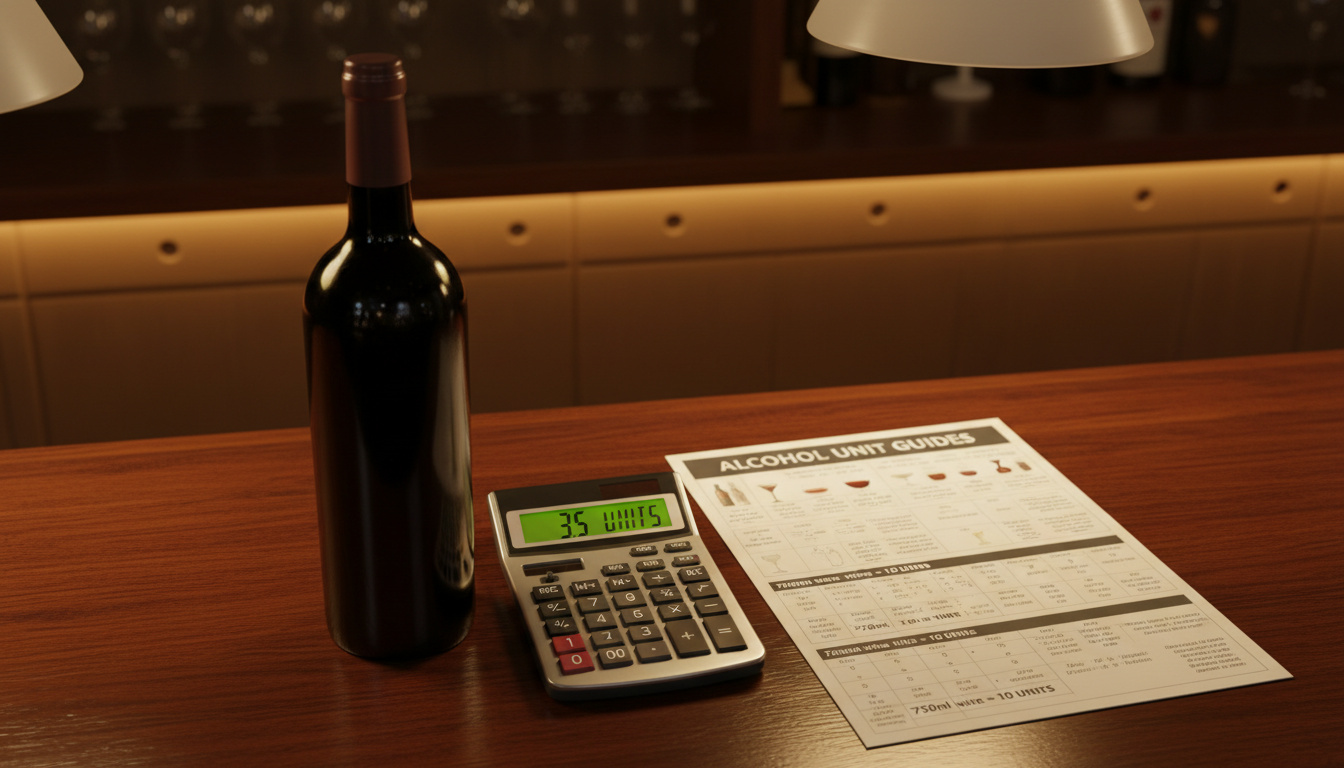
Understanding alcohol units remains essential for anyone tracking their consumption against UK health guidelines. A standard bottle of wine typically contains more alcohol than most drinkers realize, often approaching two-thirds of the recommended weekly limit in a single container.
The UK measurement system defines one unit as 10ml or 8g of pure alcohol, providing a standardized method to compare drinks of varying strengths and volumes. The NHS confirms this standard helps consumers navigate differences between beer, wine, and spirits with mathematical precision.
For wine specifically, unit content depends primarily on Alcohol by Volume (ABV) percentage and bottle size, though serving practices often obscure these calculations in social settings.
How Many Units Are in a Bottle of Wine?
13.5% ABV: 10 units
750ml bottle: 10 units
750ml bottle: 9-10 units
14 units (men and women)
Key facts about wine units:
- A standard 750ml bottle at 13.5% ABV contains exactly 10 units of alcohol
- Red wines typically range between 9-11 units per bottle depending on specific ABV
- White wines usually contain 9-10 units for standard 750ml bottles
- Drinking one full bottle approaches the entire weekly recommendation for low-risk drinking
- Home servings often exceed standard pub measures by 50% or more
- Label checking proves essential as ABV varies significantly between brands
- Fortified wines contain substantially higher unit counts than standard table wines
| Drink Type | Volume | ABV | Units |
|---|---|---|---|
| Standard wine bottle | 750ml | 13.5% | 10 |
| Red wine bottle | 750ml | 14% | 10.5 |
| White wine bottle | 750ml | 12% | 9 |
| Large wine glass | 250ml | 12% | 3 |
| Standard wine glass | 175ml | 12% | 2.1 |
| Small wine glass | 125ml | 12% | 1.5 |
| Pint of higher-strength beer | 568ml | 5.2% | 3 |
| Pint of lower-strength beer | 568ml | 3.6% | 2 |
| Single spirits measure | 25ml | 40% | 1 |
| Can of beer | 440ml | 5.5% | 2.4 |
How to Calculate Units in a Bottle of Wine
The Mathematical Formula
Calculating alcohol units requires a straightforward equation. Rethink Drink provides the standard formula: multiply the ABV percentage by the volume in millilitres, then divide by 1,000.
For example, a 175ml glass of wine at 12% ABV contains 2.1 units (12 × 175 ÷ 1,000 = 2.1). A 750ml bottle at 13.5% ABV yields 10.125 units, typically rounded to 10 units for practical guidance.
Practical Calculation Methods
For quick mental arithmetic, multiply the ABV by 0.75 when assessing a standard bottle. A 14% red wine therefore contains approximately 10.5 units. DrinkCoach offers digital tools for precise calculations when mental math proves challenging.
For any 750ml wine bottle, simply multiply the ABV percentage by 0.75 to estimate units. A 12% bottle yields 9 units, while a 15% fortified wine contains 11.25 units.
Wine Units Compared to Pints and Beer
Beer Equivalents
A full bottle of wine at 10 units equals roughly 3.3 pints of 5.2% beer or 5 pints of 3.6% beer. DrinkFox confirms the 14-unit weekly limit translates to approximately 6 pints of average-strength beer.
This comparison reveals why wine consumption requires particular vigilance. While beer drinkers might consume two pints over an evening (4-6 units), finishing one bottle of wine doubles that intake.
Volume vs. Strength Differences
Beer typically ranges 3.6% to 5.2% ABV, while wine spans 11% to 15%. This concentration difference means smaller wine volumes deliver equivalent alcohol. Understanding these comparisons helps when tracking 10.5 Stone in Kg alongside alcohol intake for comprehensive health monitoring.
UK Alcohol Unit Guidelines and Weekly Limits
The 14-Unit Threshold
Medical guidance established that both men and women should consume no more than 14 units weekly to keep health risks low. This represents roughly 6 pints of beer or 10 small glasses of lower-strength wine.
The Chief Medical Officers’ guidelines emphasize spreading these units across three or more days, rather than consuming them in single sessions. Binge drinking, defined as consuming 6+ units in one sitting for women or 8+ for men, significantly increases health risks.
Caloric and Health Considerations
Alcohol contains 7 calories per gram, meaning a 10-unit bottle of wine contributes approximately 700 calories from alcohol alone, excluding residual sugars. When calculating dietary intake alongside alcohol units, consider how How Many Grams of Protein in an Egg compares to the empty calories in alcoholic beverages.
Consuming one standard bottle of wine (10 units) in a single evening approaches the entire weekly recommendation. Regularly exceeding this threshold increases risks of liver disease, certain cancers, and cardiovascular conditions.
Drinkaware provides unit and calorie calculators that account for variations in drink size and strength, particularly useful when home servings differ from standard measurements.
How Weekly Units Accumulate Over Seven Days
- Monday: Zero units consumed. Weekly total: 0.
- Tuesday: One large glass of wine (250ml at 12% ABV). NHS data confirms this equals 3 units. Weekly total: 3.
- Wednesday: Zero units consumed. Weekly total: 3.
- Thursday: One pint of 5.2% beer (3 units). Weekly total: 6.
- Friday: Half bottle of wine (375ml at 13.5% ABV, equaling 5 units). Weekly total: 11.
- Saturday: One standard glass of wine (175ml at 12% ABV, 2.1 units). Weekly total: 13.1.
- Sunday: One small glass of wine (125ml at 12% ABV, 1.5 units). Weekly total: 14.6 units, exceeding the recommended limit.
What Affects the Number of Units in Your Wine?
Established Information
- Standard 750ml bottles contain predictable unit ranges based on labeled ABV
- The mathematical formula (ABV × ml ÷ 1000) produces accurate results
- 14 units represents the weekly low-risk threshold for all adults
- Red wines typically show higher ABV than white wines
Variable Factors
- Home-poured glasses vary significantly from standard 125ml/175ml/250ml measures
- Actual ABV may deviate slightly from label declarations without laboratory testing
- Restaurant servings often default to 250ml “large” glasses containing 3 units
- Non-standard bottle sizes (500ml, 1L) require individual calculation
Why the UK Measures Alcohol in Units
The unit system emerged from public health necessity, providing a common language to compare the absolute alcohol content across beverage types. Before standardization, comparing a pint of bitter with a glass of sherry proved mathematically challenging for consumers. The unit system emerged from public health necessity, providing a common language to compare the absolute alcohol content across beverage types, and you can learn more about what constitutes a unit of alcohol in a bottle of wine here: Що таке обслуговування клієнтів.
One unit represents 10ml of pure ethanol, allowing direct comparison regardless of drink type. This standardization enables the Chief Medical Officers to issue clear guidelines applicable to all alcoholic beverages, from 40% spirits to 4% session beers.
The current 14-unit weekly limit, introduced in 2016, replaced previous gender-specific recommendations, reflecting modern understanding that biological sex provides less protection against alcohol-related harm than previously assumed.
Medical Authority and Evidence Sources
One unit of alcohol in the UK equals 10ml or 8g of pure alcohol, and a standard 750ml bottle of wine (ABV 13.5%) contains 10 units.
NHS Alcohol Guidelines
ABV (Alcohol by Volume) represents the percentage of pure alcohol in a drink and can be found on drink labels, sometimes written as “vol” or “alcohol volume.”
UK Health Authorities
The UK recommended limit is 14 units per week for both men and women, which is equivalent to 6 pints of average-strength beer or 10 small glasses of lower-strength wine.
Chief Medical Officers’ Guidelines
What Should You Remember About Wine Units?
A standard 750ml bottle of wine typically contains 9-10 units of alcohol, representing nearly three-quarters of the weekly 14-unit guideline. Calculating units requires multiplying ABV by volume and dividing by 1,000, though online calculators provide convenient alternatives. Understanding these measurements enables informed decisions about consumption patterns, whether choosing between a bottle of wine or equivalent beer volumes, or tracking weekly intake against medical recommendations.
Common Questions About Alcohol Units
How many units of alcohol per week are safe?
The UK recommends limiting alcohol to 14 units weekly for both men and women, spread across at least three days. This equals roughly one standard bottle of wine plus one additional glass.
How many pints equal the units in a bottle of wine?
A 10-unit bottle of wine equals approximately 3.3 pints of 5.2% beer or 5 pints of 3.6% beer. Actual equivalence depends on specific beer strength.
How many units are in a pint of beer?
A pint of 3.6% beer contains 2 units, while a pint of 5.2% beer contains 3 units. The variation depends entirely on the ABV percentage.
Do red and white wines contain different unit amounts?
Red wines typically contain 10-10.5 units per bottle due to higher ABV (13.5-14%), while white wines usually contain 9-9.5 units (12-13% ABV), though specific brands vary.
Can I drink a whole bottle of wine and stay within daily guidelines?
Drinking one bottle (10 units) in a single day significantly exceeds recommended daily patterns. Guidelines suggest spreading 14 units across three or more days, making single-bottle consumption inadvisable.
Where can I find an alcohol units calculator?
The NHS recommends Alcohol Change UK’s unit calculator. Drinkaware and DrinkCoach also provide free online tools that calculate both units and calories for various drink types.

Oliver Hayes is a staff writer for CivicInsight.uk, reporting on news, local government and public services. His work is reviewed by the editorial desk and checked against our sourcing and fact-checking standards before publication.