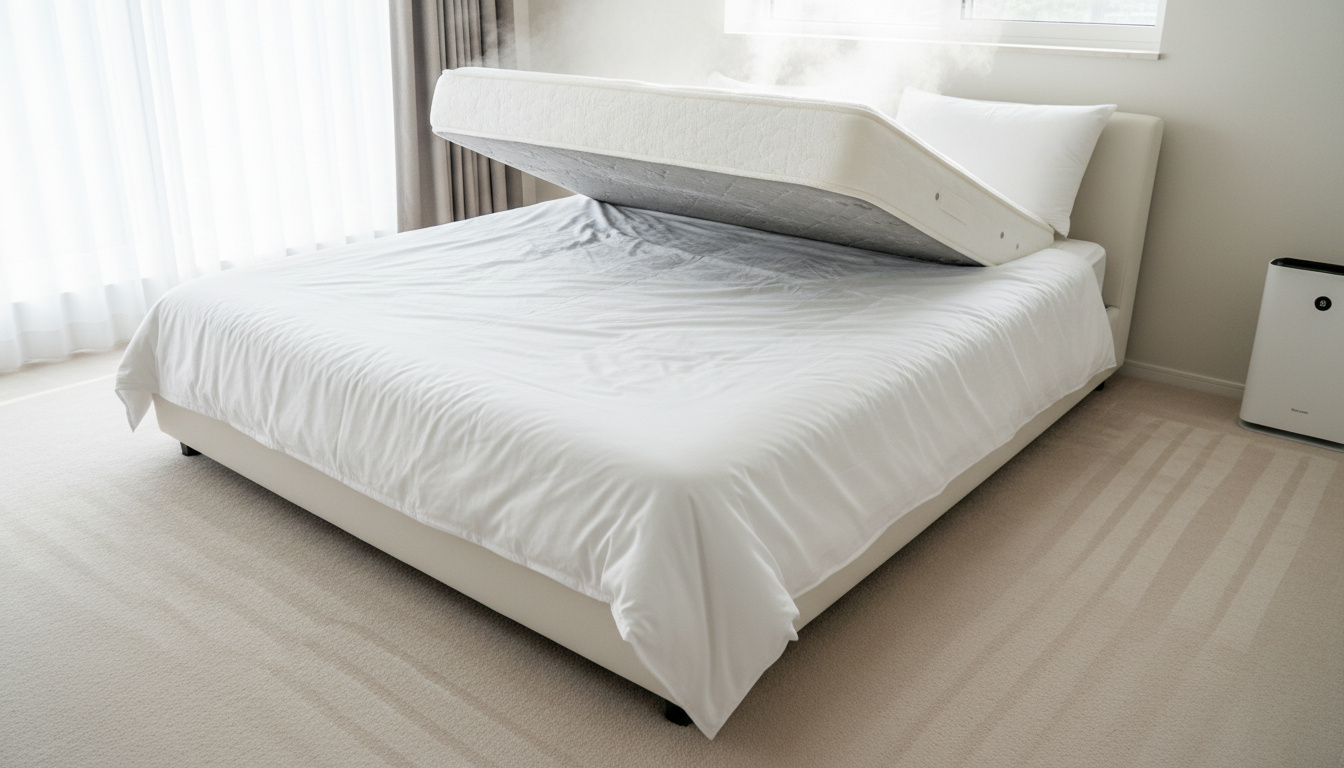
Dust mites represent one of the most common triggers for indoor allergies, yet they remain invisible to the naked eye. These microscopic arachnids thrive in warm, humid environments, particularly within bedding, carpets, and upholstered furniture where they feed on dead human skin cells and shed allergenic proteins.
While complete eradication remains technically impossible in occupied residential spaces, consistent intervention significantly reduces populations and alleviates allergic symptoms. Effective management requires targeting their preferred habitats through precise temperature control, physical barriers, and rigorous cleaning protocols rather than seeking total elimination.
How to Get Rid of Dust Mites
Encase Bedding
Install zippered, dust-mite-proof encasements with pore sizes smaller than 10 microns on mattresses, box springs, and pillows to trap existing populations and block food access.
Hot Water Washing
Launder all bedding weekly in water maintained at 130°F (54.4°C) or higher to kill mites and denature the Der p 1 protein responsible for allergic reactions.
HEPA Vacuuming
Vacuum floors, mattresses, and furniture at least once weekly using HEPA-filter equipment, spending 20 seconds per square yard on carpeted surfaces.
Humidity Control
Maintain indoor humidity below 50 percent, ideally around 35 percent, using dehumidifiers to create atmospheric conditions that prevent mite survival.
- Temperature threshold: Water must reach 130°F (54.4°C) to kill mites and denature Der p 1 allergen proteins; warm water provides only a bath without mortality source
- Mechanical barriers: Encasements with pores smaller than 10 microns physically trap mites and cut off food supplies, preventing surface travel
- Surface modification: Replacing wall-to-wall carpeting with hard flooring like hardwood, laminate, or tile reduces bedroom dust mite populations by up to 90 percent source
- Freezing protocol: Sealing pillows in plastic bags for 24 to 48 hours kills mites without water exposure, though washing afterward removes allergen proteins source
- HEPA containment: Ordinary vacuums disperse mites into air; only HEPA filtration effectively contains particles and prevents redistribution source
- Professional intervention: Hot water extraction cleaning performed every six months reduces dust mite allergens by up to 90 percent
- Humidity requirements: Dust mites require approximately 80 percent humidity to survive; maintaining levels below 50 percent inhibits hydration and reproduction source
| Parameter | Specification |
|---|---|
| Lethal washing temperature | 130°F (54.4°C) minimum |
| Mite survival humidity | Approximately 80% |
| Target humidity level | Below 50%, ideally 35% |
| Encasement pore size | Smaller than 10 microns |
| Freezing duration | 24–48 hours |
| Bedding washing frequency | Weekly |
| Pillow washing frequency | Every 3–6 months |
| Carpet cleaning frequency | Every 6 months |
| Vacuuming contact time | 20 seconds per square yard |
| Mattress replacement interval | Every 7–10 years |
How to Check for Dust Mites in Bed
Specific protocols for visually identifying dust mite infestations remain unverified in current research, largely because these arachnids measure fractions of a millimeter and require microscopic examination to distinguish from other particulate matter. Most individuals detect their presence indirectly through physiological responses rather than direct observation.
Clinical assessments typically rely on allergen testing rather than visual confirmation. If you experience persistent morning congestion, sneezing fits upon waking, or asthma exacerbation that improves when away from home, dust mites likely constitute the primary irritant. These symptoms result from exposure to Der p 1 protein found in mite fecal matter and body fragments, not from bites.
No consumer-grade detection methods for dust mites are documented in available research. Professional allergen testing of dust samples remains the only verified identification method, though such testing exceeds typical household management needs.
Will Washing Pillows Kill Dust Mites
Hot Water Protocol
Machine washing pillows at 130°F (54.4°C) or higher effectively kills dust mites and removes accumulated allergen proteins. This temperature threshold denatures the Der p 1 protein responsible for triggering allergic responses. If your washing machine cannot reach 130°F, transfer items immediately to a dryer set on high heat for at least 15 minutes to achieve lethal temperatures.
Pillows require washing every three to six months to maintain control over mite populations and allergen loads. Standard washing frequency for sheets and pillowcases remains weekly, but pillows themselves withstand less frequent aggressive cleaning while still requiring regular intervention.
Alternative Freezing Methods
Wrapping pillows in sealed plastic bags and placing them in a freezer for at least 48 hours kills dust mites through thermal shock, though some sources suggest 24 hours may suffice. This method benefits materials that cannot withstand hot water washing. However, freezing kills mites without removing the allergen proteins, necessitating a subsequent wash or thorough vacuuming to eliminate the residual Der p 1 material.
Children’s stuffed animals that cannot withstand hot washing should be sealed in plastic bags and frozen for 24 hours, then washed afterward to remove allergen proteins.
How to Make Eucalyptus Spray for Dust Mites
Research regarding eucalyptus-based interventions remains preliminary and incomplete. Available sources briefly mention eucalyptus oil as a potential aid for killing dust mites at lower water temperatures, though comprehensive formulation data, concentration requirements, and efficacy rates remain unestablished in the provided research.
Without verified recipes or dilution ratios, creating an effective eucalyptus spray requires consultation with entomological or allergen specialists rather than DIY preparation. The available evidence does not support claims that eucalyptus spray alone eliminates infestations or replaces mechanical removal methods like hot water washing or HEPA vacuuming.
Natural sprays containing eucalyptus may repel mites or aid in elimination during washing, but no evidence confirms they fully eradicate established populations. Do not substitute unverified natural remedies for established temperature-based or mechanical controls.
Treatment Schedule and Frequency
- Launder all bedding at 130°F or higher; HEPA vacuum all floors, mattresses, furniture, and hard-to-reach areas including bookshelves and blinds
- Dust all surfaces using damp microfiber cloths rather than dry dusting to capture rather than disperse particles
- Remove and wash curtains; handwash and air dry if machine washing isn’t feasible
- Wash pillows at high temperature or freeze for 24–48 hours to kill mites
- Schedule professional hot water extraction cleaning for carpets and upholstered furniture to reduce allergens by up to 90 percent
- Replace mattresses due to accumulated dust mites, sweat, and moisture loads that exceed cleaning capabilities
Established Methods vs. Uncertain Approaches
| Verified Established Facts | Uncertain or Unverified Areas |
|---|---|
| Hot water at 130°F (54.4°C) kills mites and denatures Der p 1 proteins | Specific visual detection methods for consumer use |
| HEPA vacuums contain mites; standard vacuums spread them | Complete elimination feasibility in occupied homes |
| Pore sizes below 10 microns block mite passage through encasements | Eucalyptus spray formulations and concentration efficacy |
| 24–48 hour freezing kills mites at all life stages | Long-term persistence of allergen proteins after mite death |
| Humidity below 50% significantly inhibits mite survival | Comparative effectiveness of natural vs. chemical controls |
| Hard flooring reduces populations 90% versus wall-to-wall carpet | Standardized consumer testing protocols for mite identification |
The Biology Behind the Allergen
Dust mites do not bite humans; they feed exclusively on dead skin cells shed by occupants. The allergic reactions—rhinitis, asthma exacerbations, and dermatological irritation—result from the Der p 1 protein, a digestive enzyme present in mite fecal pellets and body fragments. These microscopic particles become airborne during bed-making, vacuuming, or sitting on upholstered furniture, triggering immune responses in sensitized individuals.
Preferred habitats include mattresses, box springs, pillows, carpets, upholstered furniture, and heavy drapes—essentially any fabric surface that traps skin cells and maintains humidity. Research published in environmental health journals confirms that integrated pest management approaches combining humidity control, physical barriers, and thermal elimination prove more effective than any single intervention source.
Understanding that dust mites require approximately 80 percent humidity to survive explains why dehumidification plays a critical role in management. However, perspiration during sleep creates localized humid microclimates that complicate atmospheric control, necessitating the combination of moisture management with physical barriers like encasements.
Evidence Base and Clinical Sources
Current recommendations derive from allergy and immunology practices, sleep medicine centers, and environmental health research. Clinical sources emphasize that while chemical treatments exist, non-chemical methods such as steam cleaning or ultraviolet light application for mattresses prove preferable because chemical residues may cause additional irritation for allergy sufferers.
Professional mattress cleaning using non-chemical methods like steam cleaning or ultraviolet light is preferable to chemical treatments, which may cause additional irritation for allergy sufferers.
Heveya Sleep Consultancy
The limitation of humidity control methods bears repeating: while lowering humidity below 50 percent inhibits mite survival, this approach does not remove existing dust mite fecal matter, which constitutes the primary allergen trigger. Additionally, electrical costs prove significant, and very low humidity levels create human comfort issues.
Maintaining Long-Term Control
Sustainable dust mite management requires habitual adherence to temperature protocols and environmental modifications rather than one-time intensive cleaning. Individuals experiencing persistent respiratory symptoms despite rigorous cleaning should consider professional allergen assessment and the Swollen Lymph Nodes Neck evaluation to rule out concurrent conditions. For those managing related respiratory discomfort, understanding How to Relieve Trapped Wind may provide additional symptom relief strategies though these address different physiological mechanisms.
Can I use warm water instead of hot to kill dust mites?
Warm water only bathes dust mites without killing them. Temperatures must reach 130°F (54.4°C) to eliminate mites and denature allergen proteins. If your machine cannot reach this temperature, dry items on high heat for at least 15 minutes instead.
How often should I vacuum to control dust mites?
Vacuum floors, mattresses, and furniture at least once weekly using a HEPA-filter vacuum. Spend at least 20 seconds per square yard on carpets and upholstered furniture. For optimal results, vacuum carpeted areas twice weekly and wash the vacuum’s filter regularly.
Will a dehumidifier eliminate dust mites completely?
No. While maintaining humidity below 50 percent creates unfavorable conditions, perspiration during sleep increases localized humidity. Dehumidifiers also fail to remove existing dust mite fecal matter, which constitutes the primary allergen trigger.
Can I use baking soda on any mattress type?
The baking soda method suits fabric surfaces like spring coil mattresses, but avoid direct application on latex or memory foam cores. For these materials, rely on encasements and HEPA vacuuming without abrasive powders.
Do dust mites bite humans?
Dust mites do not bite. They feed exclusively on dead skin cells. The irritation people sometimes attribute to bites is actually allergic reactions to the Der p 1 protein found in mite fecal matter and body fragments.
Is freezing stuffed toys as effective as washing?
Freezing sealed stuffed animals for 24 hours kills mites, but follow with washing to remove allergen proteins. Hot water washing at 130°F remains the most effective single method for both killing mites and removing allergens.
Why do ordinary vacuums make allergies worse?
Standard vacuum cleaners lack the filtration necessary to contain microscopic mites, instead dispersing them into the air during operation. HEPA-filter vacuums trap these particles, preventing redistribution throughout the room.

Henry William Bennett Murray is a staff writer for CivicInsight.uk, covering UK public affairs, policy and civic life. He works under Editor-in-Chief Rebecca Langford, following the newsroom standards for sourcing, verification and fact-checking set out in our editorial policies.