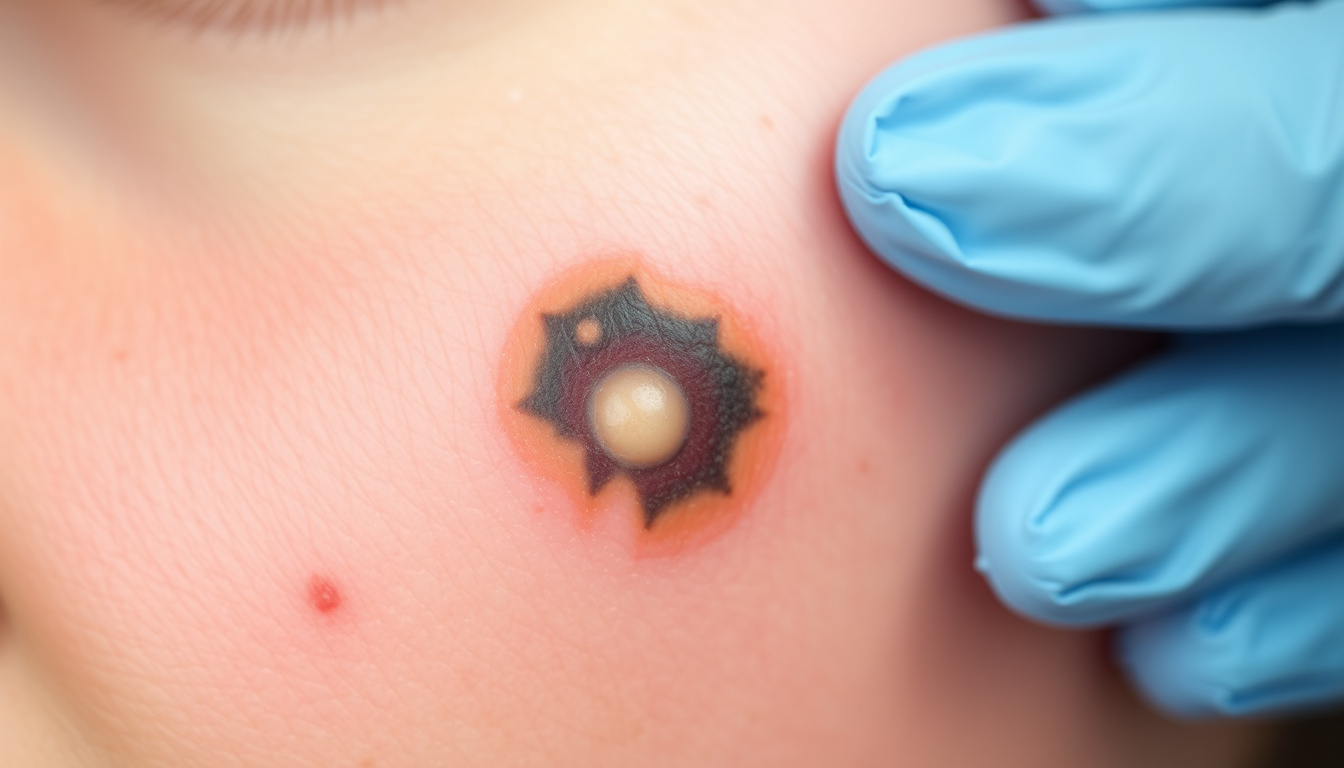
If you’ve ever glanced at a new freckle and wondered whether to worry, you’re not alone. Skin cancer is the most common cancer in the United States, yet catching it early can make the difference between a minor outpatient procedure and something far more serious. The good news: most types are highly treatable when identified quickly. This guide walks through the actual warning signs—not just the textbook lists—using expert checklists from Mayo Clinic and MD Anderson, so you know exactly what to look for and when to call a doctor.
Most common sign: New spot or changes in existing spot · Key melanoma rule: ABCDE (Asymmetry, Border, Color, Diameter, Evolving) · Non-melanoma signs: Lumps or crusted areas that do not heal · Early detection focus: Itchy, painful, or rough patches
Quick snapshot
- ABCDE rule identifies melanoma warning signs (Cleveland Clinic)
- Non-healing lumps signal non-melanoma skin cancer (Health Service Executive Ireland)
- Exact gender-specific symptom differences remain poorly documented
- Early-stage body-wide sensations lack consistent clinical definition
- Skin cancer rates increase with cumulative sun exposure over decades
- Most basal cell carcinomas develop slowly over years
- Any suspicious spot persisting beyond 4–6 weeks warrants professional evaluation
- Early biopsy allows treatment before potential spread
The key facts table below summarizes the primary signs, their descriptions, and the sources backing each one.
| Sign type | Description | Source |
|---|---|---|
| Primary sign | New growth or changing spot | Mayo Clinic |
| Melanoma rule | ABCDE checklist | Cleveland Clinic |
| Non-healing feature | Lump or ulcer persists months | Health Service Executive Ireland |
| Common mimic | Benign moles or patches | Mayo Clinic |
What are the 7 warning signs of skin cancer?
Dermatologists and cancer organizations typically organize skin cancer warning signs into two main categories: changes in existing spots, and brand-new growths. According to the MD Anderson Cancer Center, nine symptoms—often simplified to the most critical—include new spots, changing moles, itchy growths, painful lesions, rough patches, non-healing sores, crusted areas, open sores, and growing lumps. Mayo Clinic specifically emphasizes a new growth on the skin that might look like a mole, bump, or scab that doesn’t resolve.
New spots or changes in existing moles
The single most reliable warning sign is change. Mayo Clinic notes that changes to a mole or freckle—such as getting bigger, changing color, or developing an irregular shape—can indicate skin cancer. MD Anderson identifies this as a primary signal, recommending that any spot visibly evolving over weeks or months be evaluated. The key principle: if a spot looks different from your other freckles, or if it’s changing in size, shape, or color, that asymmetry is worth a professional look.
Itchy or painful areas
Mayo Clinic lists itchy skin around a growth as a symptom of skin cancer, and pain around a spot can also signal a problem. MD Anderson confirms that painful or itchy lesions warrant attention, particularly when the discomfort persists and isn’t tied to an obvious injury or insect bite. Not every itchy spot is cancer—but a growth that hurts or itches without explanation is worth noting.
Rough patches or sores
Mayo Clinic identifies a rough patch on the skin as a sign of skin cancer, alongside a sore on the skin that won’t heal. Cancer Research UK specifies that sores, lumps, or patches on the skin that persist for more than a few weeks—especially those that bleed, crust over, or scab and then reopen—should prompt a visit to a doctor.
What do early signs of skin cancer look like?
Visual identification relies heavily on the ABCDE rule, a checklist endorsed by the Cleveland Clinic and widely used by dermatologists. This framework helps distinguish between harmless moles and potentially dangerous melanomas by evaluating five specific characteristics. Cleveland Clinic emphasizes that melanoma is the most serious type of skin cancer, which makes early identification through this checklist particularly critical.
The ABCDE rule for melanoma
- Asymmetry (A): Cleveland Clinic explains that one half of the mole doesn’t match the other in shape—meaning if you folded the spot in half, the halves wouldn’t line up.
- Border (B): Uneven, blurred, or jagged edges signal concern, per the Cleveland Clinic. Normal moles have smooth, defined borders.
- Color (C): A mole containing multiple colors—or uneven distribution of shades including brown, black, red, white, or blue—is flagged, according to Cleveland Clinic.
- Diameter (D): A spot larger than about 6 millimeters (roughly the size of a pencil eraser) is considered suspicious, per the Cleveland Clinic. However, melanomas can also be smaller when first detected.
- Evolving (E): Any change in size, shape, color, height, or the appearance of new symptoms like itching, bleeding, or scabbing is the single most important warning sign, according to Cleveland Clinic.
Spots on face or common areas
Mayo Clinic notes that basal cell carcinoma often develops on sun-exposed areas like the face, making the face one of the most common locations for non-melanoma skin cancer. For melanoma specifically, Cancer Research UK reports that the legs and back are common sites in women and men respectively, though melanoma can appear anywhere on the body including areas not typically exposed to sun.
Mayo Clinic advises that on white skin, basal cell carcinoma typically appears as a skin-colored or pink bump, while on darker skin, it may present as a brown or glossy black bump with a rolled border. This variation means darker-skinned individuals should pay particular attention to pigmented growths that don’t match surrounding skin.
What are non-melanoma skin cancer symptoms?
Non-melanoma skin cancers—including basal cell carcinoma and squamous cell carcinoma—are far more common than melanoma but generally less aggressive. Mayo Clinic provides detailed symptom guidance for both major types, noting their distinct presentations and common locations.
Lumps or crusted areas
Basal cell carcinoma typically appears as a pearly or skin-colored bump, sometimes with visible blood vessels, per Mayo Clinic. Cancer Research UK describes these as pearly lumps or scaly, crusted patches that may bleed if bumped. Squamous cell carcinoma often presents as a firm, red nodule or a flat lesion with a scaly, crusted surface, according to Mayo Clinic.
Patches or ulcers
Mayo Clinic identifies slowly progressing growths as characteristic of basal cell carcinoma, which tends to grow slowly over months or years. The Health Service Executive Ireland specifies that a lump or crusted area that does not heal within 4–6 weeks is a key warning sign. An ulcerating lesion—one that breaks through the skin surface and doesn’t close—is particularly concerning and requires prompt evaluation.
Slowly progressing growths
Unlike melanoma, which can grow and spread relatively quickly, basal cell carcinoma earns its reputation for slow growth. Mayo Clinic notes that squamous cell carcinoma commonly affects sun-exposed areas like the lower lip and ears, where lesions may develop slowly before becoming noticeable. This slow progression actually works in patients’ favor: it gives more opportunity for detection and treatment before the cancer advances.
What are the main symptoms of melanoma?
Melanoma is the most dangerous form of skin cancer because it can spread to other parts of the body if not caught early, according to the Cleveland Clinic. Unlike non-melanoma cancers that grow locally, melanoma has the potential to metastasize, making recognition of its symptoms especially urgent. The five warning signs promoted by Mayo Clinic focus on evolving spots as the biggest indicator.
Body sensations like itching
Mayo Clinic identifies itchy skin around a skin growth as a symptom that can accompany melanoma. MD Anderson Cancer Center expands on this, noting that lesions that become tender, painful, or begin to bleed also warrant attention. Not every itchy mole is cancer—but when itching is new, persistent, and focused on a specific spot rather than generalized skin irritation, it becomes a more meaningful signal.
Advanced spreading symptoms
When melanoma spreads, additional symptoms may develop beyond the skin. The Cancer Research UK guidance suggests that advanced melanoma can present with swollen lymph nodes, unexplained weight loss, persistent fatigue, or a persistent cough if spread involves the lungs. These systemic symptoms typically appear only after the cancer has progressed beyond the original skin site, which underscores why local skin changes should prompt evaluation before advancement occurs.
Common body locations
Mayo Clinic notes that basal cell carcinoma often develops on sun-exposed areas like the face. For melanoma specifically, Cancer Research UK reports that the legs are the most common site in women and the back in men, though melanoma can occur anywhere including palms, soles, under nails, and in the eyes. The implication: don’t limit your skin checks to sun-exposed areas.
What can be mistaken for skin cancer?
Not every unusual spot is cancer, which is both reassuring and potentially problematic. Many benign conditions mimic skin cancer’s appearance, leading to unnecessary anxiety or, conversely, delayed evaluation when a genuinely suspicious lesion is dismissed as harmless.
Benign conditions vs cancer
Mayo Clinic identifies several noncancerous growths that can resemble skin cancer: seborrheic keratoses (rough, waxy wart-like growths common with aging), intradermal moles (raised, skin-colored bumps), and dermatofibromas (small, firm reddish-brown nodules). Cancer Therapy Advisor notes that rough patches or freckles often turn out to be benign. The distinguishing factors that favor benign over cancerous: stable appearance over many years, smooth borders, uniform color, and no symptoms like itching, pain, or bleeding.
Other than moles
Skin cancer can appear in forms other than the classic mole. Mayo Clinic describes rough patches and sores that won’t heal as skin cancer symptoms distinct from mole-like growths. This means people without prominent moles should still monitor for non-mole presentations—persistent rough spots, scaly patches, or open wounds that crust over and reopen. Cancer Research UK emphasizes watching for patches that bleed or crust, which can be mistaken for minor injuries but persist beyond typical healing timeframes.
When in doubt, the persistence rule applies: benign spots tend to stay stable or grow very slowly over years, while skin cancers evolve. A spot that’s changed noticeably in recent weeks or months—regardless of what it looks like—is more compelling than one that’s looked the same since adolescence.
Confirmed facts
- ABCDE rule reliably identifies melanoma warning signs (Cleveland Clinic)
- Non-healing lumps and sores signal non-melanoma skin cancer (HSE Ireland)
- Basal cell carcinoma typically appears on sun-exposed areas (Mayo Clinic)
- Evolving spots are the single most important melanoma indicator (Mayo Clinic, Cleveland Clinic)
- Skin cancers can resemble benign moles or patches (Cancer Therapy Advisor)
What’s unclear or under-researched
- Precise gender-specific symptom patterns lack robust clinical documentation
- Early-stage body-wide sensations (fatigue, general malaise) tied to skin cancer remain poorly defined in literature
- Optimal self-exam frequency hasn’t been standardized with controlled outcome data
Related reading: Bowel Cancer Poop Pictures – Narrow Stools, Blood, Mucus Signs · NHS A-Z Guide: Conditions, Symptoms & Health A to Z
youtube.com, newsnetwork.mayoclinic.org, newsnetwork.mayoclinic.org, youtube.com
Frequently asked questions
Is skin cancer deadly?
When detected early, skin cancer is highly treatable. Melanoma has a 5-year survival rate exceeding 99% when caught before spread, according to the National Cancer Institute. However, advanced melanoma that spreads to distant organs has a significantly lower survival rate. The stakes make early detection critical—making regular skin self-checks and prompt evaluation of suspicious spots essential habits.
Is skin cancer curable?
Yes, most skin cancers are curable when identified and treated early. Basal cell carcinoma and squamous cell carcinoma—collectively called non-melanoma skin cancers—are among the most curable cancers, often treated with minor surgical procedures in outpatient settings, per Mayo Clinic. Even melanoma is highly curable when caught at stage I or II, before metastasis occurs.
What are symptoms of skin cancer spreading?
When melanoma spreads beyond the original skin site, symptoms may include swollen lymph nodes (particularly near the original lesion), a firm nodule under the skin, unexplained weight loss, persistent fatigue, or neurological symptoms if spread involves the brain, per Cancer Research UK. These systemic symptoms typically emerge only after significant progression, emphasizing why local skin changes should trigger evaluation before advancement occurs.
What is the most common body part for melanoma?
According to Cancer Research UK, the legs are the most common site for melanoma in women, while the back is the most common site in men. However, melanoma can develop anywhere on the body—including the palms, soles, under nails, and on mucous membranes—making comprehensive skin checks important regardless of where you find spots.
How does your body feel when you have melanoma?
Early-stage melanoma typically produces no sensation beyond what appears visually on the skin. When symptoms do occur, they may include itching, tenderness, or pain specifically around the lesion, per Mayo Clinic. Generalized symptoms like fatigue or weight loss usually only develop in advanced or metastatic disease. The absence of pain or systemic symptoms in early melanoma is precisely why visual self-exams are so important.
What are symptoms of skin cancer other than moles?
Skin cancer can appear as rough patches, scaly areas, crusted lumps, non-healing sores, or flat lesions rather than raised moles, according to Mayo Clinic. Basal cell carcinoma often looks like a pearly or skin-colored bump; squamous cell carcinoma may present as a firm red nodule or scaly patch. Any persistent skin change—especially one that bleeds, crusts, or fails to heal—warrants evaluation, regardless of whether it resembles a typical mole.
What the experts say
A new growth that looks like a mole, bump, or scab that doesn’t seem to go away could be skin cancer.
— Mayo Clinic (leading academic medical center)
Changes in the size, shape, or color of a spot on your skin can be a sign of skin cancer. Any spot that’s changing should be evaluated.
— MD Anderson Cancer Center (specialist cancer hospital)
Sores, lumps, or patches on the skin that don’t heal within a few weeks should be checked by a doctor.
— Cancer Research UK (cancer research organization)
The pattern is clear across major medical institutions: skin cancer is most dangerous when it goes unnoticed, yet its warning signs are visible—if you know what to look for. The ABCDE checklist and the persistence rule (anything new, changing, or refusing to heal over 4–6 weeks) represent the core of early detection. For patients, the takeaway is straightforward: know your skin, track changes systematically, and err on the side of professional evaluation when something seems off.

Oliver Hayes is a staff writer for CivicInsight.uk, reporting on news, local government and public services. His work is reviewed by the editorial desk and checked against our sourcing and fact-checking standards before publication.