
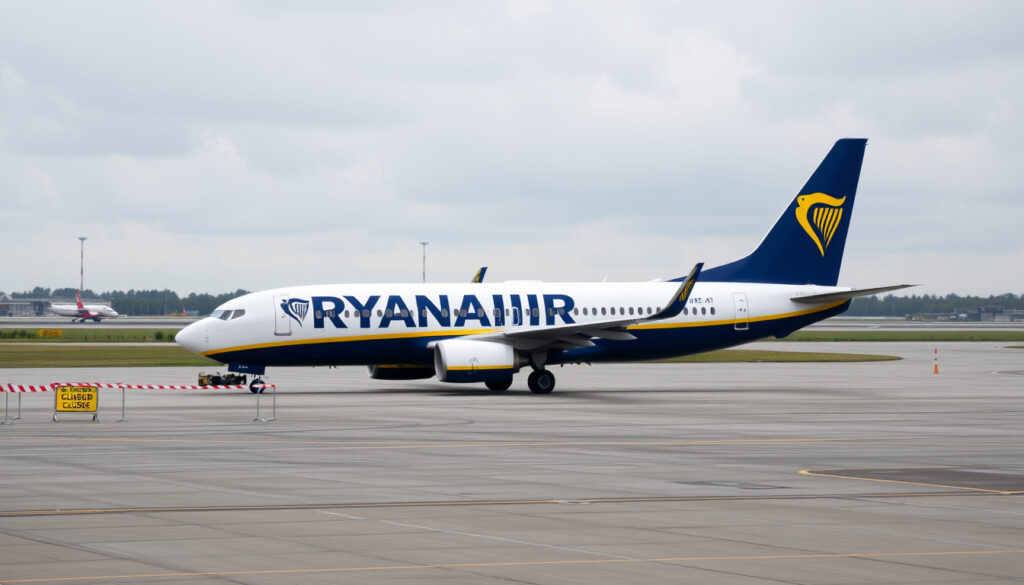
Billund Airport will soon be without Ryanair for the first time in years. The low-cost carrier announced on 31 January 2025 that it is closing its two-aircraft base at Billund and cancelling all flights to and from Aalborg by the end of March. The reason, according to Ryanair, is Denmark’s new DKK 50 aviation tax, introduced in January 2025, which the airline says makes regional Denmark “hopelessly uncompetitive.” The pullout means Denmark loses 32 routes and roughly 1.7 million seats.
Base closed: Billund Airport · Routes axed: All Aalborg flights · Effective date: End of March 2025 · Reason: DKK 50 aviation tax · Aircraft removed: 2 from Billund
Quick snapshot
- Billund base closure confirmed (Airways Magazine)
- Aalborg routes fully cancelled by March 2025 (The Independent)
- DKK 50 tax cited as primary reason (Aviation24.be)
- Exact passenger numbers affected by the route cancellations
- Whether Billund retains any ad-hoc Ryanair flights after the base closure
- Whether Ryanair will return to Denmark if the tax is reversed
- 31 Jan 2025: Ryanair announces closures (The Independent)
- February 2025: News coverage confirms tax as reason (The Independent)
- End March 2025: All operations cease (The Independent)
- Ryanair reallocating 2 aircraft to Sweden, Hungary, Italy
- Affected passengers must contact Ryanair for refunds
- Other airlines remain as alternatives to Denmark
The table below summarises the key figures behind this withdrawal.
| Label | Value |
|---|---|
| Announcement source | Ryanair corporate, 31 Jan 2025 |
| Base impacted | Billund (2 aircraft) |
| Routes cut | Aalborg, all directions |
| Tax trigger | DKK 50 per departing passenger |
| Seats lost | 1.7 million |
| Routes lost | 32 |
| Jobs affected | Up to 60 |
| Investment lost | US$200 million |
| Status | Confirmed closure |
What airports are Ryanair closing?
Ryanair is shutting down its entire Billund Airport base, the larger of the two affected locations. The base, which housed two aircraft and served routes including London Stansted, Edinburgh, and Manchester, represents a US$200 million investment that the airline says it is now abandoning (Airways Magazine). Billund is also the gateway to Legoland, meaning families travelling from the UK to the popular theme park will need to find alternative arrangements from the end of March 2025.
Billund handled significantly more traffic than Aalborg. The closure affects a wider range of passengers, including leisure travellers heading to one of Denmark’s most recognisable family attractions.
What this means: regional Denmark now faces a significant gap in low-cost connectivity, with no immediate replacement carrier on the horizon.
Billund base closure
The Billund base is the centrepiece of Ryanair’s Danish operations. With two based aircraft, it had been a permanent fixture since the airline expanded into regional Denmark. The closure eliminates that presence entirely, leaving the airport to rely on other carriers. Ryanair says pilots and crew at Billund have been offered transfers within its broader European network (Aviation24.be), though up to 60 jobs will still be lost at the local level.
Aalborg routes cut
Ryanair’s Aalborg service, which began in 2017, will end completely. By March 2025, the only remaining route from Aalborg (London Stansted) will also be scrapped. The loss marks the end of affordable direct connectivity between northern Denmark and the UK (The Independent).
The implication: passengers in Jutland lose access to the kind of low-cost short-haul routes that Ryanair built its reputation on. Regional Denmark is now less connected to European leisure and business markets.
Which routes are Ryanair cancelling?
Ryanair is cutting all 32 routes that operated from its Danish bases, affecting both Billund and Aalborg. The combined impact removes 1.7 million seats from the market annually (Aviation24.be). This includes routes to UK airports, other European cities, and holiday destinations across the continent.
UK to Denmark routes
The UK connections are among the most immediately noticeable losses. Ryanair flights from London Stansted to both Aalborg and Billund are ending. Edinburgh-Billund and Manchester-Billund are also on the chopping block (Euronews). UK passengers who relied on Ryanair’s low fares to reach Denmark’s regional airports will need to consider alternatives, which typically come at a higher price point.
Other European links
Beyond the UK, routes to Spanish, Italian, and other European destinations from both Danish airports will disappear from Ryanair’s schedule. The airline is reallocating the two released aircraft to markets where aviation taxes are being reduced or abolished, including Sweden, Hungary, and Italy (The Independent).
Denmark’s tax generates revenue from aviation but risks losing the broader economic activity that low-cost connectivity brings — tourism spending, business travel, and jobs in surrounding communities.
The pattern: Ryanair is shifting capacity away from Denmark toward countries that are cutting, not adding, aviation taxes. For Danish regional airports, this is a direct economic consequence of government policy.
Why has Ryanair stopped flying to Aalborg?
Denmark introduced a new aviation tax of up to DKK 50 (approximately £5.58 or €6.70) per departing passenger in January 2025 (The Independent). Ryanair says this tax makes operating low-cost routes from regional Danish airports financially unviable.
Danish aviation tax details
The tax applies to all departing passengers from Danish airports, with no exemptions for transfer passengers in most cases. At DKK 50 per person, a return flight immediately costs an extra DKK 100 in taxes per passenger. For a family of four, that is DKK 400 added to the cost of a single trip. Ryanair argues this pricing model is incompatible with its low-fare model, which relies on high passenger volumes at thin margins.
Ryanair’s response
Ryanair has been vocal in its criticism. A spokesperson said the airline was “left with no other choice” following what it called the Danish government’s “short-sighted decision to introduce a harmful aviation tax from Jan 2025” (The Independent). The airline also pointed out that countries like Sweden, Hungary, and regions of Italy are abolishing aviation taxes to attract exactly the kind of traffic Denmark is now pricing out.
“Unfortunately, this harmful aviation tax makes Denmark (especially regional Denmark) hopelessly uncompetitive compared to other EU countries, like Sweden, Hungary, and Italian regions, who are abolishing aviation taxes to stimulate traffic recovery and growth.”
— Michael O’Leary, Ryanair CEO (statement to The Independent)
What this means: the Danish government faces a policy trade-off between tax revenue and aviation connectivity. Regional airports that depend on low-cost carriers are particularly vulnerable when those carriers decide the maths no longer works.
What is the timeline for these cancellations?
The timeline is relatively compressed. Ryanair announced the changes on 31 January 2025, with all operations set to cease by the end of March 2025 (The Copenhagen Post). That gives affected passengers roughly two months to adjust their travel plans.
Announcement date
Ryanair confirmed the closure on 31 January 2025, framing it as a response to the tax that had been in effect since the start of the month. The announcement was accompanied by statements criticising the policy and outlining the scale of the withdrawal.
Closure date
The end of March 2025 marks the final day of Ryanair operations at both Billund and Aalborg. After that point, no new bookings will be accepted on those routes, and existing schedules will no longer operate. Passengers with bookings beyond that date should contact Ryanair for rebooking or refund options (Euro Weekly News).
What should passengers do about Ryanair Denmark flights?
Passengers with existing bookings on affected routes need to take action. Ryanair has not indicated it will automatically rebook affected passengers on alternative carriers, so the initiative falls to travellers themselves.
Refunds and rebookings
Customers whose flights are cancelled are entitled to a refund under EU regulations. Ryanair’s standard process requires passengers to request this through its website or customer service channels. Those who booked through third-party sites should contact that vendor first. Passengers should also check their travel insurance policies — some may cover additional costs incurred due to cancelled low-cost flights.
Alternative airlines
Other carriers still serve Danish airports, though typically at higher price points than Ryanair’s base fares. Norwegian Air, KLM, and British Airways offer routes to Copenhagen and other Danish hubs, with connections available to regional airports via code-share or partner airlines. For UK passengers specifically, direct routes to Aalborg and Billund will disappear, making Copenhagen the nearest option for non-stop service (The Independent).
The catch: there is no direct low-cost replacement for Ryanair on these routes. Passengers accustomed to sub-£50 return fares will need to budget significantly more for alternative travel.
Timeline
This chronology tracks the key events from the tax introduction through to the full operational shutdown.
| Date | Event |
|---|---|
| January 2025 | Denmark introduces DKK 50 aviation tax per departing passenger |
| 31 January 2025 | Ryanair announces Billund base closure and Aalborg route cuts |
| February 2025 | News outlets confirm tax as primary reason; coverage expands |
| End of March 2025 | All Ryanair operations at Billund and Aalborg cease |
| Summer 2025 onwards | Reallocated aircraft deployed in Sweden, Hungary, Italy |
Clarity section
Confirmed
- Billund base closing with 2 aircraft removed (Airways Magazine)
- All Aalborg routes cancelled by end of March 2025 (The Independent)
- DKK 50 aviation tax introduced January 2025 (Airways Magazine)
- 32 routes and 1.7 million seats lost (Aviation24.be)
- US$200 million investment being withdrawn (Airways Magazine)
- Up to 60 jobs eliminated at Billund (Airways Magazine)
Unclear
- Exact number of passengers directly affected by cancellations
- Whether Billund retains any ad-hoc or seasonal Ryanair flights after closure
- Whether Denmark’s government will reconsider the tax policy
- Future prospects for Ryanair returning to Danish regional airports
What Ryanair is saying
“We are very disappointed to announce the closure of our two-aircraft Billund base and our operations at Aalborg from the end of March, but we have been left with no other choice following the Danish Govt’s short-sighted decision to introduce a harmful aviation tax from Jan 2025.”
— Ryanair spokesperson, The Independent
“Denmark’s connectivity, traffic, jobs, economic recovery, and growth will suffer irreparable damage – particularly in regional airports where they are reliant on efficient, low-cost air travel.”
— Ryanair statement to media outlets
Ryanair’s Danish pullout fits a wider pattern. The airline has stopped flying to 87 airports since 2004, with five cuts in 2025 alone including Aalborg. Germany has been most affected historically, losing 16 Ryanair airports over that period, and faces further capacity cuts of 12% for summer 2025 (Air Service One). The common thread is aviation taxation policy.
Summary
Ryanair is withdrawing from Denmark’s regional airports at a scale that will be felt immediately. The closure of the Billund base and complete cancellation of Aalborg routes removes affordable connectivity for thousands of passengers who depended on low-cost access to and from Jutland. For UK families planning Legoland holidays, for northern Danish businesses, and for anyone who relied on Ryanair’s model, the practical alternatives are fewer and more expensive. The airline has been clear that the DKK 50 tax is the reason, and has shifted its investment toward countries that are going in the opposite direction on aviation taxation.
Denmark now faces the consequence of losing 1.7 million annual seats and 32 routes as Ryanair reallocates its two Danish aircraft to markets in Sweden, Hungary, and Italy where aviation taxes are being reduced rather than introduced.
Related reading: Denmark travel · Met Office weather warnings
Frequently asked questions
Why is Ryanair closing its Billund base?
Ryanair says Denmark’s new DKK 50 per passenger aviation tax, introduced in January 2025, makes operating from Billund financially unviable. The airline is removing its two based aircraft and redirecting investment to markets with lower or no aviation taxes.
Are all Ryanair flights to Aalborg cancelled?
Yes. Ryanair is cancelling all routes to and from Aalborg Airport by the end of March 2025. This includes the London Stansted route, which was the last remaining service before the cut.
What is Denmark’s new aviation tax?
Denmark introduced an aviation tax of up to DKK 50 (approximately £5.58 or €6.70) per departing passenger in January 2025. It applies to most commercial flights leaving Danish airports.
When do the cancellations take effect?
Ryanair announced the closures on 31 January 2025, with all operations at Billund and Aalborg ceasing by the end of March 2025.
How can I get a refund for cancelled Ryanair flights?
Passengers with cancelled bookings should contact Ryanair directly through its website or customer service to request a refund. Those who booked through travel agents or third-party platforms should contact their booking provider in the first instance.
Will Ryanair return to Aalborg later?
Ryanair has not indicated any plans to return. The airline has made clear it views Denmark’s tax policy as the barrier, meaning a reversal of that policy could potentially prompt a review.
Which other Ryanair routes to Denmark are safe?
Copenhagen is not directly affected as Ryanair does not have a base there. However, the Billund and Aalborg closures represent a complete withdrawal from regional Denmark. Passengers seeking alternative routes to Danish regional airports will need to use other carriers.

Edward Miles is Policy & Research Correspondent at CivicInsight.uk, covering money, markets, public data and policy analysis. He works through official documents and public datasets to build the evidence base behind our reporting.