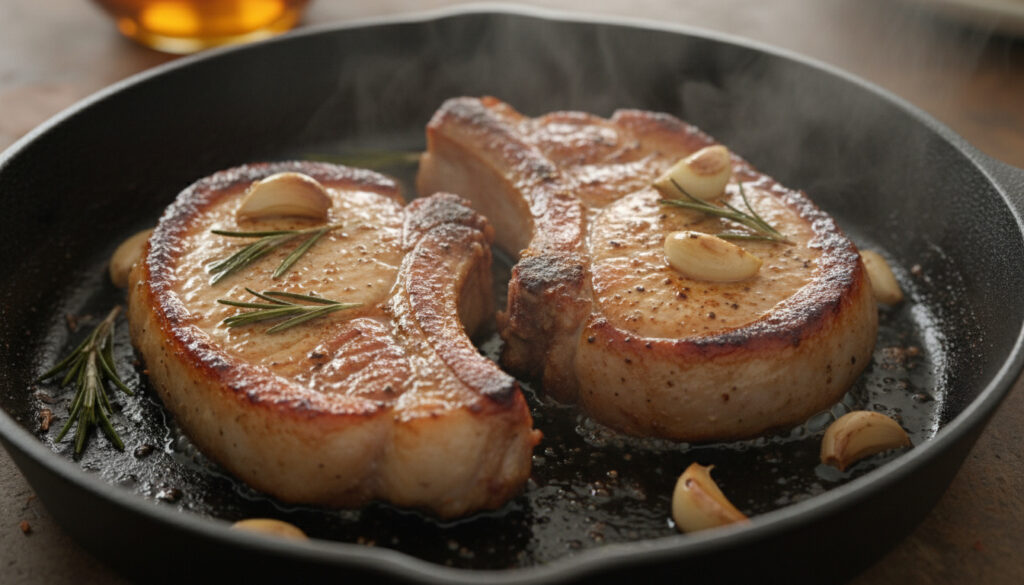
How to Cook Pork Chops – Juicy Results Every Time
Perfectly cooked pork chops require precision rather than guesswork. The margin between juicy, tender meat and a dry, chewy chop is narrow, governed by specific temperatures and timing. Whether you prefer the controlled environment of an oven, the speed of a stovetop sear, or the char of a grill, understanding the science of heat transfer and internal temperature ensures consistent results.
Modern pork production has transformed cooking recommendations. Decades-old guidance suggesting 160°F as a safe endpoint has given way to evidence-based standards that prioritize both safety and palatability. Today, chefs and home cooks alike recognize that pork chops benefit from techniques that preserve moisture while achieving a safe internal temperature.
This guide examines multiple cooking methods, from conventional oven roasting to emerging air fryer techniques, providing specific parameters for thickness variations and equipment types. Each approach offers distinct advantages depending on your kitchen setup and time constraints.
How to Cook Pork Chops in the Oven
Oven baking provides consistent, indirect heat that cooks pork chops evenly without requiring constant attention. This method excels for thicker cuts, allowing the interior to reach the target temperature while minimizing surface drying.
Sear on stovetop first, then transfer to elevated rack
325°F to 425°F depending on desired speed
Remove at 140°F, rest to reach 145°F
Use a roasting pan with rack for air circulation
Key Insights for Oven Success:
- Preheating to 425°F reduces cooking time to approximately 10 minutes for unseared chops
- Pre-seared chops require only 6-8 minutes at 425°F
- Lower temperatures (325-350°F) work best for very thick cuts over 1.5 inches
- An elevated rack prevents the bottom from steaming in accumulated juices
- Always position the oven rack in the center for even heat distribution
- Using a meat thermometer eliminates the risk of overcooking
| Method | Temperature | Time (1-inch) | Rest Period |
|---|---|---|---|
| Oven (unseared) | 425°F | 10 minutes | 5-6 minutes |
| Oven (pre-seared) | 425°F | 6-8 minutes | 5-6 minutes |
| Stovetop | Medium-high | 4-5 min/side | 5-6 minutes |
| Grill (direct then indirect) | 450°F then cooler zone | 8-12 min total | 5-6 minutes |
| Air Fryer | 375°F | 10-12 minutes | 5-6 minutes |
| Broiler (thin chops) | High | 3-4 min/side | 5-6 minutes |
For optimal results, sear chops in a skillet for a couple minutes before transferring to an elevated rack over a roasting pan. This two-stage approach develops a flavorful crust while the oven finishes the cooking gently.
How to Pan-Fry Pork Chops on the Stovetop
Pan-searing delivers the fastest results and the most pronounced crust. The direct contact with hot metal triggers the Maillard reaction, creating complex flavors that oven cooking alone cannot replicate.
The Searing Technique
Preheat a non-stick sauté pan to medium-high heat with one teaspoon of olive oil per serving. Sear pork chops for 4-5 minutes per side, including the edges, until the internal temperature reaches 140°F.
Frequent flipping promotes even cooking. Sear both sides initially to establish color, then flip periodically until the chop approaches the target temperature. This method prevents the formation of a thick overcooked band beneath the surface.
Managing Thickness Variations
Thin chops (under 1 inch) cook rapidly and can move from perfect to overdone in seconds. Thick chops (1.5 to 2 inches) require modified technique. After the initial sear, reduce heat to medium and continue cooking, or transfer to a 350°F oven to finish gently without burning the exterior.
Remove pork chops from heat when the internal thermometer reads 140°F. During the subsequent 5-6 minute rest, carryover cooking will raise the temperature to the USDA-recommended 145°F, ensuring safety while preventing moisture loss from excessive heat exposure.
How Do You Know When Pork Chops Are Done?
Visual cues alone prove unreliable for pork doneness. Color variations in raw pork—ranging from pale pink to deep rose—continue through cooking, making “clear juices” or “firmness” tests imprecise indicators of safety.
The 145°F Standard
145°F represents the USDA-safe internal temperature for all pork chop cuts, whether bone-in or boneless. This standard replaced the previous 160°F recommendation following improvements in pork production practices and pathogen research.
A digital instant-read thermometer inserted into the thickest part of the chop—avoiding bone—provides the only accurate assessment. For thin chops, insert the probe horizontally through the side to ensure the sensor reaches the center.
Resting: The Final Cooking Phase
Resting for 5-6 minutes under tented foil serves dual purposes. The brief pause allows muscle fibers to relax and reabsorb juices that would otherwise flood the cutting board. Simultaneously, the internal temperature climbs approximately 5°F through residual heat, achieving the safety threshold without additional fire exposure.
How to Make Pork Chops Tender and Juicy
Tenderness in pork chops results from managing moisture retention and muscle fiber behavior. Unlike beef, which benefits from collagen breakdown through long cooking, pork chops—cut from the loin—contain little connective tissue and quickly become tough when overheated.
Bone-In Versus Boneless
Bone-in chops often provide superior flavor because fat surrounds the bone, and the bone itself acts as a heat sink that slows cooking near its surface. This buffer helps retain moisture in the adjacent meat. Bone-in and boneless varieties both reach food safety at 145°F using identical temperature guidelines, though bone-in cuts may require slightly longer cooking times due to the thermal mass.
Preparation Fundamentals
Preparation begins with proper thawing. Defrost frozen chops in the refrigerator overnight, or use the quick-thaw method by placing vacuum-sealed portions in cold water for 30 minutes. Completely thaw chops before cooking to ensure even heat penetration.
Remove excess moisture by patting with paper towels before seasoning. Dry surfaces brown more effectively, creating the fond that contributes depth to the final flavor. Apply coarse sea salt, black pepper, or herbaceous rubs after drying and lightly oiling both sides.
Chops 1.5 to 2 inches thick require modified approaches. After initial searing, reduce heat or move to indirect cooking to prevent the exterior from overcooking before the interior reaches 145°F. Thinner chops (under 1 inch) cook quickly and benefit from high heat and minimal flipping.
Pork chops possess minimal intramuscular fat. Once the internal temperature exceeds 145°F significantly, muscle fibers contract and expel moisture rapidly. The window between perfectly cooked and dry is approximately 5-7 degrees, making thermometer use essential rather than optional.
Air Fryer and Grilled Pork Chops
Alternative cooking methods offer distinct textures and convenience factors. Tower Air Fryer models and similar appliances have popularized rapid, crispy results, while grilling imparts smoky characteristics impossible to replicate indoors.
Air Fryer Method
Preheat the air fryer to 375°F. Season chops and arrange on the rack with 1 inch between portions to ensure proper air circulation. Cook 6 oz. boneless pork chops for 10-12 minutes, flipping halfway through, until the internal temperature reaches 140°F. The forced air creates a crust similar to frying with minimal oil.
Grilling Protocol
Preheat the grill to medium-high (approximately 450°F). Pat chops dry, rub with oil, and season as desired. Cook for 3-5 minutes per side until well browned, then move to the cooler side of the grill to finish cooking until the internal temperature measures 145°F. Total grilling time typically ranges from 8-12 minutes depending on thickness and grill temperature.
Broiling and Sous Vide
For broiling, position chops 4 inches from high heat. Thin chops (1 inch or under) broil quickly on each side until browned. Thick chops require both sides to be broiled, then finished in a reduced-temperature environment until reaching 140°F.
Sous vide offers maximum precision. Set the water bath to 130°F and bag chops with butter, kosher salt, pepper, and fresh herbs like rosemary. Cook 1-inch chops for 1 hour, 1.5-inch chops for 1.5 hours, and 2-inch chops for 2 hours, adding 30 minutes if cooking from frozen. Pat dry and sear briefly before serving.
How Long Does It Take to Cook Pork Chops?
Timing varies by method, thickness, and starting temperature. The following sequence represents a standard workflow for 1-inch thick chops:
- Preparation (5 minutes): Thaw completely if frozen, pat dry with paper towels, and apply seasoning and light oil coating.
- Searing (3-4 minutes per side): Establish crust on stovetop or grill over medium-high heat, or skip this step for pure oven roasting.
- Finish Cooking (5-12 minutes): Complete cooking in oven, covered pan, or grill indirect zone until internal temperature reaches 140°F.
- Mandatory Rest (5-6 minutes): Tent with foil to allow carryover cooking to 145°F and juice redistribution.
Total active cooking time ranges from 10 to 20 minutes depending on thickness and method, with the resting period adding non-negotiable time that cannot be shortened without sacrificing texture.
What is Certain About Cooking Pork Chops?
Distinguishing between established culinary science and variable factors helps cooks avoid common errors while adapting to their specific equipment.
Established Facts
- 145°F is the USDA-safe internal temperature for all pork cuts
- Removing chops at 140°F prevents overcooking during the rest
- 5-6 minutes of resting is mandatory for juice retention
- Dry surfaces brown better than wet ones
- Bone-in chops generally retain more moisture
Variable Factors
- Exact cooking time varies by specific oven calibration
- Grill hot spots create uneven cooking surfaces
- Starting temperature of meat (fridge-cold vs. room temp)
- Altitude effects on cooking times
- Specific fat content variations between individual animals
Why Do Pork Chops Dry Out?
The science of overcooking pork involves protein chemistry. At approximately 140°F, muscle fibers begin to contract, squeezing out intracellular moisture. As temperatures climb toward 160°F and beyond, these fibers tighten irrevocably, expelling so much liquid that the meat becomes chalky and tough. Modern USDA guidelines acknowledge that 145°F achieves safety without triggering excessive contraction, provided the meat rests properly.
Fat content plays a crucial role. Pork loin—the source of most chops—is naturally lean. Without the insulating effect of marbling, heat penetrates directly to muscle fibers. This explains why brining or cooking bone-in cuts produces juicier results; the added moisture or thermal mass buffers the muscle from rapid temperature spikes.
Expert Sources and Recommendations
Culinary professionals emphasize temperature precision over arbitrary timing. USDA Food Safety and Inspection Service guidelines establish 145°F with a three-minute rest as the safety standard, replacing decades of overcooking recommendations.
“The key to perfectly cooked pork chops is reaching an internal temperature of 145°F followed by a 5-6 minute rest, which allows carryover cooking to complete the process and redistribute juices throughout the meat.”
— Grill Momma Culinary Research
“Bone-in chops often provide the most flavor because fat surrounds the bone, and the bone helps retain moisture during cooking, preventing the meat from drying out.”
— National Pork Board
Key Takeaways for Perfect Pork Chops
Mastering pork chops requires a thermometer, patience during the rest period, and acceptance that 145°F—not 160°F—defines doneness. Whether using a Tower Air Fryer, conventional oven, or charcoal grill, the principles remain constant: dry the surface, sear for flavor, cook to 140°F, and rest for five minutes. These steps separate succulent results from disappointment.
Common Questions About Cooking Pork Chops
Do you wash pork chops before cooking?
No. Washing raw pork spreads bacteria through splash contamination without improving safety or flavor. Cooking to 145°F eliminates pathogens. Pat dry with paper towels instead.
What is the best seasoning for pork chops?
Simple coarse sea salt and black pepper highlight the meat’s natural savory-sweet undertones. Herbaceous rubs with rosemary or thyme complement the flavor without overwhelming it.
How thick should pork chops be?
One inch represents the optimal balance between sear development and even cooking. Thinner chops cook too quickly and dry out easily; thicker chops require modified two-stage cooking.
Should pork chops be cooked covered or uncovered?
Uncovered cooking promotes browning and crust formation. Cover only if finishing very thick chops at lower temperatures to prevent the exterior from drying before the center reaches temperature.
Can cooking pork chops cause digestive discomfort?
Properly cooked pork at 145°F poses no digestive risks for most individuals. If you experience discomfort after eating, consult How to Relieve Trapped Wind for symptom management.
More related posts
 Weather Next 10 Days – London’s Spring Temperature Swings
 When is Easter 2025 in the UK? Dates, Holidays & Schools
 Mind Flayer Stranger Things – Origins Powers Fate Explained
 Darts Order of Play Today – Full Schedule Times TV Guide
 M&S Party Food: Platters, Christmas & Buffet Ideas
 Cast of Gangs of London: Seasons 1-4 Actors & Characters
 Reese Witherspoon Movies and TV Shows – Complete Career Guide
 Benson Boone Beautiful Things – Lyrics Meaning and Analysis