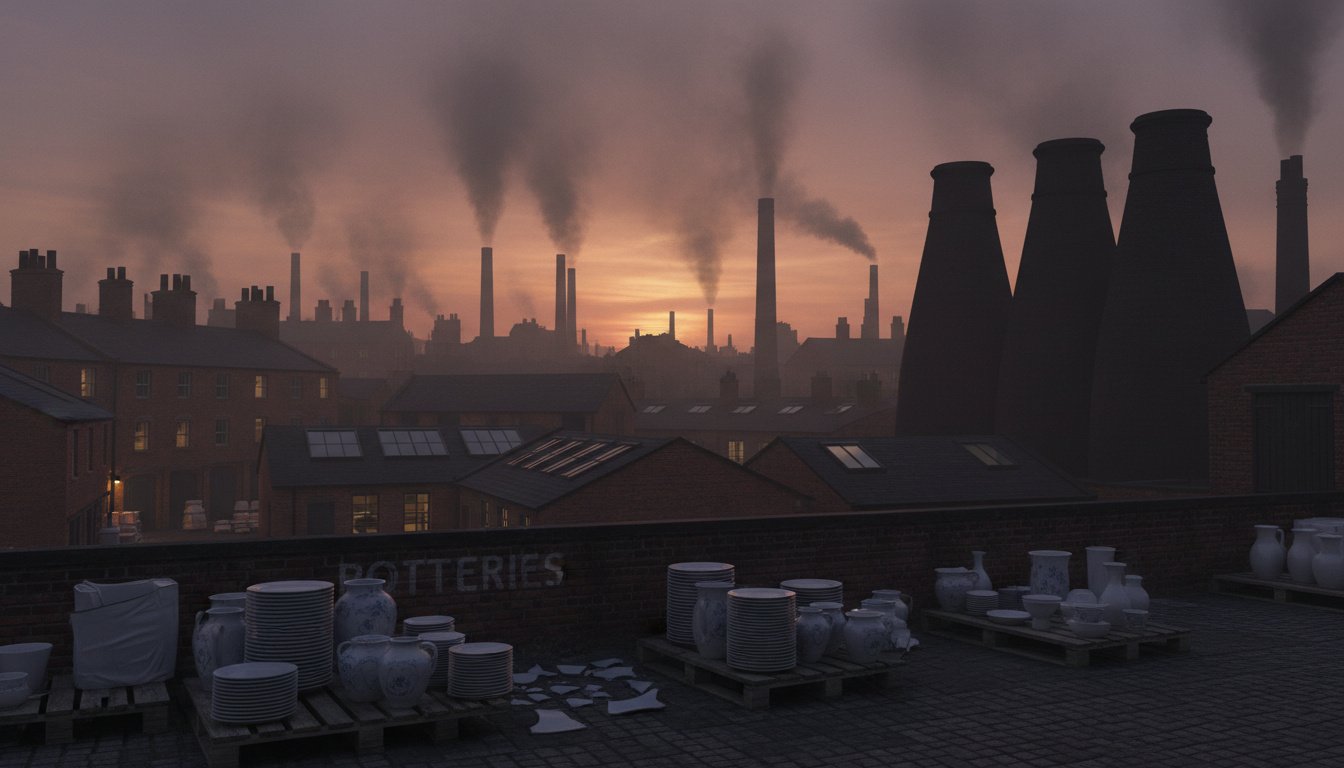
Stoke-on-Trent serves as the administrative and cultural heart of The Potteries, a North Staffordshire conurbation renowned globally for ceramic manufacturing. The city occupies a distinctive position in England’s industrial heritage, having emerged from six separate towns that federated in 1910 to form a single municipal entity.
Geological abundance initially defined the region. Deposits of clay, salt, lead, and coal enabled pottery production to intensify around 1670, transforming the area into the world’s leading ceramic center by 1800. This industrial dominance shaped the physical landscape through bottle ovens, canals, and distinctive Victorian factory architecture.
Today, the city functions as a heritage destination where former manufacturing sites operate as museums and working exhibits. While the industrial scale has diminished, the ceramic legacy remains central to local identity and tourism.
Where is Stoke-on-Trent and What Makes It a City?
Stoke-on-Trent occupies North Staffordshire, England, approximately halfway between Manchester and Birmingham. The designation as a city derives not from a single historic core but from the 1910 federation of six distinct towns—Burslem, Hanley, Stoke, Fenton, Longton, and Tunstall—each maintaining distinct characteristics while operating under unified governance.
North Staffordshire, England
Current figures unavailable
The Potteries, ceramic manufacturing heritage
Federation of six towns in 1910
- Six-town structure: Burslem, Hanley, Stoke, Fenton, Longton, and Tunstall form the city.
- Mother town status: Burslem earned recognition as the “mother town of the Potteries” following early industrial activity.
- Geological advantage: Local clay, salt, lead, and coal deposits enabled ceramic production from the 1670s.
- Transport infrastructure: The Trent and Mersey Canal, completed in 1777, facilitated the movement of raw materials and finished goods.
- Industrial scale: Over 300 potworks operated by 1800, establishing global dominance in ceramic output.
- Municipal formation: Formal federation occurred in 1910, creating the modern city entity.
- Educational establishment: Keele University was founded in 1949 as North Staffordshire University College.
| Fact | Details | Historical Context |
|---|---|---|
| Location | North Staffordshire, England | Staffordshire Potteries region |
| Status | City (federated municipality) | Six towns united 1910 |
| Also Known As | The Potteries | Historical ceramic center |
| Primary Industry | Ceramic manufacturing | Dominant from 1740-1950s |
| Six Constituent Towns | Burslem, Hanley, Stoke, Fenton, Longton, Tunstall | Federation components |
| Key Geological Resources | Clay, coal, salt, lead | Available from 1670s |
| Major Transport Link | Trent and Mersey Canal | Completed 1777 |
| Heritage Museum | Gladstone Pottery Museum | Opened 1974 |
| University | Keele University | Founded 1949 |
| Last Industrial Firing | Bottle oven | Recorded 1978 |
| Early Production Center | Burslem | Active from 1670 |
What is Stoke-on-Trent Famous For?
The city’s reputation rests upon ceramic innovation and manufacturing scale that dominated global markets for two centuries. This legacy encompasses technological breakthroughs, distinctive architectural forms, and the transformation of geological resources into industrial wealth.
The Birth of The Potteries
Intensive pottery production began around 1670 in Burslem, initially focused on saggar production for butterpots. The town’s early specialization earned it the title “mother town of the Potteries.” By 1740, the region dominated English ceramic output, leveraging abundant local materials and water transport routes.
The Staffordshire Potteries region emerged as a global center due to these geological advantages, with roadside clay digging reportedly causing noticeable “potholes” in the 1670s as production intensified.
Industrial Innovations
Technical developments defined the industry’s evolution. Salt glazing arrived in the 1680s, with Dutch immigrants the Elers brothers settling in Bradwell to produce fine red ware. In 1720, John Astbury of Shelton added ground flint to clay, creating creamware and sparking a production boom.
The mid-18th century brought further refinement. Josiah Wedgwood perfected cream-colored earthenware known as Queens Ware during the 1760s, establishing his Etruria factory in 1769. Josiah Spode, apprenticed to Thomas Whieldon between 1749 and the 1760s, expanded manufacturing capabilities significantly.
Architectural Heritage
The industrial landscape featured distinctive bottle ovens—brick structures essential for firing ceramics. Middleport Pottery, constructed in 1888 for Burleigh wares, represents the architectural legacy of this era. Historical records indicate the site remains operational today, preserving Victorian manufacturing methods.
Middleport Pottery, built in 1888 for Burleigh wares, continues ceramic production using traditional methods. The Gladstone Pottery Museum maintains the only complete Victorian pottery factory in the United Kingdom, with the last bottle oven firing recorded in 1978.
What is the Population of Stoke-on-Trent and Is It a Good Place to Live?
Contemporary demographic data for Stoke-on-Trent remains incomplete. While historical records document substantial workforce growth driven by industrial expansion, current population figures, age distributions, and ethnic compositions remain unverified.
Demographic Data Limitations
Current population statistics for Stoke-on-Trent are unavailable. Historical context indicates industrial growth drew workers from the 17th century onward, but specific figures regarding modern demographics—including total population, age breakdowns, or ethnic diversity—remain unconfirmed.
Those considering relocation might consult local resources regarding How to Book a Driving Test for practical administrative requirements in the region.
Historical Settlement Patterns
Population growth historically concentrated in Burslem during the initial industrial phase, subsequently expanding across the five other towns. The 1842 Chartist riots reflected the social pressures of rapid industrial urbanization, occurring alongside infrastructure developments such as the 1825 establishment of gas works.
Modern Livability Assessments
No direct data exists evaluating current living quality or identifying optimal residential areas within the city. Historical notes highlight Burslem as the early industrial hub and Etruria as a planned industrial village, though modern assessments of neighborhood amenities, housing quality, or community services remain unavailable.
Current population statistics, demographic breakdowns, and standardized livability assessments for Stoke-on-Trent remain unverified. Historical records indicate the industrial expansion drew significant workforce migration from the 17th century onward.
What to Do in Stoke-on-Trent?
The city offers concentrated heritage tourism centered on its ceramic manufacturing legacy. Visitors encounter preserved industrial sites, working pottery demonstrations, and architectural monuments to the region’s manufacturing dominance.
Museum Experiences
The Gladstone Pottery Museum, opened in 1974 following a 1971 preservation campaign, presents the only complete Victorian pottery factory in the country. The museum hosted events during the 1986 National Garden Festival and maintains bottle ovens as central exhibits. Museum archives note the last recorded bottle oven firing occurred in 1978.
Working Pottery Sites
Middleport Pottery, constructed in 1888, continues producing Burleigh pottery beside the canal. Historical surveys identify the site as offering guided tours and production demonstrations, allowing observation of traditional manufacturing techniques.
Heritage Exploration
The Etruria Works site, where Josiah Wedgwood established his 1769 factory, now functions as a heritage area. Bottle oven surveys conducted between 1975 and 1976 documented remaining industrial structures, while ceramics festivals in 2006 celebrated continued artistic production.
Visitors planning travel should verify Are Trains Running Today UK for current transport service status to the region.
The Gladstone Pottery Museum provides manufacturing history exhibits and occasional firing recreations. Middleport Pottery offers canal-side tours with active production demonstrations of Burleigh ceramic wares.
How Did Stoke-on-Trent Develop Over Time?
- : Pottery-making intensifies in Burslem with saggar production; Burslem becomes “mother town” of The Potteries. Source: Potteries Timeline
- : Salt glazing introduced; Dutch Elers brothers settle in Bradwell producing fine red ware. Source: Stoke Dates
- : John Astbury adds ground flint to clay for creamware, sparking production boom. Source: Wikipedia
- : Josiah Wedgwood builds Etruria factory; perfects Queens Ware. Source: Stoke Dates
- : Trent and Mersey Canal completed, facilitating transport. Source: Stoke Dates
- : Over 300 potworks operate; region becomes world’s leading ceramic center. Source: Potteries Timeline
- : Chartist riots occur amid industrial tensions. Source: Stoke Dates
- : Middleport Pottery built for Burleigh wares. Source: Heritage Calling
- : Six towns federate as Stoke-on-Trent. Source: English Ancestors
- : Last bottle oven firing recorded. Source: Gladstone Museum
What Facts Are Verified About Stoke-on-Trent Today?
| Established Information | Information That Remains Unclear |
|---|---|
| Federation of six towns occurred in 1910 | Current population figures and demographic breakdowns |
| Burslem recognized as “mother town” since 1670 | Specific details on modern livability by area |
| Geological deposits enabled industry from 1670s | Identity of current mayor |
| Trent and Mersey Canal completed 1777 | Current economic metrics beyond historical context |
| Gladstone Pottery Museum opened 1974 | Specific 2025 regeneration project details |
| Last bottle oven firing occurred in 1978 | Detailed postcode mapping systems |
Why Does the Potteries Legacy Matter?
Stoke-on-Trent’s industrial history represents a pivotal chapter in global manufacturing. The region’s ceramic output supplied international markets, establishing standards for tableware and decorative arts throughout the 18th and 19th centuries. The concentration of technical innovation—from Astbury’s creamware to Wedgwood’s industrial organization—demonstrates the transformation of craft into systematic manufacturing.
The geological uniqueness of North Staffordshire provided the material foundation for this industry. The specific combination of clay, coal, salt, and lead created conditions un replicated elsewhere in England, fostering the dense concentration of potworks that characterized the landscape by 1800.
Contemporary relevance lies in heritage preservation. As manufacturing declined through the mid-20th century—evidenced by the 1950 cessation of Etruria production and the 1978 final bottle oven firing—the region pivoted toward tourism and historical interpretation, maintaining the physical infrastructure of industrialization as cultural artifacts.
What Do Historical Records Confirm?
Geological extraction from the 1670s caused noticeable roadside “potholes” as workers dug for clay and coal to supply the burgeoning potworks.
— Potteries Historical Timeline
The federation of 1910 united Burslem, Hanley, Stoke, Fenton, Longton, and Tunstall into the single entity of Stoke-on-Trent.
— English Ancestors Research
The 1986 National Garden Festival drew thousands of visitors to the region, highlighting the potential for heritage-based tourism.
— Gladstone Pottery Museum Archives
What Defines Stoke-on-Trent Today?
Stoke-on-Trent comprises six federated towns united in 1910, defined by 300 years of ceramic manufacturing that transformed local geology into global industrial dominance. While current demographic and economic data remains partially unverified, the city’s preserved bottle ovens, operational heritage potteries, and canal-side museums maintain tangible connections to its status as The Potteries.
Common Questions
What postcode covers Stoke-on-Trent?
The city uses the ST postcode prefix. Specific district allocations within the six towns could not be verified in available mapping sources.
Where can I find a detailed map of the city?
Detailed geographical mapping showing the boundaries of the six constituent towns and their historical industrial zones remains unavailable.
Which areas offer the best quality of life?
No verified assessments rank current residential quality across Burslem, Hanley, Stoke, Fenton, Longton, or Tunstall. Historical context notes Burslem as the earliest industrial center.
What regeneration projects are currently underway?
Specific 2025 developments or regeneration initiatives remain unverified. Historical projects include the 1986 National Garden Festival and 1988 preservation efforts at Gladstone Pottery Museum.
Does Stoke-on-Trent have city status?
Yes. The federation of six towns in 1910 created the municipal entity of Stoke-on-Trent, conferring city status through parliamentary statute.
What is the significance of the bottle ovens?
These brick structures served as essential firing chambers for ceramic production. The last recorded firing occurred in 1978, marking the end of traditional manufacturing methods.

Hannah Brooks is Community & Local Government Editor at CivicInsight.uk. She covers local authorities, places, venues, transport, regional development and public services across the UK.