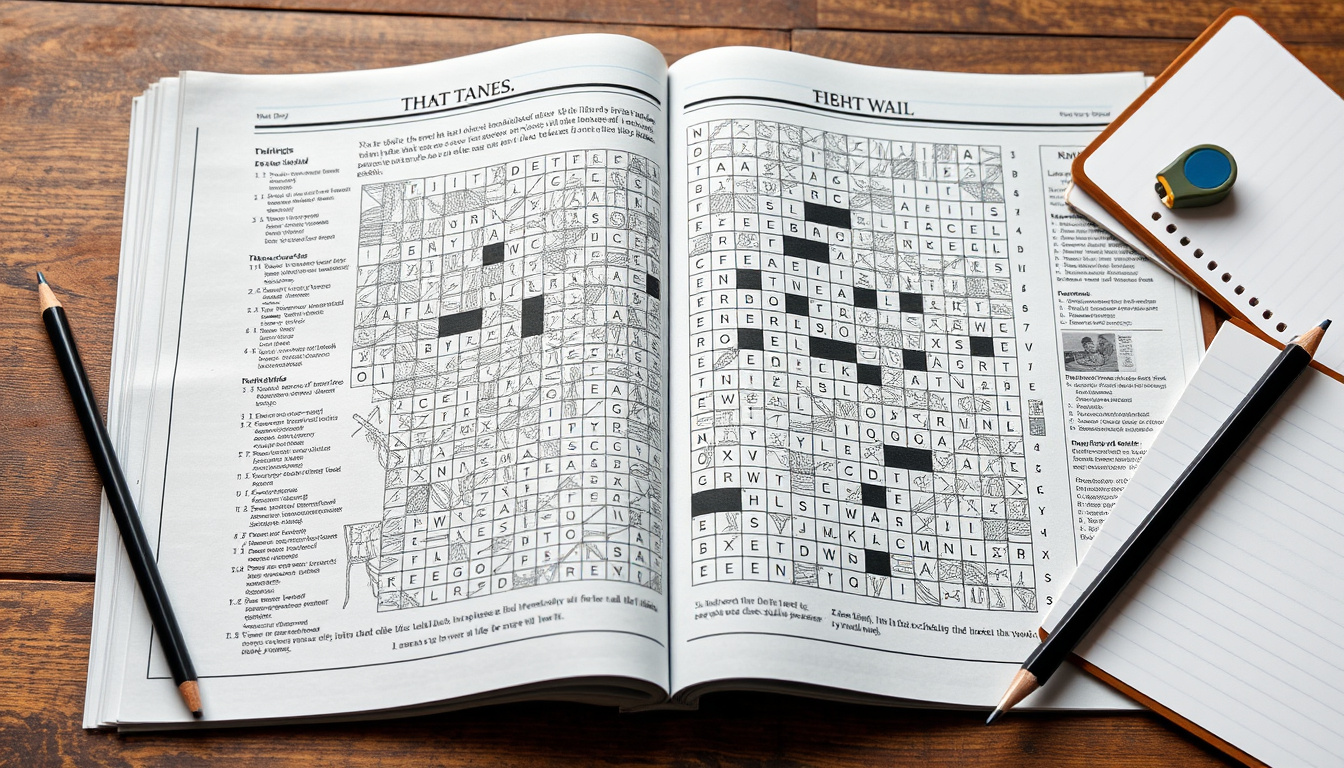
If you’ve ever stared at a cryptic clue and felt your brain do a slow U-turn, you’re in good company. The Daily Mail cryptic crossword draws thousands of solvers daily, and many of them get tripped up by the same mental habits that make word puzzles feel harder than they are. What most beginners don’t realize is that every clue contains a secret map — you just need to know how to read it.
Puzzles in Volume 1: 100 · Champion Tips Source: Mark Goodliffe (12x winner) · Free Online Availability: games.dailymail.co.uk · Skill Description: Not too difficult · Published Puzzles: Daily
Quick snapshot
- Free daily at games.dailymail.co.uk (Daily Mail)
- Cincinnus and Orlando packs (Daily Mail)
- Volume 1: 100 puzzles (Fifteen Squared)
- Available on Amazon (Fifteen Squared)
- Mark Goodliffe solving guide (The Oxford Blue)
- Trick explanations (The Oxford Blue)
- games.dailymail.co.uk (Daily Mail games platform)
- No registration required (Daily Mail games platform)
The table below summarizes key facts about the Daily Mail cryptic crossword offering, sourced from official and third-party references.
| Label | Value |
|---|---|
| Official Site | games.dailymail.co.uk (Daily Mail) |
| Puzzle Compiler Examples | Cincinnus, Orlando (Fifteen Squared) |
| Book Puzzles Count | 100 per volume (Fifteen Squared) |
| Skill Fit | Coffee break level (Crossword Man) |
| Champion Wins | 12 (Mark Goodliffe) (The Oxford Blue) |
| Sudoku Apps Released | 7 (Cracking the Cryptic) (The Oxford Blue) |
What is the trick to cryptic crosswords?
Every cryptic clue is a two-part puzzle in a single line. One part is the definition — the answer itself, or a close synonym. The other is wordplay — instructions for building that answer from letters already in front of you. Once you learn to separate the two, the whole system clicks. Mark Goodliffe, who has won The Times Crossword Championship 12 times, demonstrates this split clearly in his solving videos, showing how even complex clues reveal themselves once the structure is visible. Cracking the Cryptic (YouTube)
Common clue types
Wordplay indicators act as signposts telling you which operation to perform:
- Anagram signals: “twisted,” “mixed,” “messed up,” “confused” — the letters need rearranging
- Insertion markers: “in,” “around,” “within,” “surrounded by” — letters go inside other letters
- Reversals: “back,” “returning,” “upside down” — read something backwards
- Chains: “after,” “before,” “leading” — one element follows another
The pattern holds across UK publications: definition plus wordplay is the standard format, meaning once you master it, you can apply the same logic to puzzles from The Guardian, The Times, and Daily Mail alike.
Most Daily Mail clues put the definition at either the start or end of the clue. Scan from those positions first — you’ll spot the wordplay boundary faster than you expect. The Guardian (Crossword Blog)
Wordplay techniques
The Guardian’s crossword guide confirms that UK cryptic conventions standardize this format across publications, meaning every puzzle you encounter — including Daily Mail — follows the same definition-plus-wordplay structure. This consistency is a gift: once you master the pattern, you can apply it everywhere. Goodliffe’s approach in his solving videos involves looking for a clear indicator word — “around,” “twisted,” “inside” — and treating it as your starting point. From there, he works backward to find which letters get manipulated and in what order.
What skill level is the Daily Mail cryptic crossword?
Daily Mail cryptic crosswords sit at a beginner-to-intermediate level, placing them firmly in “coffee break” territory — challenging enough to be satisfying, but not punishing. The Crossword Man confirms that Daily Mail cryptics are generally easier than The Times, making them ideal for building skills before attempting more advanced puzzles. The official Daily Mail platform itself presents clues designed for regular solving rather than championship-level competition.
Compared to other dailies
The gap between Daily Mail and The Times is significant in two ways: word count and clue complexity. Daily Mail uses shorter answers with more straightforward wordplay, while The Times favors longer entries with layered operations. Fifteen Squared’s analysis of Daily Mail puzzles confirms this accessibility-first approach, noting that many clues can be cracked with just one or two operations rather than four or five.
Beginner vs expert fit
The implication: beginners should feel encouraged rather than intimidated. If you’ve never solved a cryptic, Daily Mail gives you the right scaffolding — short answers, clear indicators, familiar vocabulary. Experts who find Daily Mail too straightforward can use it as a warm-up rather than a main event. For solvers stuck between beginner and intermediate, the “not too difficult” label is accurate; it’s a puzzle that rewards consistent practice without punishing mistakes.
Tips on solving a cryptic crossword by Mark Goodliffe
Mark Goodliffe and Simon Anthony co-created Cracking the Cryptic, the world’s biggest Sudoku YouTube channel, and began solving The Times crossword daily on video in 2017. Their approach synthesizes decades of championship experience into watchable strategies. In his solving videos, Goodliffe walks through his thought process step by step, making elite technique accessible to anyone willing to practice.
8-time winner strategies
Goodliffe’s core advice is straightforward: look for clues with clear wordplay indicators first. Words like “twisted,” “around,” “inside,” or “back” are your entry points — they tell you exactly what operation the clue requires. Once you identify the indicator, separate the wordplay from the definition and work through the manipulation one step at a time. His video from 17 August 2017 demonstrates this on a live Times puzzle, showing how he separates the definition at the end of a clue from the wordplay at the beginning.
- Scan for a clear wordplay indicator (“twisted,” “around,” “inside,” “back”)
- Separate the wordplay from the definition — definition usually sits at one end
- Work through the manipulation one step at a time
- Spend 5-10 seconds per clue initially, then move on if nothing clicks
- Use letters from solved entries to guide adjacent clues
The Journal of Expertise confirms that elite solvers like Goodliffe exhibit pre-eminent skill verified by public competition records, with fluid intelligence identified as a key differentiator at top levels. Rather than relying on vocabulary alone, Goodliffe demonstrates how pattern matching and letter enumeration narrow options efficiently. The Journal of Expertise (Volume 3 Issue 2) study shows that this kind of fluid intelligence — the ability to recognize patterns under constraint — matters more than encyclopedic word knowledge.
Goodliffe competes at top UK levels in both cryptic crossword and sudoku, yet he explains that both disciplines are not as difficult as they first appear once basic techniques are learned. His Patreon offers exclusive Times solves for $2/month minimum. The Oxford Blue
Practice puzzles
Simon Anthony’s advice for beginners is direct: “Watch the channel.” The Cracking the Cryptic archive contains hundreds of solved puzzles, each one a masterclass in reading clues. For Daily Mail specifically, Fifteen Squared maintains a solve blog that walks through daily puzzles step by step, providing a safety net for practice. Goodliffe’s own solving style involves rapid clue scanning and grid navigation — he spends 5-10 seconds per clue initially, moving on if nothing clicks, rather than fixating on a single entry.
What is the best free daily crossword?
For daily cryptic solving without cost, games.dailymail.co.uk delivers the most accessible entry point — no registration required, no paywall, no app download. The platform runs daily puzzles compiled by respected setters like Cincinnus and Orlando, whose work appears in the puzzle books as well. Fifteen Squared confirms that these compilers produce quality wordplay at the coffee-break difficulty level.
Daily Mail options
The Daily Mail Cryptic Crossword stands out among free dailies for its consistency and accessibility. Its skill level sits clearly in the beginner-to-intermediate range, matching what the Crossword Man and Daily Mail’s own site confirm. The puzzle appears daily, and the online platform mirrors the print experience without extra features or restrictions.
Alternatives like BestCrosswords.com
If you want variety beyond Daily Mail, aggregator sites compile puzzles from multiple newspapers, giving you access to different compiler styles and difficulty curves. The key trade-off is that Daily Mail offers a curated, single-source experience while aggregators offer breadth. For pure Daily Mail cryptics without friction, the official site wins.
Can ChatGPT solve cryptic crosswords?
LLMs struggle with cryptic crosswords. The Journal of Expertise identifies fluid intelligence — the ability to recognize and manipulate patterns under constraint — as essential to elite cryptic solving. Current AI systems lack this capacity in a reliable way, making them inconsistent at best when facing clues that require multi-step wordplay. Goodliffe demonstrates the gap clearly: in one video, he parses “shiver” as “pellicle of ice” leading to “creep,” showing the layered inference that AI systems currently cannot replicate.
LLM challenges
Cryptic clues require simultaneous working memory for multiple constraints — definition matching, letter position, wordplay operation, and length. LLMs process these sequentially rather than holistically, which is why they frequently produce plausible-sounding answers that don’t actually fit the grid. The Guardian’s crossword guide notes that human solvers develop pattern recognition through practice; AI systems haven’t demonstrated equivalent learned intuition.
arXiv findings
Research on AI and puzzle-solving confirms what solvers intuitively know: cryptic crosswords resist pattern-matching approaches because every clue is a mini-creation with unique structure. The research literature treats elite solvers as exhibiting exceptional cognitive capacities that current AI cannot replicate. For solvers wondering whether AI will change the game — the answer is no, not yet.
The catch: this limitation may narrow as AI systems improve, but current LLMs lack the fluid intelligence that distinguishes human cryptic solvers.
Confirmed facts
- Free online access via Daily Mail games (Daily Mail)
- Mark Goodliffe has won 12 Times Championships (The Oxford Blue)
- Cracking the Cryptic started daily solves in 2017 (The Oxford Blue)
- Fluid intelligence key to elite solving (Journal of Expertise)
- Daily Mail skill level: beginner-intermediate (Crossword Man)
What’s unclear
- Exact search volume for Daily Mail cryptics
- Detailed difficulty ratings beyond general descriptions
“First of all let’s start with a good tip — look for a clear indicator of wordplay, some sort of anagram indicator or an insertion.”
— Mark Goodliffe, Cryptic Crossword Champion (Cracking the Cryptic YouTube)
“Watch the channel.”
— Simon Anthony, Cracking the Cryptic Host (The Oxford Blue interview)
For crossword solvers in the UK, the path forward is clear: start with Daily Mail, apply Goodliffe’s indicator-scanning technique, and build toward Times-level complexity when ready. The Daily Mail cryptic crossword at games.dailymail.co.uk costs nothing and requires no account — you can begin practicing immediately. What separates those who get stuck and those who improve is simple: the solvers who advance spend 5-10 seconds per clue, move around the grid dynamically, and treat every solved entry as a launchpad for the next one.
Related reading: newspaper types and history · Wordle original site
While Mark Goodliffe’s expert tips build long-term skill, a cryptic crossword solver offers instant relief by decoding tricky clues on demand.
Frequently asked questions
What do you call someone who does cryptic crosswords?
A person who solves cryptic crosswords is often called a “cruciverbalist” — a term combining Latin for “cross” and “word.” In casual UK puzzle circles, they might simply be called a “crossword solver” or “cryptic enthusiast.” (The Guardian Crossword Blog)
What do you call a person who loves crossword puzzles?
Someone passionate about crossword puzzles might be called a “cruciverbalist,” a “puzzler,” or in UK contexts, simply a “crossword addict.” The term reflects genuine enthusiasm rather than any formal designation.
Which free online puzzle site is best?
For UK cryptic crosswords specifically, games.dailymail.co.uk offers the most accessible Daily Mail puzzle collection without registration. The Guardian and The Telegraph also provide free daily cryptics with different skill profiles. BestCrosswords.com aggregates multiple sources if you want variety in one place. (Daily Mail)
Where can I find Daily Mail cryptic crossword answers?
Fifteen Squared maintains a solve blog that covers Daily Mail cryptic puzzles, providing worked answers and explanations. The official Daily Mail site shows solutions after completing a puzzle online. For book collections, answer sections appear at the back of each volume. (Fifteen Squared)
Are there printable Daily Mail cryptic crosswords?
The online Daily Mail crossword is browser-based and not designed for printing. However, puzzle books published by DMGT include reproducible puzzles for personal use. The digital experience is optimized for screen solving rather than print.
How often is Daily Mail cryptic crossword published?
Daily Mail runs a cryptic crossword daily — six days a week, with no puzzle on Sunday. Volume 1 contains 100 puzzles spanning approximately four months of daily challenges, confirming the publication cadence. (Fifteen Squared)
What are practice puzzles for cryptics?
Practice puzzles include Daily Mail (beginner-intermediate), The Guardian daily cryptic (intermediate), and The Times (advanced). Cracking the Cryptic’s YouTube archive provides hundreds of solved examples with commentary. The Times Crossword Club hosts Masterclass-level puzzles, including Masterclass 100 solved by Goodliffe on 10 January 2025. (Cracking the Cryptic YouTube)

Oliver Hayes is a staff writer for CivicInsight.uk, reporting on news, local government and public services. His work is reviewed by the editorial desk and checked against our sourcing and fact-checking standards before publication.